

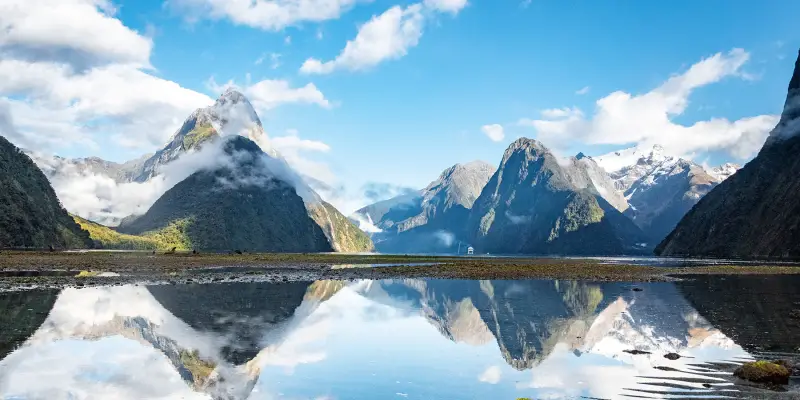
The South Island’s Greatest Hikes - Good Bits You Don’t Want to Miss
New Zealand’s South Island is a hiking fever dream—alpine spires, cedar-green valleys, rivers the colour of sapphires, and beaches that look faked. Below is a region-by-region guide to the best trails I keep returning to. I’ve added the kind of detail I wish I’d had the first time: when to go, how to pace days, what the weather really does, and a few stories from the track that might help you avoid my mistakes.
Nelson & Abel Tasman
Abel Tasman Coast Track (3–5 days)
The Coast Track is pure joy: a ribbon of golden sand bays stitched together by a gentle, beautifully formed path through mānuka and kānuka forest. This is the hike I recommend to friends who want their first multi-day—accommodations are plentiful (DOC huts and camps, plus a few private lodges), the gradients are friendly, and the logistics are almost suspiciously easy thanks to water taxis and bag transfers. The rhythm is simple: wake to birdsong, walk a headland or two, drop into a beach for a swim, repeat. Tides add just enough spice. Awaroa Inlet is a mandatory low-tide crossing; Torrent Bay and Bark Bay have optional low-tide shortcuts that shave time and add a touch of smugness if you plan well.
When to go & how to do it: Summer brings long, swimmable days; shoulder seasons (Mar–May, Sep–Nov) are quieter with cooler water and crisper light. I love a 4-day split—Marahau → Anchorage → Bark Bay → Awaroa → Tōtaranui—because it leaves room for swims, picnics, and detours like Cleopatra’s Pool (a freshwater slide smooth enough to make you squeal). Book accommodation early; this is beloved for a reason.
Personal note: On my last run I shared a beach with a weka that stole a muesli bar wrapper right out of my pocket. Secure your food and trash; the locals are cheeky and the rangers are rightly fussy about keeping this place pristine.
Mount Arthur Summit (1 day)
Kahurangi feels older than the rest of the country—karst outcrops, tussock basins, and views that fold to the horizon. From Flora Car Park you climb steadily through beech forest to the alpine world above the treeline. On a clear day the summit panorama pulls your eyes from the marble ridgelines out to Tasman Bay and, if the air is sharp, the North Island.
Reality check: This is an alpine day walk; it can blow and cloud in fast. The track is well-trod but exposed in parts, and winter/spring can leave lingering snow and ice on the tops. Carry layers, a shell, gloves, and enough food to sit out a squall. The gravel road to the car park can be rough—take it slow.
Why it’s worth it: You get the high-country feeling without the multi-day commitment, and the “wow” arrives quickly after the bushline.
West Coast
Fox Glacier Valley Walk (half day)
The West Coast is raw and constantly rearranging itself. The Fox Glacier valley walk is the safest, simplest way to feel the scale of a living glacier without roping up. You trace a river of grey stones past waterfalls and moraine walls to designated viewpoints where the ice hangs back in its blue silence.
One big caveat: routes change with weather and rockfall. Sometimes sections close entirely; sometimes they push the viewpoint further downvalley. Treat anything you’ve read (even this!) as a vibe, not a promise. If conditions allow, this is a family-friendly wander with outsized payoff.
Pro tip: Combine the valley walk with Lake Matheson (mirror-lake reflections of Aoraki/Mt Cook and Mt Tasman at sunrise or calm evenings). Bring patience; reflections are a mood, not a guarantee.
Copland Track to Welcome Flat (2 days)
Eighteen kilometres of classic Westland: swing bridges, lush river flats, and that triumphant moment you drop your pack at Welcome Flat Hut and slide into natural hot pools under a ceiling of stars. The grade is kind, but it’s a long day in, and wet feet are common—boardwalks and roots keep you honest.
Hut life & bookings: Welcome Flat is wildly popular. Book early, and bring a headtorch (evenings in the pools have zero light pollution) plus a microfibre towel you don’t mind perfuming with sulphur. Sandflies are part of the deal—cover up at dusk, and treat skin like treasure.
A small warning: after rain, side streams can swell; always ask the ranger/hut warden about conditions. I once delayed my exit to let levels drop—best “forced” extra soak of my life.
Canterbury & Aoraki / Mount Cook
Hooker Valley Track (3–4 hrs return)
If you only have half a day in the national park, do this. Three swing bridges, glaciers peeking between peaks, and a final reveal: Hooker Lake with icebergs bobbing and Aoraki towering beyond. The path is wide and mostly flat—more a promenade for your neck and camera than a grind for your lungs.
When to go: Mornings are calmer and less crowded; evenings are magic if the peaks clear. In summer, take a hat and more water than you think. In winter, a frozen hush and crisp air make the views feel close enough to touch—watch for icy patches and keep to the track.
Mueller Hut Track (full day or overnight)
This is the South Island’s masterclass in “you earn it, you keep it.” From the valley floor you climb steeply—steps, tussock, and a rubble field—gaining the high ridge where Mueller Hut sits with a front-row seat to the Sefton icefall and Hooker Valley. The daytime out-and-back is unforgettable; the overnight is life-upgrade territory. Sunset paints the peaks; sunrise lights the glaciers from within.
What to expect: Big elevation, loose rock in the scree section, and alpine exposure near the top. In shoulder/winter seasons, the route can require alpine skills (ice/axe/crampons). Hut spots must be booked; bring earplugs and a camera that likes low light.
Pack list beyond the basics: Poles for the descent, a warm beanie (even in summer), and a spare battery—cold eats charge.
Otago & Queenstown
Ben Lomond Summit (full day)
Ben Lomond is the hike that explains Queenstown: lake, serrated ranges, and a skyline you’ll want to high-five. Starting from town adds grunt; taking the gondola trims the lower climb. The track is straightforward to the saddle, then steepens to the summit, where the Remarkables line up like a saw blade and Moke Lake glints in the hills behind you.
How to time it: Start early to sidestep heat and crowds; carry a wind layer for the top. In spring/early summer, a cornice can linger—respect snow and avoid the edge. On the way down, resist the urge to run the scree unless your ankles are on a first-name basis with chaos.
Roy’s Peak, Wānaka (5–6 hrs return)
Roy’s Peak is Instagram famous for a reason. The track is a steady, thighy switchback all the way to a rolling ridgeline where Lake Wānaka spreads like a map. Sunrise turns the lake to liquid gold and reduces heat (and crowds), but it means hiking by headlamp—bring one and know the route.
Crowd hacks & alternatives: Start early or late (golden hour descent is gorgeous). If you want a quieter version with a different flavour, Isthmus Peak is nearby and wonderful; Rocky Mountain / Diamond Lake is shorter with bang-for-buck views.
A personal truth: I’ve done Roy’s Peak in blistering heat and in cool wind. Wind wins every time. Layer like you mean it.
Fiordland & Milford Sound
Routeburn Track (2–4 days)
Alpine traverse, river flats, swing bridges, waterfalls—Routeburn strings them like pearls. Most people hike Routeburn Shelter → The Divide (or reverse), with nights at Routeburn Falls/Lake Mackenzie/Lake Howden depending on pace and bookings. The high section near Harris Saddle is the heart of it: tarns reflecting peaks and that mesmerizing sense of moving along the spine of the island.
Bookings & logistics: Huts sell out in peak season. Shoulder season can be sublime but weather-spiky—carry proper layers and always check for track advisories. It’s a one-way walk; use shuttles or stage a car at each end.
Small joys: Brew a coffee at Lake Mackenzie in the soft morning calm; it tastes better here.
Gertrude Saddle (day hike)
When conditions are right, Gertrude is the most outrageous day hike you can do on the Milford Road: slabby granite, blue tarns, and a final saddle that opens a jaw-drop view straight down the valley toward Piopiotahi/Milford Sound.
The serious bit: This is not a casual track. It’s unformed in sections with steep rock slabs, water crossings, and avalanche danger in winter/spring. Go only in settled, dry weather with good visibility. Grippy shoes, poles, and comfort on exposure are non-negotiable; turn around if the wind is shouting or the rock is wet.
Why I love it: It’s raw and honest. You earn every metre and the payoff is cinematic—then you get to drink coffee at the Milford foreshore like you just stole a scene.
Southland & Stewart Island
Rakiura Track, Stewart Island / Rakiura (3 days)
Rakiura is where the pace drops and the birds turn the volume up. The loop mixes podocarp forest, boardwalks, and crescent beaches that catch pastel sunsets. You’ll fall asleep to morepork calls and wake to kākā gossiping in the canopy. Kiwi sightings happen—at dusk on quieter beaches or on night walks from huts/camps—if you move slow, keep lights low, and stay patient.
Logistics: The ferry from Bluff can be lumpy; flights are quicker but weather-dependent. Book huts/camps, and carry spare layers—Stewart Island builds its own weather. Keep boots on boardwalks to protect delicate ground and to dodge the mud’s sense of humour.
Humpridge Track (3 days)
Hump Ridge is variety on a string: coastal flats with Hector’s dolphins sometimes surfing close in, swing bridges over tea-coloured rivers, then a climb to a high ridge where the world falls away on both sides. The private huts are a luxury surprise—hot showers, hearty meals if you add catering, and warm social rooms that make bad-weather evenings feel like a reward.
Pacing & feel: Day 1 is long, Day 2 is views-on-views along the ridge and historic viaducts, Day 3 glides you back to the sea. Knees will notice the downhills; poles help. This is a great choice if you want the wilderness without roughing it every night.
Memory I keep: Watching a storm march across Te Waewae Bay from the deck, safe and steaming with a cup of tea—worth every step.
Field Notes & Trailcraft (Read This and You’ll Hike Happier)
-
Weather is the boss. Fiordland and the Alps can flip from postcard to “nope” in an hour. Check forecasts the night before and morning of; carry a waterproof shell, warm mid-layer, hat, and gloves even on bluebird days.
-
Start smarter, finish happier. On popular day tracks (Hooker, Roy’s, Ben Lomond), leave early or late to dodge midday crowds and heat. For coastal trails, let tides set your timing; for alpine outings, watch wind more than rain.
-
Feet first. Treat hot spots immediately; tape > bravado. On scree and long downhills, poles are free knee insurance.
-
Hydration & snacks. 2L water capacity per person for big days; more in summer. Mix salt/sugar; add a “morale snack” for the last hour (gummy snakes are elite).
-
Hut bookings & etiquette. DOC huts on Great Walks must be booked in season. In all huts: keep gear contained, share bench space, and whisper after lights out.
-
Leave no trace (seriously). Pack out everything; stay on formed tracks; give wildlife room; use toilets where provided or bury waste 50+ m from water. Sunscreen and swim soap? Choose reef-safe options.
-
Maps & comms. Carry a map/app with offline tiles and a small power bank. For remote routes (Gertrude, Mueller in shoulder season), a PLB or inReach is the grown-up move.
-
Plan B ≠ failure. Swap to a valley walk if the tops are scowling. The South Island’s “second choices” are often better than your first idea in bad weather.
Final Take
Pick a couple of headline hikes, then give yourself room for detours: a spur to a waterfall, a late swim in a river too pretty to ignore, an unplanned night at a hut because the sunset was that good. The South Island rewards the curious and the prepared. Lace up, layer up, and go make a few trail stories of your own.
If you tell me when you’re going, your fitness level, and whether you’ll carry a tent or stick to huts, I’ll stitch this into a day-by-day plan with realistic times, tide notes, booking advice, and backup options for rough weather.
Add comment
Comments