

COROMANDEL
6 Best Things to Do in the Coromandel: Beaches, Walks and Coastal Adventures
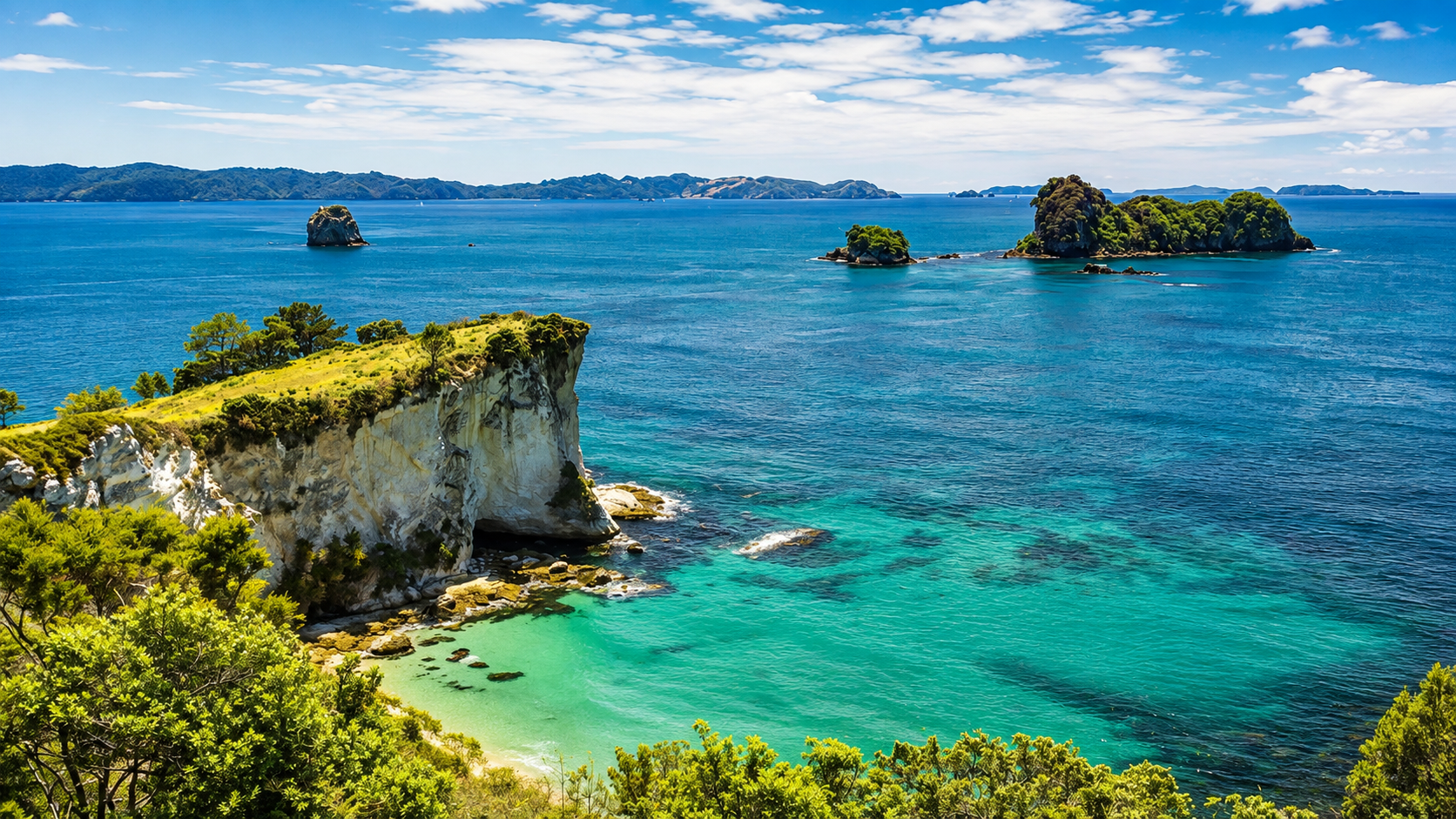
The Coromandel is one of those places that makes you slow down almost as soon as you arrive.
The roads twist around the coastline, pōhutukawa trees lean over quiet beaches, and small settlements appear between stretches of native bush. Even the drive feels like part of the trip.
Most visitors come for Cathedral Cove and Hot Water Beach, and both are worth experiencing. However, the Coromandel has far more to offer than two famous photographs. You can kayak through a protected marine reserve, climb to one of the best viewpoints on the peninsula, ride a handmade mountain railway and walk through old gold-mining tunnels.
My main advice is not to rush it. The Coromandel looks compact on a map, but the winding roads mean travelling between places can take longer than expected. Spend at least three days here rather than trying to race around the entire peninsula in one afternoon.
Here are six of the best things to do in the Coromandel.
Walk, Kayak or Cruise to Mautohe Cathedral Cove
1. Walk, Kayak or Cruise to Mautohe Cathedral Cove
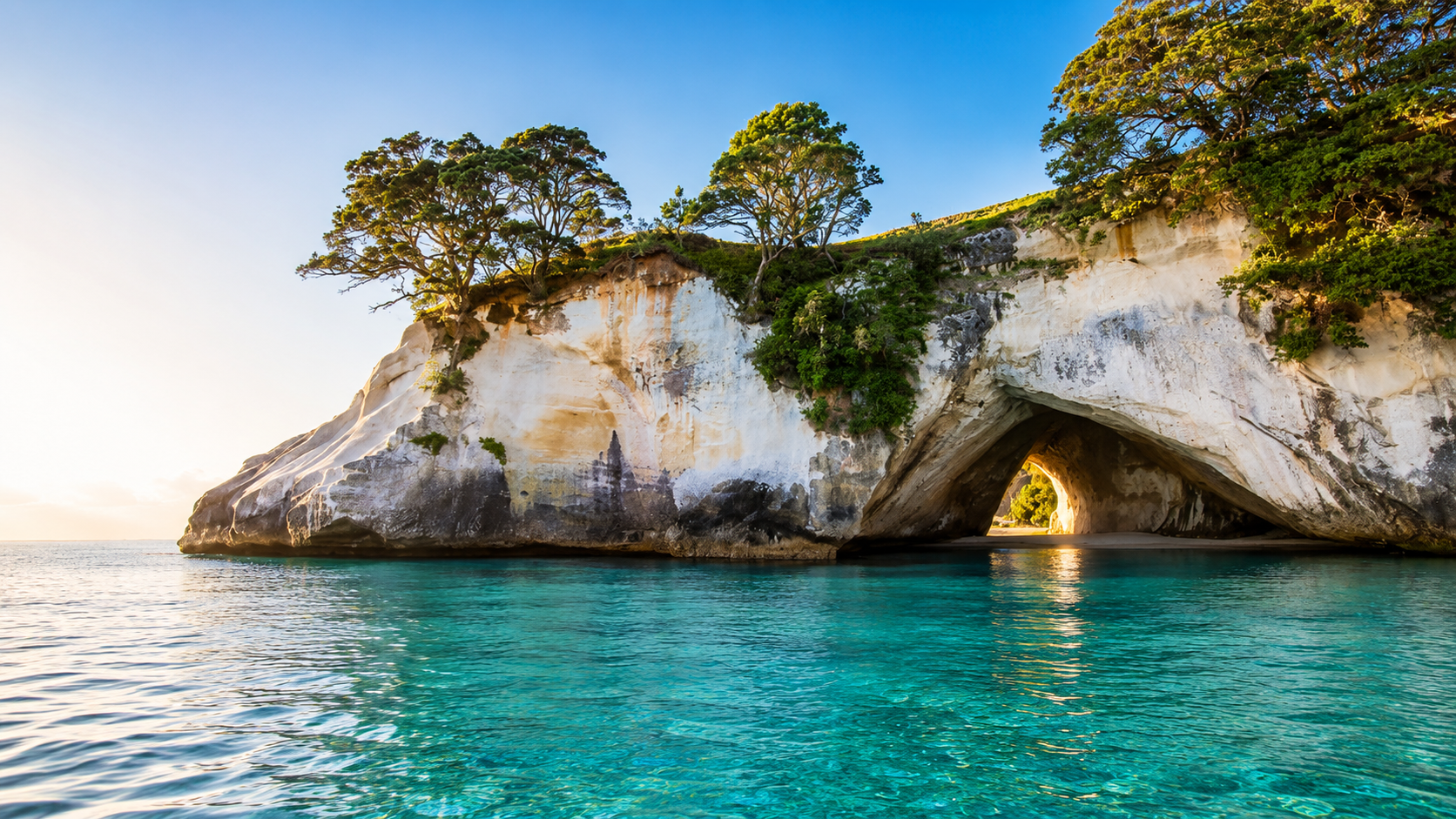
Mautohe Cathedral Cove is the most recognisable attraction in the Coromandel, and for good reason.
The enormous natural archway, pale cliffs, offshore rock formations and clear water create one of the most memorable coastal scenes in the North Island. The cove sits within the protected Te Whanganui-o-Hei Cathedral Cove Marine Reserve, near the seaside village of Hahei.
The walking track is currently open, although this coastline is naturally unstable and can be affected by slips, rockfalls and severe weather. Visitors should check the latest Department of Conservation alerts before setting out and avoid the track during or immediately after heavy rain.
Walking to Cathedral Cove
The walk begins from the top of Grange Road, where there is no public parking. Most visitors park in Hahei and walk or use the seasonal shuttle to reach the track entrance.
From Grange Road, allow approximately 90 minutes for the return walk, plus whatever time you want to spend at the beach. The track is well formed but includes hills, steep sections and plenty of steps. It can also become very hot during summer, and there is no running water along the route.
The walk is worthwhile, but I would not describe it as effortless. Take proper shoes, water and sun protection rather than turning up in jandals with a small bottle of water between three people.
Once you reach the cove, avoid sitting directly beneath the cliffs or lingering under the arch. Rockfalls are a genuine hazard here, even in fine weather. Move through the arch promptly and follow the safety signs around the beach.
Seeing Cathedral Cove from the water
For me, the best way to experience Cathedral Cove is from the water.
Guided kayaking tours leave from Hahei Beach and explore the coastline, islands, rock gardens and sheltered bays of the marine reserve. Tours are designed for different ability levels, and previous kayaking experience is not normally required. The classic guided trip generally takes around three hours.
A kayak gives you a much stronger sense of the coastline than simply walking down to the beach. You can move through sea caves, paddle around offshore rocks and approach the cove slowly from the water.
Boat tours are a better choice when you want to see more coastline without the physical effort. Some leave from Hahei, while others depart from Whitianga or Ferry Landing. Depending on the operator, trips may include sea caves, blowholes, marine-life viewing and opportunities to swim or snorkel.
My preference would be a kayak tour on a calm day and a boat trip when conditions are less settled or you are travelling with people who do not want to paddle.
My tip: Plan Cathedral Cove early in your stay. Walking, kayaking and boat trips can all be affected by weather and sea conditions, so an early booking gives you another chance if plans need to change.
Dig Your Own Pool at Hot Water Beach
2. Dig Your Own Pool at Hot Water Beach
Hot Water Beach is one of the most unusual free attractions in New Zealand.
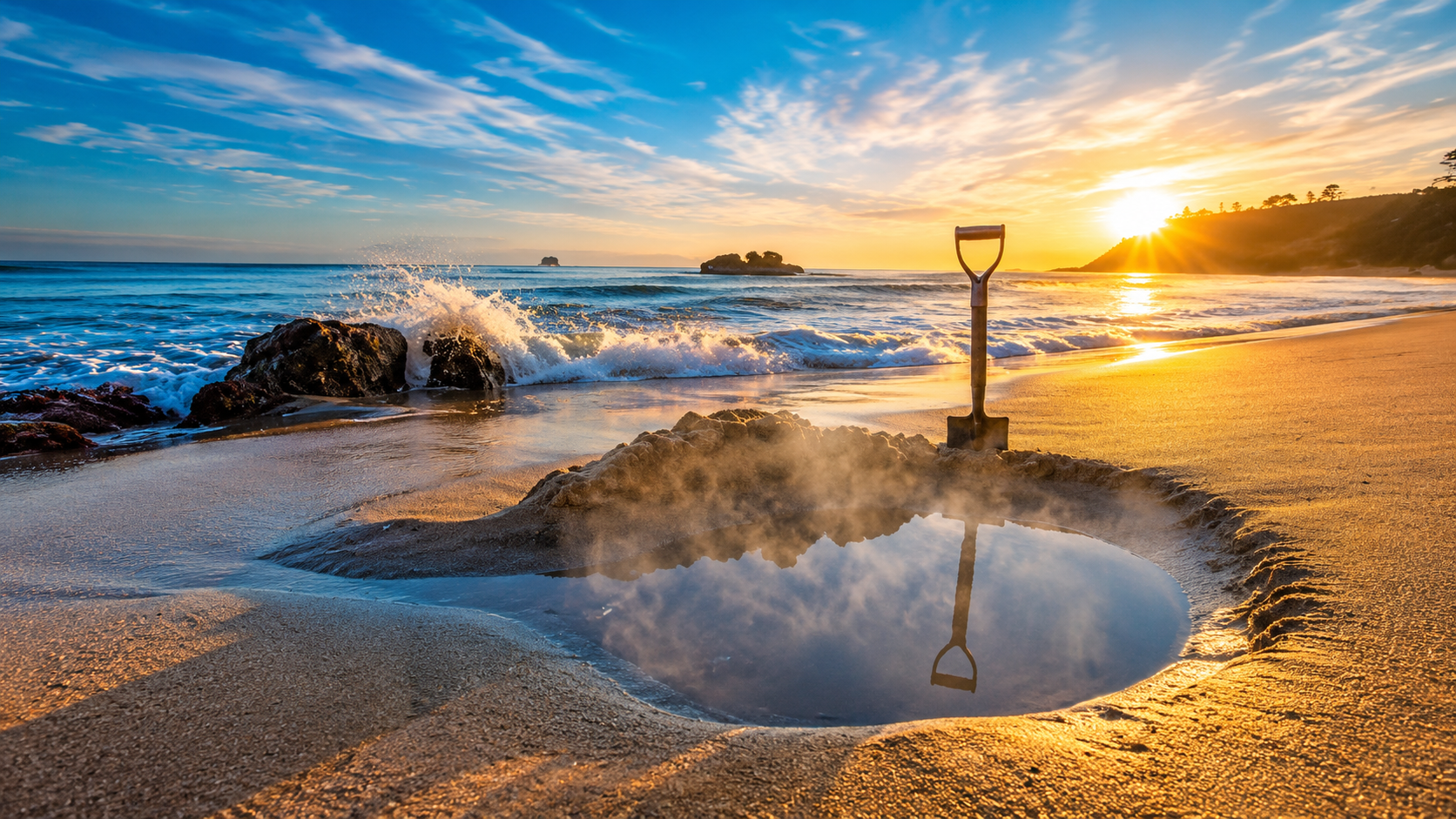
Geothermally heated water rises through the sand near the southern end of the beach. Around low tide, visitors dig shallow pools and mix the hot spring water with cooler seawater to create their own temporary beach spa.
The timing matters. The best visiting window is approximately two hours either side of low tide. At high tide, the section of sand above the springs is covered by the sea and you will not be able to dig a pool.
Check the tide before planning the rest of your day. There is no point arriving at midday simply because it suits your driving schedule when low tide was at seven in the morning.
Bring a strong spade rather than a tiny plastic beach shovel. Spades can also be hired locally. Once you begin digging, test the temperature carefully because some patches of water are extremely hot.
Hot Water Beach can become crowded, especially during summer and when low tide falls at a convenient time. Do not expect to have a large section of sand entirely to yourself. In my opinion, the atmosphere is part of the experience, but it is much more enjoyable when you arrive toward the beginning of the low-tide window.
The beach itself is exposed to the open Pacific Ocean and can have powerful waves and currents. Treat the hot pools and swimming beach as two separate activities, supervise children closely and follow any lifeguard instructions or warning signs.
Is Hot Water Beach worth visiting?
Yes, but manage your expectations.
You are not arriving at a peaceful private hot spring surrounded by silence. You may be sharing the area with dozens of people carrying spades, rebuilding collapsed walls and trying to stop cold waves from flooding their pools.
It is slightly chaotic, very Kiwi and genuinely fun when you embrace it.
Hot Water Beach is only a short drive from Hahei, so it makes sense to combine it with Cathedral Cove. Let the tide determine which activity you complete first.
My tip: Bring a bucket as well as a spade. It makes it much easier to add cold seawater when your pool becomes too hot.
Book a Coromandel tour including Cathedral Cove and Hot Water Beach
Ride the Driving Creek Railway
3. Ride the Driving Creek Railway
Driving Creek is one of the most original attractions in the Coromandel.
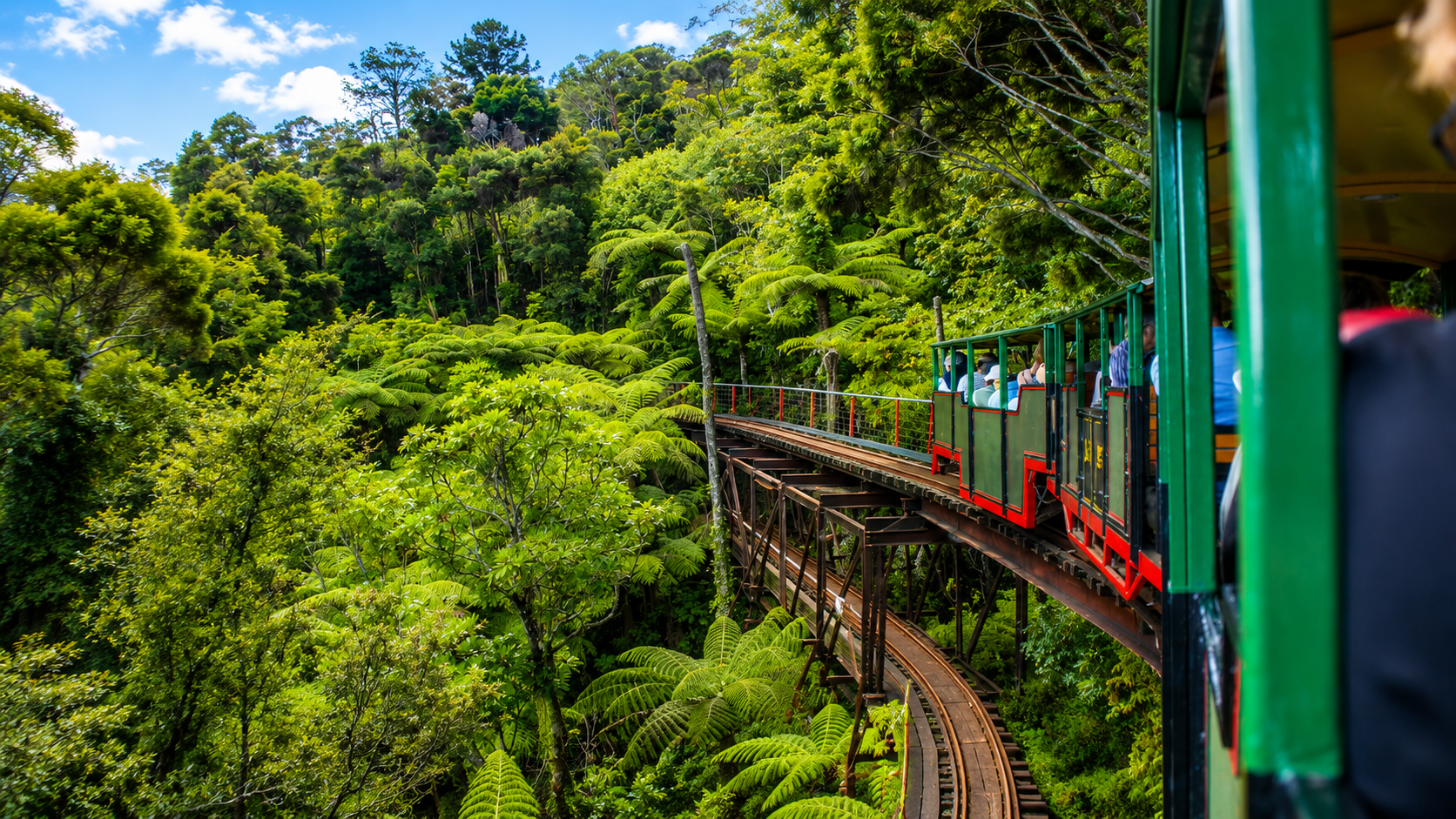
Located just outside Coromandel Town, the railway was created by potter, engineer and conservationist Barry Brickell. What began as a practical way to move clay and materials gradually became an extraordinary railway winding through regenerating native forest.
The guided journey takes approximately one hour and 15 minutes. The train crosses ten bridges, passes through three tunnels and climbs to the EyeFull Tower, where passengers can look across the forest towards the Hauraki Gulf. Driving Creek describes it as New Zealand’s only mountain railway.
I initially thought this might be mainly an attraction for children, but the story behind it makes it just as interesting for adults. It combines unusual engineering, pottery, conservation and classic Kiwi determination in a way that feels completely different from a standard scenic train ride.
The narrow track winds through the bush using tight corners, switchbacks and carefully constructed bridges. During the journey, the guide explains how the railway developed and how the surrounding land has been restored.
Driving Creek is also a useful wet-weather activity. A grey or lightly rainy day can actually suit the forest, while many of the Coromandel’s beach activities are far less enjoyable in poor conditions.
Add the Driving Creek Zipline
Travellers wanting more adventure can also take a guided zipline tour through the forest.
The railway is the better choice for families, mixed-age groups and anyone interested in the story of Driving Creek. The zipline is more suitable when you want to spend time among the trees and add a little more excitement.
You can also find pottery activities and workshops on site, reflecting the creative side of Barry Brickell’s original vision.
My tip: Book ahead during summer, school holidays and wet weekends. Arrive early enough to park, check in and look around rather than pulling into the car park at your exact departure time.
Climb the Kauaeranga Kauri Trail to the Pinnacles
4. Climb the Kauaeranga Kauri Trail to the Pinnacles
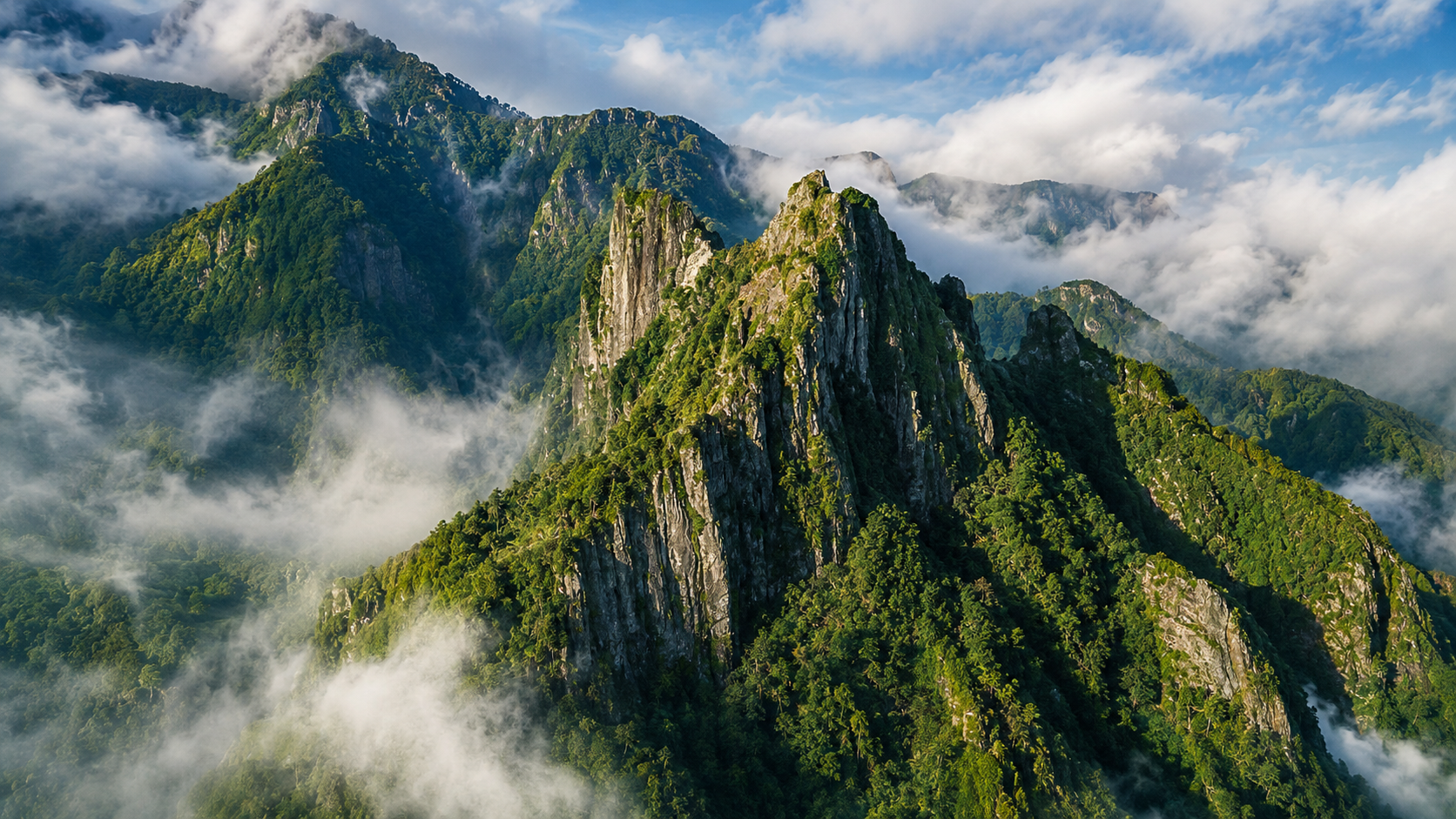
The Kauaeranga Kauri Trail, commonly called the Pinnacles Walk, is one of the best hikes in the Coromandel.
The track follows an old route once used by kauri bushmen before climbing through Coromandel Forest Park towards Pinnacles Hut and the 759-metre summit lookout.
It can be completed as a long day walk or an overnight trip. The return route using Webb Creek Track generally takes between six and seven and a half hours, while the longer circuit using Webb Creek and Billygoat tracks can take seven to eight and a half hours.
This is not a casual beach walk. There are long stairways, uneven rock, steady climbing and some slippery sections. The final climb beyond the hut is steeper and more exposed, with ladders and sharp drops near the track. DOC advises against attempting the summit section in high winds or rain.
The effort is worth it. From the summit platform, you can look across the bush-covered ranges and towards the eastern coastline of the peninsula.
Day walk or overnight?
Strong walkers can complete the Pinnacles as a day trip, but I think the overnight option offers the better experience.
Staying at Pinnacles Hut allows you to split the climb across two days and potentially reach the summit for sunset or sunrise, provided the weather is safe. It also means you can enjoy the forest without spending the whole day worrying about how much daylight remains.
The hut is popular and must be booked in advance when bookings are required. Carry all the food, clothing and equipment needed for an overnight backcountry trip rather than treating it like a hotel on the hill.
For a day walk, start early. The track takes longer than many visitors expect, particularly when the rocks are wet or the group includes people with different fitness levels.
My tip: Save dry socks and a warm layer for the top. Even when it feels warm in Thames, conditions can be cooler and windier near the Pinnacles.
Find guided Coromandel hikes and outdoor experiences
Read our complete guide to the best day hikes in New Zealand.
Walk to New Chum Beach
5. Walk to New Chum Beach
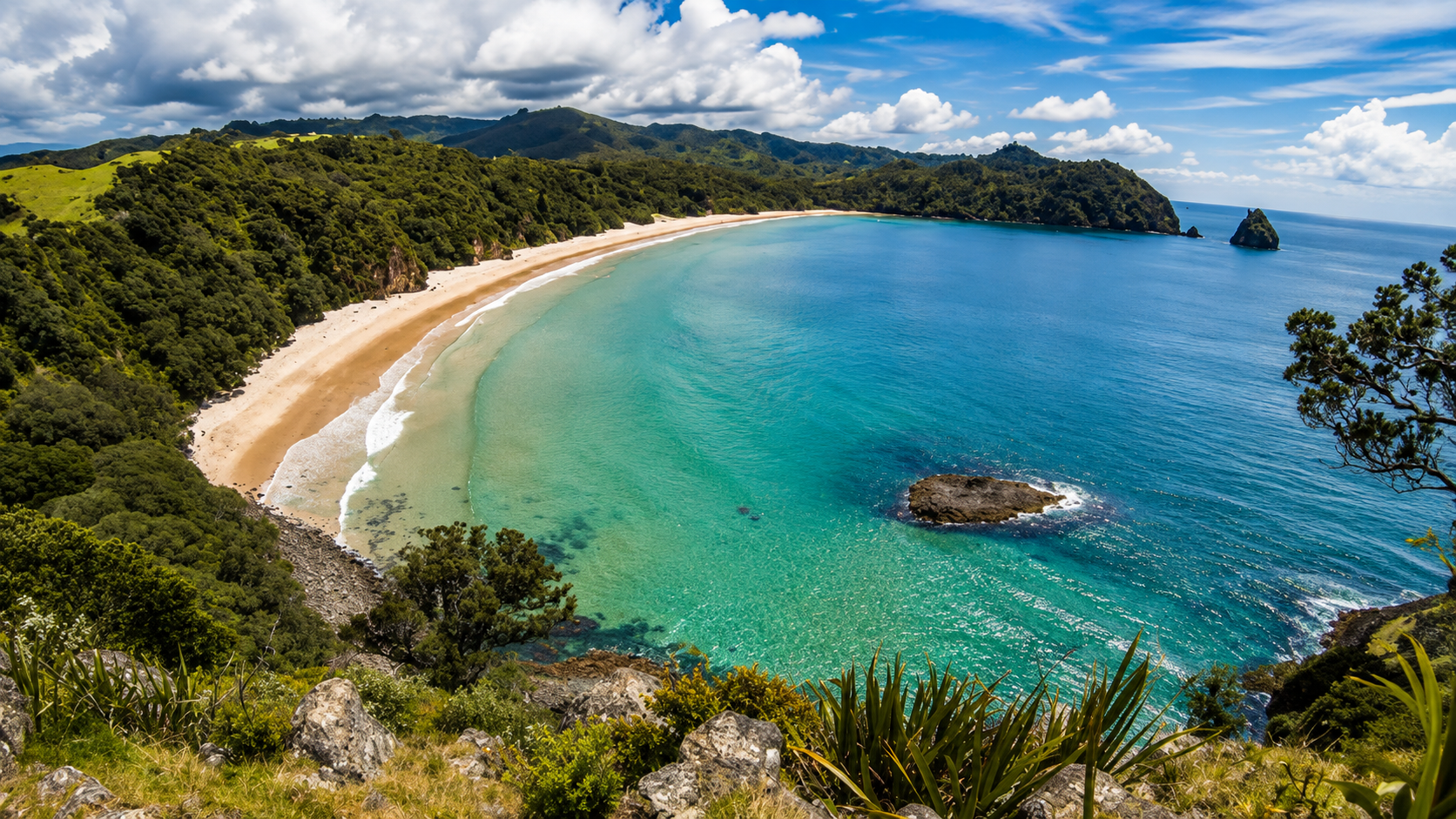
New Chum Beach, also known as Wainuiototo Bay, feels like the Coromandel people imagine before they arrive.
There is no road leading directly to the beach, no large car park beside the sand and no row of cafés or shops. You reach it by walking from the northern end of Whangapoua Beach, crossing the stream and following a partly formed route around the rocky shoreline and through native bush.
The walk generally takes around 30 minutes each way. Access includes a tidal stream crossing and rocky terrain, so visitors are advised not to attempt it within roughly two hours of high tide. There are no facilities, shops, bins or drinking water at New Chum Beach.
That lack of development is exactly why the beach feels special.
Once you arrive, you find a long curve of pale sand backed by pōhutukawa and native forest. It is a beautiful place for a picnic, a swim in suitable conditions or simply a few hours away from busy attractions.
My advice is to allow more time than you think you need. Walking all the way there, taking one photograph and immediately turning around misses the point. Pack lunch, bring plenty of water and spend time enjoying the beach.
The rocky section can be awkward when wet, so wear footwear with decent grip. Jandals may be fine once you reach the sand, but they are not ideal for scrambling over slippery stones.
Check the tide before you leave Whangapoua and remember that the return journey still includes the stream crossing. Do not wait until the water is already rising before deciding to head back.
My tip: Bring a small rubbish bag. There are no bins, and everything you carry into New Chum Beach needs to come back out with you.
Find accommodation near Whangapoua, Matarangi and the Coromandel
Explore Karangahake Gorge on Foot or by Bike
6. Explore Karangahake Gorge on Foot or by Bike
Karangahake Gorge sits at the southern edge of the Coromandel and makes an excellent first or final stop on a road trip through the region.
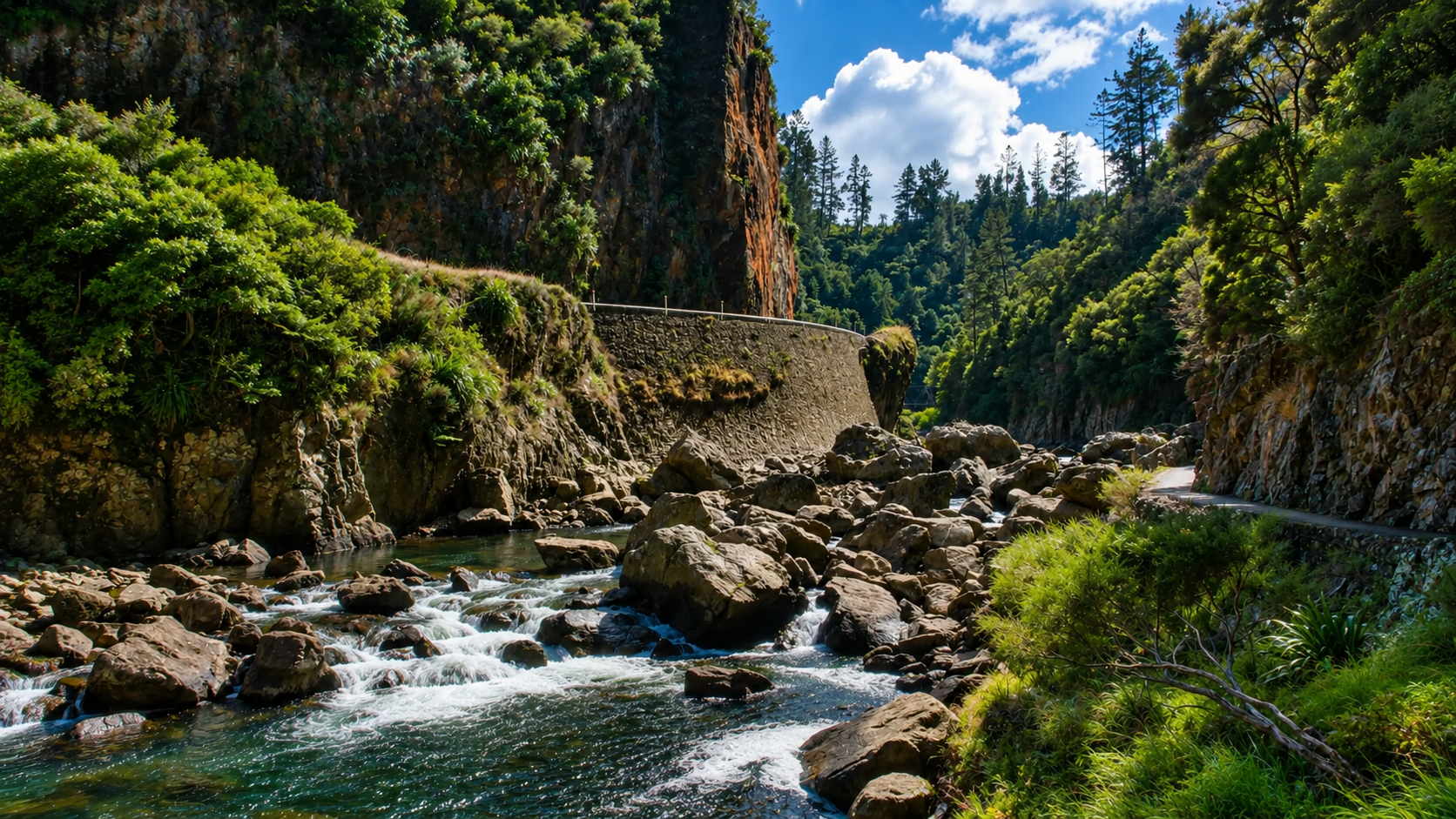
The gorge combines native bush, a fast-moving river, railway history and the remains of large-scale gold-mining operations. Old tunnels, bridges and industrial ruins are scattered through a landscape that is now surprisingly green and peaceful.
The Karangahake Gorge Historic Walkway follows part of the old railway route between Paeroa and Waihi. Highlights include steel truss bridges, a railway tunnel measuring more than one kilometre and the remains of the Victoria Battery complex. The walkway also forms part of the Hauraki Rail Trail.
Walk through the railway tunnel
The railway tunnel loop is one of the easiest ways to experience the gorge.
The tunnel has some lighting, but I would still carry a torch or use your phone light. It is long enough that the middle feels properly dark, and cyclists also use parts of the route.
Families and visitors with limited time may prefer the Windows Walk. This shorter track passes through old gold-mining tunnels with openings looking down into the river gorge before crossing a suspension bridge and returning on the opposite side.
The Windows Walk is one of the most interesting short walks in the upper North Island. It has enough darkness, history and unusual scenery to feel like an adventure without requiring an entire day.
Cycle part of the Hauraki Rail Trail
Hiring a bike is the best option when you want to travel farther through the gorge.
The Hauraki Rail Trail follows a mostly gentle route through parts of the region, making it more approachable than a technical mountain-bike track. Riders can pass through the railway tunnel, follow the Ohinemuri River and stop near historic sites along the way.
Guided rides, bike hire and shuttle services can simplify the transport, particularly when you prefer a one-way ride rather than retracing the same section.
Keep children close around steep drops, water and historic mining areas. Stay on marked tracks and never enter unmarked shafts or tunnels. Historic mining left contaminated soil in parts of the gorge, so DOC also advises visitors not to remove material and to wash their hands before eating.
My tip: Combine the gorge with lunch in Paeroa, Waihī or Waikino. Starting early allows you to enjoy the walk before continuing deeper into the Coromandel.
How Long Should You Spend in the Coromandel?
I recommend allowing at least three full days for the Coromandel.
Two days are enough to see Cathedral Cove, Hot Water Beach and one other attraction, but the trip will feel rushed. Four or five days would be better if you want to include the Pinnacles, northern beaches or a slow drive around the peninsula.
Remember that Coromandel roads are often narrow and winding. A place that looks close on the map may take much longer to reach than expected.
Avoid building an itinerary that depends on perfect weather every day. Coastal activities can be affected by wind and swell, walking tracks may close after heavy rain, and Hot Water Beach must be planned around the tide.
Suggested Three-Day Coromandel Itinerary
Day One: Karangahake Gorge and Coromandel Town
Begin at Karangahake Gorge and complete the railway tunnel loop or Windows Walk.
Continue through Thames and across to Coromandel Town. Spend the afternoon riding the Driving Creek Railway before staying locally.
Day Two: New Chum Beach and Whitianga
Drive across to Whangapoua and walk to New Chum Beach around the appropriate tide.
Continue through Kūaotunu towards Whitianga, where you can stay near restaurants, shops and the Mercury Bay waterfront.
Day Three: Cathedral Cove and Hot Water Beach
Travel to Hahei for the Cathedral Cove walk, kayak or boat tour.
Visit Hot Water Beach during the low-tide window. The order of these two activities should be based on the tide rather than the order listed here.
The Pinnacles requires an additional full day or an overnight trip. Do not try to squeeze it into the same day as Cathedral Cove.
Where to Stay in the Coromandel
Choosing the right base can save a surprising amount of driving.
Hahei or Hot Water Beach
Stay near Hahei when Cathedral Cove and Hot Water Beach are the main focus of your trip.
Hahei has a classic beach-holiday atmosphere and places you close to kayak tours, boat trips and the Cathedral Cove walking track.
View accommodation in Hahei and Hot Water Beach
Whitianga
Whitianga is the most practical base for many first-time visitors.
It has a larger range of restaurants, shops, supermarkets and accommodation than the smaller beach settlements. Boat tours also depart from the Whitianga and Ferry Landing area.
Compare hotels and holiday parks in Whitianga
Coromandel Town
Coromandel Town suits travellers visiting Driving Creek, New Chum Beach and the northern peninsula.
It has more of an artistic, historic character than the east-coast resort settlements and makes a good base for exploring quieter parts of the region.
Find accommodation in Coromandel Town
Thames or Kauaeranga Valley
Stay around Thames when the Pinnacles Walk is your main priority.
An early start is much easier when you are already near Kauaeranga Valley rather than driving across the peninsula before beginning a seven-hour walk.
When Is the Best Time to Visit the Coromandel?
Summer brings warm weather, long evenings and the best conditions for swimming and beach activities. It is also the busiest period, particularly from late December through January.
Spring and early autumn are my preferred times to visit. The weather can still be settled, accommodation is often easier to find, and popular attractions generally feel less crowded.
Winter can be peaceful and atmospheric, but shorter daylight hours and unsettled weather make some walks and coastal trips harder to plan. Driving Creek, Karangahake Gorge and the Coromandel’s towns can still work well for a winter escape.
Whatever the season, check road conditions, weather forecasts, tides and DOC track alerts before travelling.
Final Thoughts
The Coromandel is not a destination that should be reduced to one photograph beneath the Cathedral Cove arch.
Its appeal comes from the complete experience: winding coastal roads, forest walks, quiet settlements, old mining history and beaches that still require a little effort to reach.
For a first visit, my three essential experiences would be Mautohe Cathedral Cove, Hot Water Beach and the Pinnacles Walk. Together, they show the best of the region’s coast, geothermal activity and forested interior.
Families and travellers wanting a gentler trip should add Driving Creek. Those searching for quieter scenery should make the walk to New Chum Beach, while Karangahake Gorge is an excellent addition for anyone interested in walking, cycling or New Zealand’s gold-mining past.
Above all, leave some space in your itinerary. The best moments in the Coromandel are often the unplanned ones—a roadside lookout, an empty stretch of sand or a small beach you had never heard of before arriving.
Ready to explore the Coromandel?
View and compare the best Coromandel tours, activities and coastal adventures
