

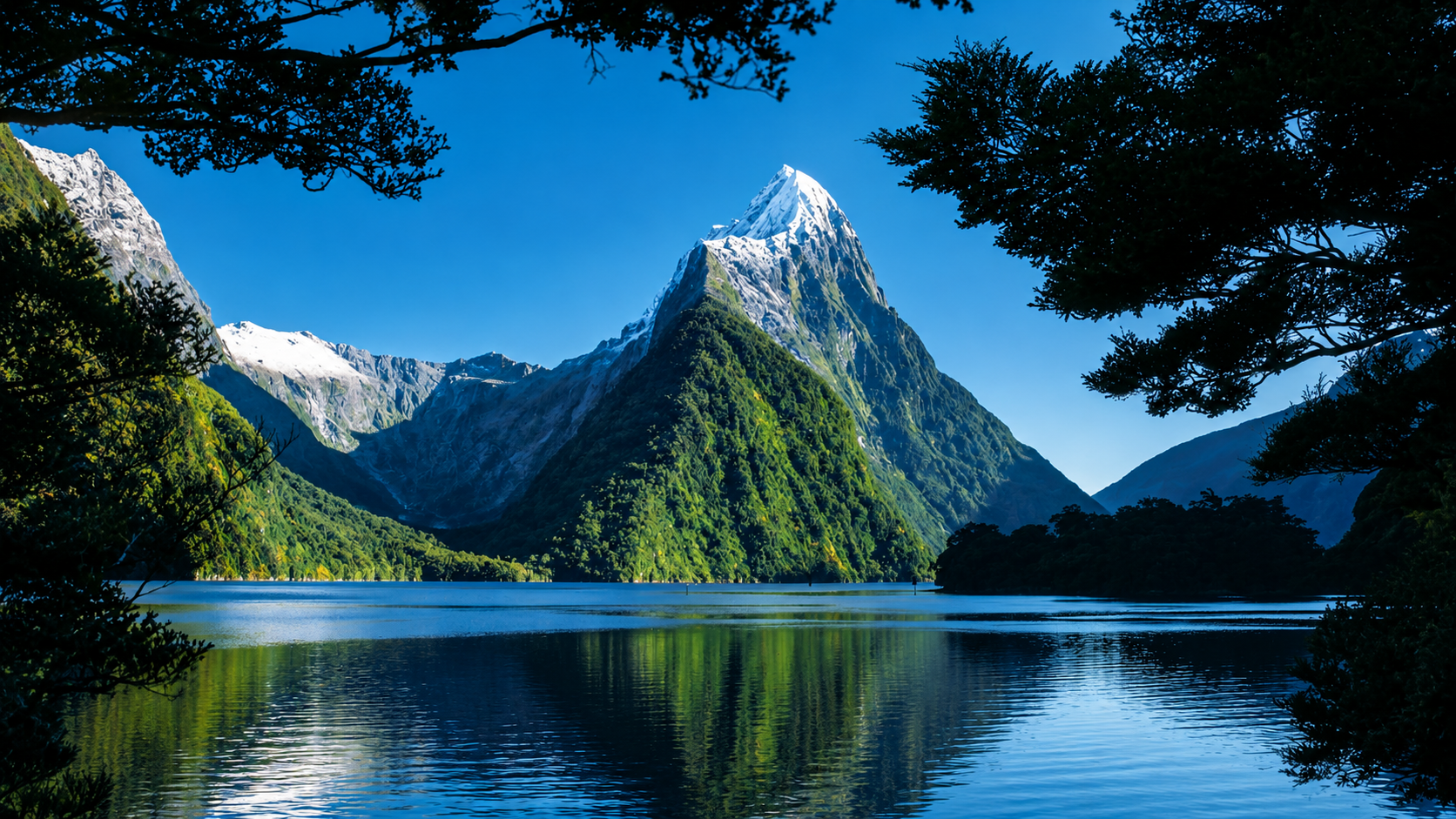
FIORDLAND
5 Best Things to Do in Fiordland,
New Zealand
Fiordland is one of those places where New Zealand suddenly feels much bigger.
The roads become quieter, the mountains close in around you, native forest covers almost every slope and waterfalls seem to appear from places where you could have sworn there was only bare rock an hour earlier. Much of the landscape feels untouched, and once you move beyond Te Anau there are long stretches where towns, shops and mobile reception simply disappear.
That remoteness is a big part of what makes Fiordland special.
It is also why I think Fiordland deserves more than a rushed day trip from Queenstown.
Piopiotahi/Milford Sound may be the place most visitors have heard of, but it is only one part of a huge region shaped by glaciers over millions of years. Fiordland contains 14 fiords, enormous lakes, deep U-shaped valleys, dense temperate rainforest and some of New Zealand's most famous walking tracks.
Patea/Doubtful Sound feels completely different from Milford. The Kepler and Routeburn tracks give you another view of the landscape entirely. Lake Te Anau hides a glowworm cave system beneath its western shore, while a scenic flight reveals just how little of this region can actually be reached by road.
Then there is the weather.
Fiordland is wet. Very wet.
That should not automatically be seen as a problem. Rain is one of the reasons Fiordland looks the way it does. DOC records an average of roughly seven metres of rainfall a year across parts of the region, spread over around 200 rain days. That rain feeds the forest, fills the rivers and turns otherwise dry cliff faces into temporary waterfalls.
A perfectly clear day in Fiordland is spectacular. A wet day can be spectacular in a completely different way.
The trick is arriving with realistic expectations, carrying a decent waterproof jacket and leaving enough flexibility in your itinerary for the weather to have an opinion.
For a first visit, these are the five Fiordland experiences I would build the trip around.
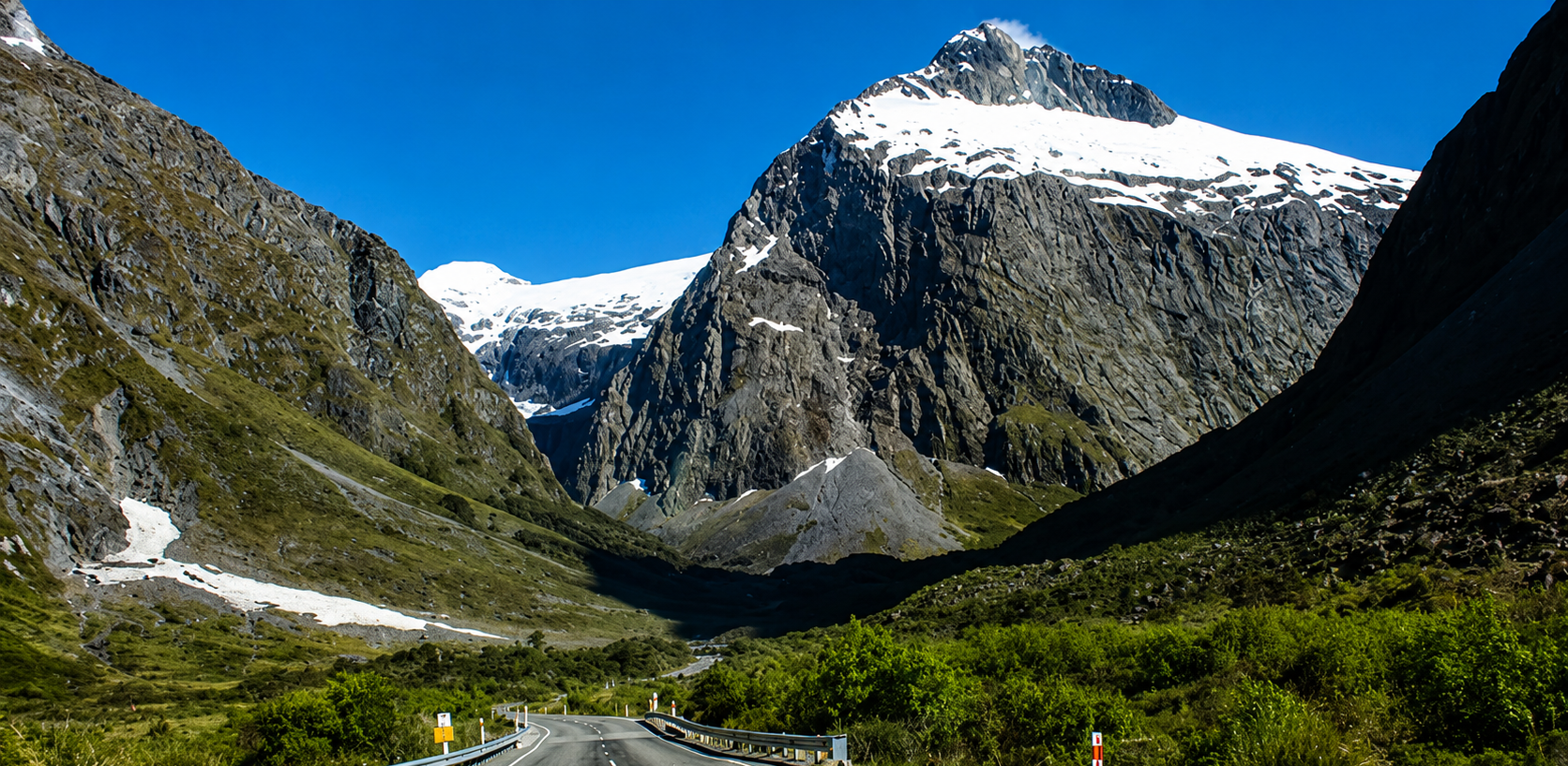
Drive the Milford Road and Cruise Piopiotahi/Milford Sound
1. Drive the Milford Road and Cruise Piopiotahi/Milford Sound
Best for: First-time Fiordland visitors
Allow: A full day from Te Anau
My pick: Self-drive if you enjoy road trips; coach if you would rather spend the day looking out the window
My verdict: Famous for a reason, and still the Fiordland experience I would recommend first
Milford Sound is one of those New Zealand destinations that can suffer slightly from its own reputation.
You see it on travel brochures, tourism campaigns and South Island itineraries so often that it is easy to wonder whether it can possibly live up to all of that attention.
I think it does.
But the important thing is not to treat Milford Sound as nothing more than the boat cruise at the end.
The Milford Road is a huge part of the day.
The Drive From Te Anau
State Highway 94 leaves Te Anau and gradually works its way deeper into Fiordland National Park. At first the landscape feels open, with views across Lake Te Anau and the surrounding valleys, but the further you travel, the more the mountains begin taking over.
The road passes through beech forest, huge glacial valleys and increasingly alpine terrain before reaching the Homer Tunnel and dropping steeply towards Milford Sound.
The distance from Te Anau to Milford is roughly 120 kilometres. Driving straight through takes a minimum of around two hours, but that is not how I would do it. Official Fiordland advice recommends allowing significantly longer if you want to stop along the way, with three to four hours giving you much more room for viewpoints and short walks.
That sounds like a lot of time for 120 kilometres.
Once you start driving it, it makes sense.
There always seems to be another reason to stop.
Where I Would Stop Along the Milford Road
The Eglinton Valley is one of the first places that gives you a real sense of Fiordland's scale. The road runs through a broad, flat valley with mountains rising sharply on either side, and on a clear day it is one of those places where getting back into the car immediately feels slightly wrong.
Mirror Lakes is another easy stop, particularly when the water is calm enough to reflect the surrounding mountains. Further along, Lake Gunn and the forest around the upper Eglinton Valley give you a quieter, greener side of the journey.
By the time you reach Monkey Creek, the landscape has become much more alpine. From there the road continues towards the Homer Tunnel, which takes you directly through the mountain before the dramatic descent into the Cleddau Valley.
Even if Milford Sound did not exist at the end, this would still be one of the most impressive road trips in New Zealand.
Do Not Rush the Homer Tunnel
The Homer Tunnel is where people who are running late for a cruise tend to start looking at the clock.
I would avoid that situation entirely.
Traffic controls at the tunnel can create delays, road conditions can change and parking at Milford still takes time. Fiordland's official road advice recommends allowing around 30 minutes after arrival to park and walk or transfer to the cruise terminal, as well as checking in before the cruise departs.
Leaving Te Anau too late because the navigation app says you can make it is simply not worth the stress.
I'd rather arrive early, walk around Milford and have a coffee than spend the entire road wondering whether the boat is going to leave without me.
Arriving at Milford Sound
Once you reach Piopiotahi/Milford Sound, the scale changes again.
Mitre Peak rises almost directly from the water, steep mountains surround the fiord and the small visitor area at the end of the road feels almost insignificant compared with everything around it.
This is why I think getting onto the water matters.
You can get beautiful views from the shore, but a cruise gives you a completely different sense of the landscape. Once the boat moves away from the terminal, the cliffs begin towering above you and waterfalls that looked fairly modest from a distance suddenly appear enormous.
The usual cruise heads towards the outer fiord and the Tasman Sea before returning through the main channel.
There are different boat sizes and styles available, but I would not overthink the decision. What matters most is getting out onto the fiord with enough time to stand outside and actually look around.
Get Outside on the Boat
Even if the weather is less than perfect, I would spend at least part of the cruise outside.
You feel the place much more.
The wind, waterfall spray and scale of the cliffs are all part of the experience.
Standing inside looking through a window is comfortable, but Fiordland is one of those places where getting slightly wet occasionally seems appropriate.
Take a waterproof layer and go outside.
Milford Sound in the Rain
This is where Fiordland is different from many sightseeing destinations.
Rain does not necessarily make Milford worse.
Milford Sound itself receives enormous amounts of rainfall, and wet weather creates temporary waterfalls across the surrounding cliffs.
On a dry, blue-sky day you get clear mountain views and reflections.
On a wet day the upper mountains may disappear into cloud, but the cliffs come alive with water.
I would happily experience either.
The only thing I would avoid is arriving with one exact photograph in mind and being disappointed when the weather produces something different.
Fiordland does not work like that.
Self-Drive or Coach?
I would self-drive if you enjoy road trips, like stopping for photographs and want control over your day. Being able to pull over when the weather suddenly clears or when a view catches your attention is a big advantage.
A coach makes more sense if you are not comfortable driving mountain roads, would rather concentrate on the scenery or simply do not want the long drive back to Te Anau after a full day.
I would be especially cautious about making Milford a self-drive day trip from Queenstown. The road is already long enough from Te Anau without adding several more hours before and afterwards.
Aotearoa Adventures Tip
If Milford Sound is one of the main reasons for your Fiordland visit, stay in Te Anau the night before. Leave early, allow plenty of time along Milford Road and make the journey part of the experience rather than something you need to get through.
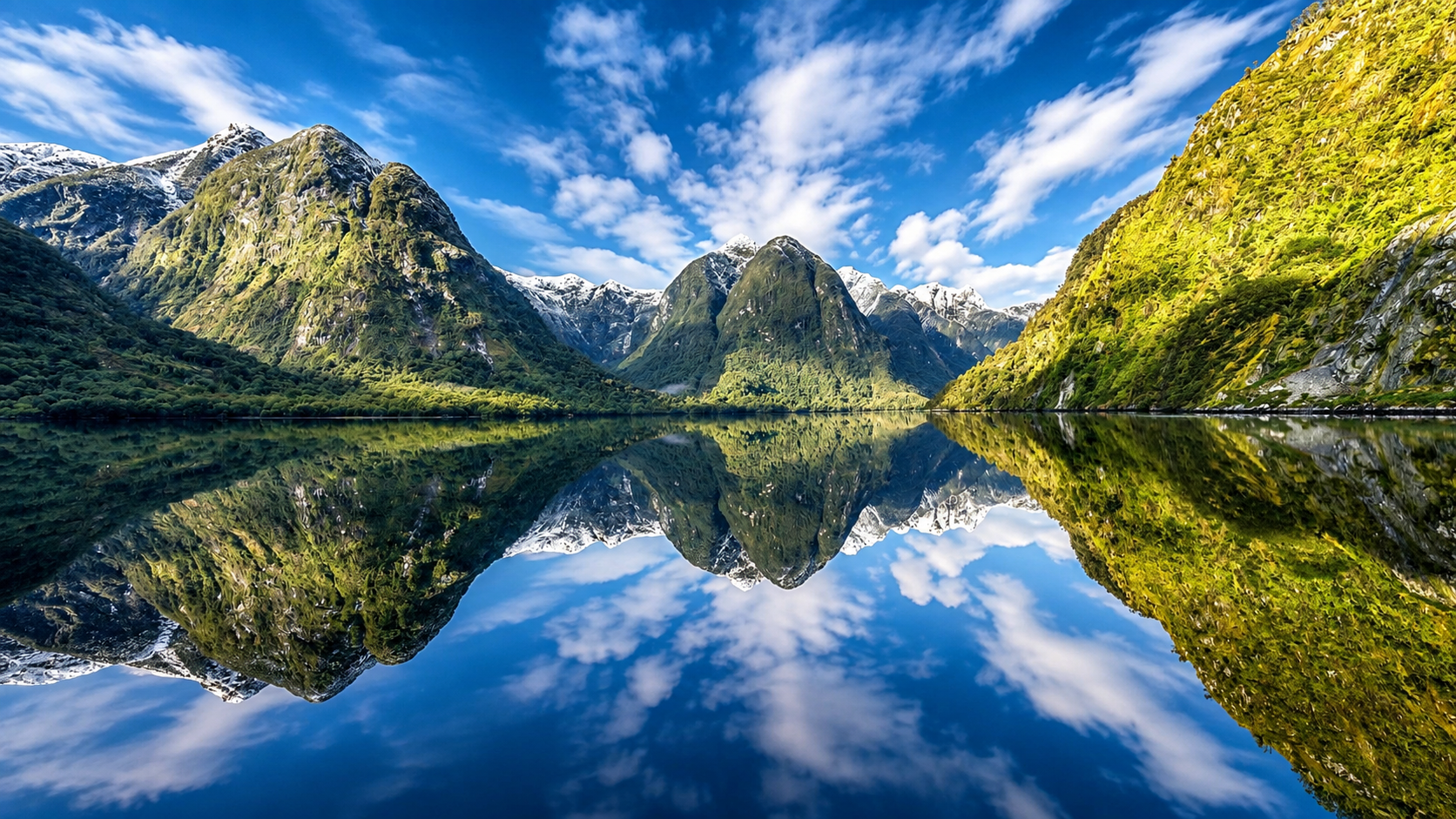
Experience the Wilderness of Patea/Doubtful Sound
2. Experience the Wilderness of Patea/Doubtful Sound
Best for: Wilderness, couples, photographers and travellers who want somewhere quieter
Allow: A full day, or overnight if the budget allows
My pick: Overnight if this is a once-in-a-lifetime trip
My verdict: Milford is more immediately dramatic; Doubtful feels more remote
Patea/Doubtful Sound is the experience I would add once you have decided Fiordland deserves more than one day.
It is tempting to think of Milford and Doubtful Sound as two versions of the same thing.
They are not.
Milford is compact, dramatic and relatively accessible.
Doubtful is larger, quieter and considerably more difficult to reach.
That difficulty is exactly what makes it special.
Doubtful Sound stretches for around 40 kilometres from the head of the fiord to the Tasman Sea and is the deepest of New Zealand's fiords, reaching approximately 421 metres. It also splits into several long arms, giving it a much more expansive feeling than Milford.
Getting There Is Part of the Experience
There is no public road into Doubtful Sound.
You normally begin at Manapouri, around 20 minutes from Te Anau, and take a boat across Lake Manapouri to West Arm. From there a coach carries you over the 671-metre Wilmot Pass before descending towards Deep Cove, where you board the main Doubtful Sound cruise.
That makes the journey considerably more involved than Milford.
I actually like that.
You do not simply park beside the attraction.
You cross one of New Zealand's great lakes, travel over a mountain pass and eventually arrive somewhere with no normal road connection to the rest of the country.
By the time you reach the fiord, you already feel like you have travelled into Fiordland.
Doubtful Sound Feels Enormous
The biggest difference I notice when comparing the two fiords is space.
Milford's cliffs seem to close around you.
Doubtful opens out into wide channels, long arms and stretches of water where there can be almost no obvious sign of people at all.
There is no busy settlement at the end and no state highway running into it.
Much of the day is simply forest, mountain and water.
That is exactly what you are paying for.
The Silence
Some Doubtful Sound cruises include a period where the engines are turned off and passengers are asked to remain quiet.
It sounds like the sort of thing that could easily feel staged.
Instead, it often makes people realise how much background noise they are used to.
Once the engines stop, you begin hearing the water against the boat, birds in the forest, waterfalls and wind.
The name Patea is associated locally with the idea of a place of silence, and it fits the experience remarkably well.
What About Wildlife?
Doubtful Sound supports kekeno/New Zealand fur seals, tawaki/Fiordland crested penguins and New Zealand's southernmost population of bottlenose dolphins.
I would never choose a fiord cruise solely because you expect to see wildlife.
Animals are not working to a timetable.
If dolphins appear beside the boat, fantastic. If seals are sitting on the rocks, enjoy them.
If you see very little wildlife, the landscape is still more than enough reason to be there.
Day Cruise or Overnight Cruise?
This is one of the few places where I think the overnight option genuinely changes the experience rather than simply making it longer.
On a day trip you see Doubtful Sound.
On an overnight trip you have time to settle into it.
The day starts quiet and becomes quieter once other visitors disappear. Depending on the trip and conditions, overnight experiences can include kayaking or smaller-boat exploration, followed by dinner and a night surrounded by the fiord rather than driving back to a motel.
It is expensive.
I would never pretend otherwise.
But if you are choosing one major experience for a special New Zealand trip, an overnight Doubtful Sound cruise is the sort of thing I would consider spending the extra money on.
Milford or Doubtful Sound?
If it is your first Fiordland visit and you only have one day, choose Milford.
You get the Milford Road as well as the cruise, and the scenery is immediately spectacular.
If you have already seen Milford, dislike busy attractions or simply want the deeper wilderness experience, choose Doubtful.
If time and budget allow, I would do both.
They are different enough that I do not think one makes the other unnecessary.
Aotearoa Adventures Tip
Give Doubtful Sound the entire day. The Lake Manapouri crossing and Wilmot Pass are part of the adventure, so do not think of them as transport you need to get through before the “real” activity begins.
VIEW DOUBTFUL SOUND WILDERNESS CRUISES
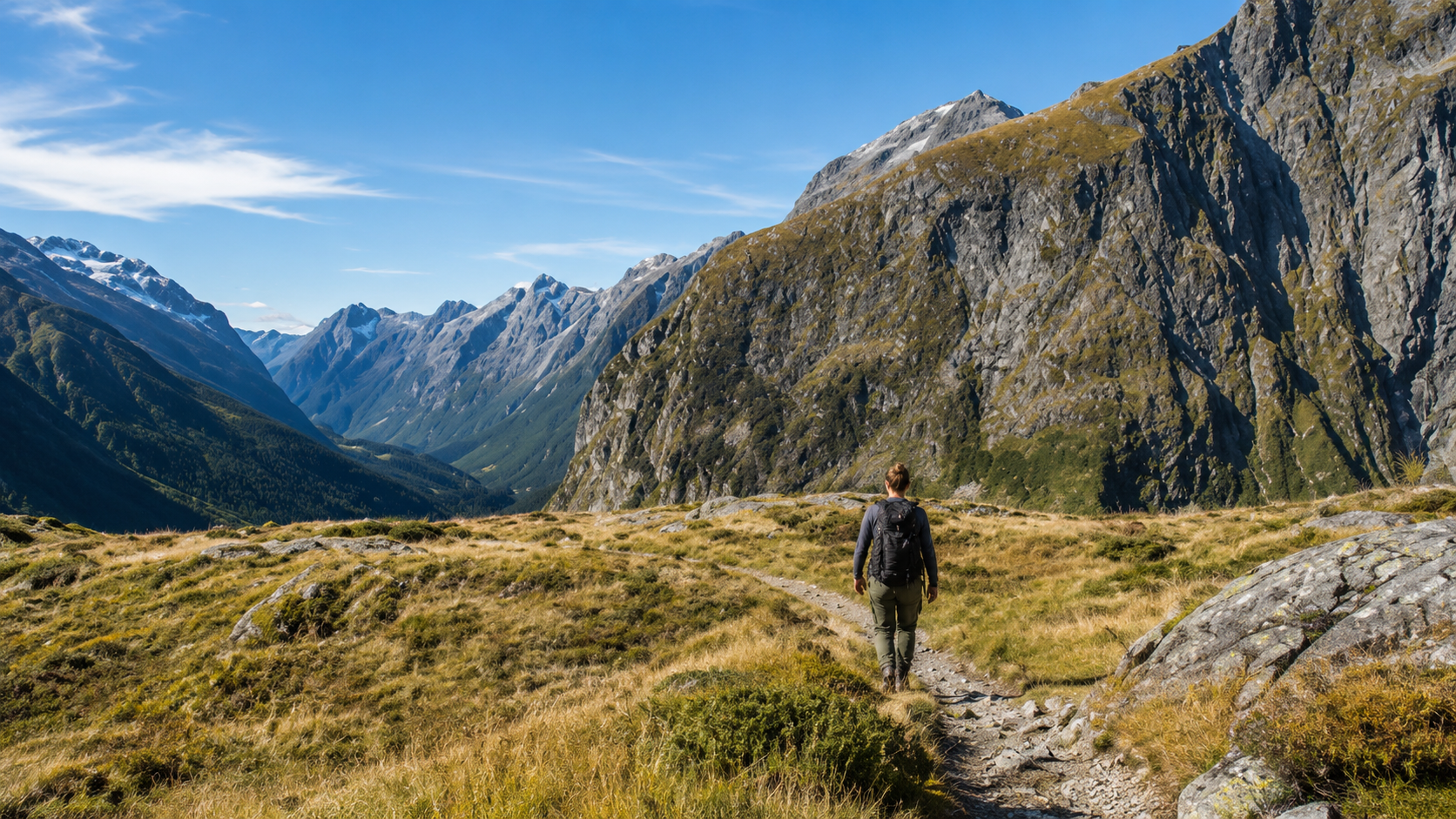
Walk One of Fiordland's Great Tracks
3. Walk One of Fiordland's Great Tracks
Best for: Hikers, photographers and anyone who wants to experience Fiordland away from a boat
Allow: From a couple of hours to several days
My pick for most visitors: Key Summit
My verdict: Do not visit Fiordland without walking somewhere
Fiordland is one of the great walking regions of New Zealand.
The Milford, Kepler and Routeburn tracks are internationally known, but you do not need to disappear into the wilderness for four days to experience them.
There are excellent day walks that give you a taste of the same landscapes without needing hut bookings or a heavy overnight pack.
For a first visit, Key Summit is probably my favourite.
Key Summit
The Key Summit walk begins at The Divide, around 85 kilometres along the Milford Road from Te Anau.
You initially follow the Routeburn Track through silver beech forest before reaching the Key Summit turn-off. DOC suggests roughly an hour to the junction and another 20 minutes of climbing to reach the summit area.
The interesting part is how quickly the landscape changes.
You begin under forest.
Then the track climbs higher and the vegetation becomes lower and more alpine.
Eventually you arrive around a series of tarns and wetlands with views towards the Humboldt and Darran mountains and down into the surrounding valleys.
For the amount of time involved, the reward is excellent.
Why Key Summit Works So Well
It is long enough to feel like you have actually been for a proper walk but short enough that it does not necessarily consume the entire day.
That makes it particularly attractive for people driving Milford Road.
The only problem is timing.
I would not try to squeeze Key Summit into a morning where your cruise booking is already tight. Mountain walks and strict boat departure times are not an ideal combination.
If you want to walk Key Summit before Milford, leave very early and build in plenty of spare time. Otherwise, give it a separate day or do it on the return journey only if daylight and conditions genuinely allow.
The Kepler Track
If you are staying in Te Anau and want to walk without driving all the way up Milford Road, the Kepler Track gives you several good options close to town.
The easiest approach is to walk from the Kepler Track car park through native beech forest towards Dock Bay and Brod Bay on the shore of Lake Te Anau. DOC lists the walk to Brod Bay at around 5.6 kilometres from the car park, and in summer you can also arrange a water taxi to shorten the return journey.
If you are fit and want a much bigger day, continue towards Luxmore Hut.
Beyond Brod Bay, the track climbs steeply through forest and eventually emerges above the bushline. The hut sits at around 1,085 metres, with wide views over Lake Te Anau, the surrounding basin and the Kepler Mountains.
This is a proper full-day walk.
I would not choose it simply because you feel you ought to do the longest version.
Brod Bay gives you a lovely taste of the track without needing to sacrifice the whole day.
What About the Full Great Walks?
If hiking is the main purpose of your South Island trip, then Fiordland becomes a completely different proposition.
The Kepler is normally walked over four days and three nights, while the Routeburn is commonly completed over three days and two nights. Bookings are required during the Great Walk season and popular dates can fill well ahead.
These are trips to plan around, not things to casually add after booking accommodation.
Outside the Great Walk season, conditions become considerably more serious. Snow, ice, flooding and avalanche hazards can affect the alpine sections, and DOC advises that winter travel should only be attempted by people with suitable skills, experience and equipment.
That advice is worth taking literally.
Fiordland's mountains do not become easier because you only have one day left before your flight home.
Which Fiordland Walk Would I Choose?
For most first-time visitors, I would choose Key Summit if the weather is clear.
If the mountains are covered by low cloud, I would choose a lower forest or lakeside walk instead. There is not much point putting in the climb to a panoramic viewpoint when the panorama is currently inside a cloud.
If you are staying in Te Anau and want a relaxed morning, Brod Bay is excellent.
If hiking is a major priority and you have the fitness, Luxmore Hut gives you a much bigger day.
Aotearoa Adventures Tip
Go into the DOC visitor centre in Te Anau before tackling the bigger walks. Fiordland weather changes rapidly, and a five-minute conversation about current conditions is much more useful than relying on a blog post written months earlier.
This is also one section where I would not force an affiliate link. Fiordland's free walking is one of the reasons the region feels balanced against the more expensive cruise experiences.
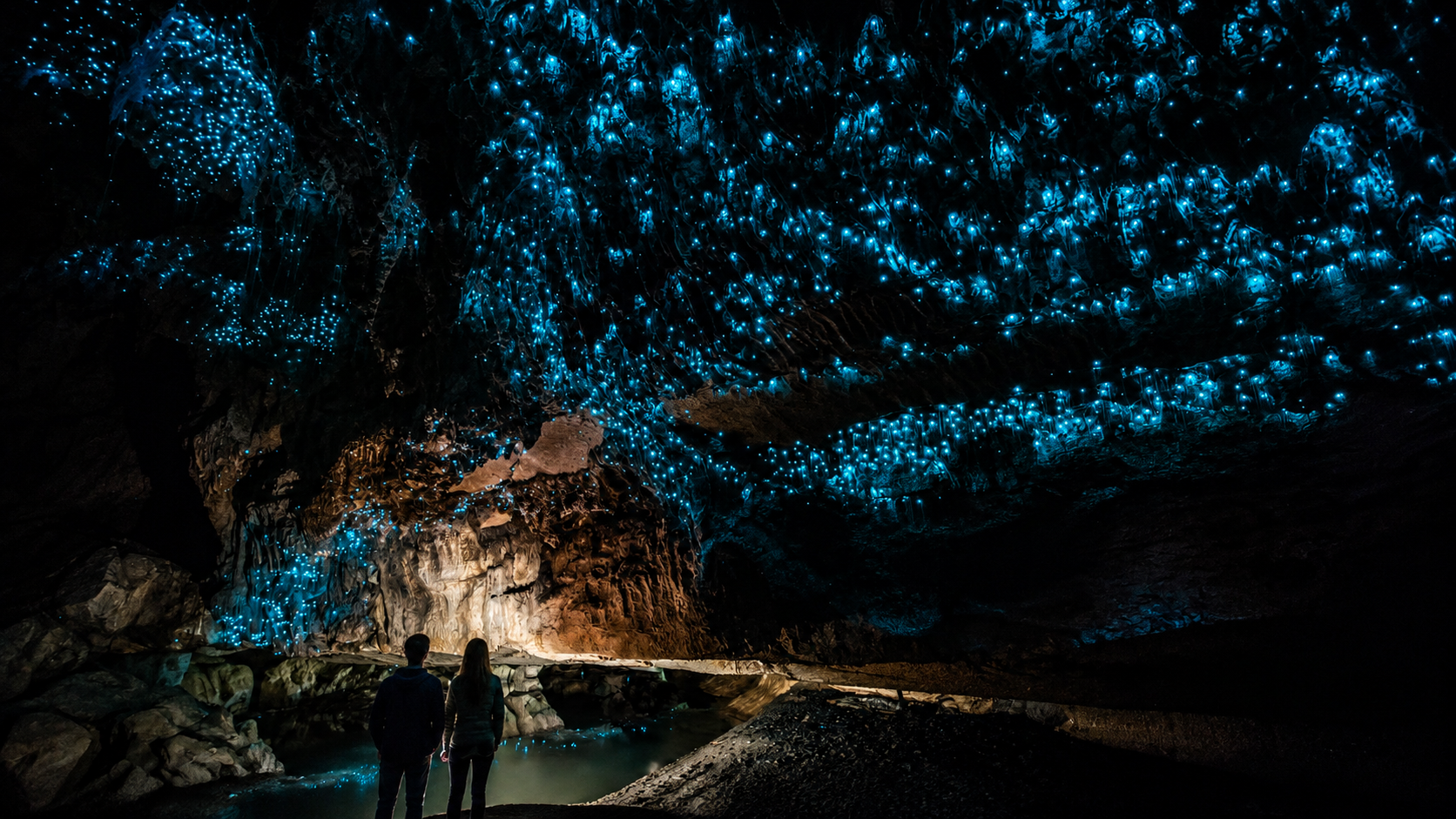
4. Visit the Te Anau Glowworm Caves
Best for: Couples, families, rainy days and arrival afternoons
Allow: Around 2½ hours
My pick: Do it on your first afternoon or evening in Te Anau
My verdict: One of the easiest experiences to add without losing a full Fiordland day
The Te Anau Glowworm Caves are completely different from everything else in this guide.
After spending your time looking up at mountains, the experience takes you underground.
The trip begins in central Te Anau with a boat journey across Lake Te Anau towards its western shore. Even before reaching the cave, the lake crossing is worthwhile because the town gradually disappears behind you and the Fiordland ranges begin getting closer.
Then you leave the open landscape and head underground.
The Cave Is More Than the Glowworms
One thing I like about the Te Anau experience is that the cave itself is interesting.
Water still actively moves through the system, carving passages and creating underground waterfalls and streams. Parts of the cave are surprisingly noisy, particularly when you first enter.
Then, as you move further inside, the experience becomes quieter.
Eventually you reach the glowworm grotto.
The lights are reduced and your eyes begin adjusting to the darkness. Slowly, tiny blue-green points of light appear overhead until sections of the cave roof start looking more like a night sky.
The entire experience, including the lake crossing, is currently around 2.5 hours.
Put the Camera Away
Photography and video are not permitted inside the glowworm cave, partly because light affects the experience and the glowworms themselves.
I actually think this improves the visit.
For once, everyone has to stop trying to photograph what they are looking at.
You simply sit quietly and experience it.
There are not many travel attractions left where your phone becomes completely irrelevant for a while.
Is It Worth Visiting If You Have Been to Waitomo?
I still think so.
The glowworms themselves may be familiar, but the setting is different.
The Lake Te Anau journey, active cave system and wider Fiordland environment make the experience feel distinct from simply visiting another glowworm cavern.
If you are already staying in Te Anau, it is also incredibly convenient.
Who Might Not Enjoy It?
The natural cave has steps and sections requiring visitors to bend, so it is not suitable for every mobility level. The tour also includes a quiet section inside the glowworm grotto, which may be difficult for some very young children.
That is worth knowing before booking rather than discovering at the cave entrance.
Why I Would Put It on Arrival Day
This is the practical reason I like the glowworm caves.
Your full daylight days in Fiordland are valuable.
You want them for Milford, Doubtful Sound and hiking.
The glowworm caves can fit nicely into the afternoon or evening after you arrive in Te Anau, leaving your next morning completely free for a bigger adventure.
That is a much better use of the itinerary than sacrificing your clearest mountain day to something underground.
Aotearoa Adventures Tip
If you have just driven down from Queenstown, check into your accommodation, have something to eat and use the glowworm caves as your first proper Fiordland experience. It makes arrival day feel worthwhile without trying to force a major hike into the afternoon.
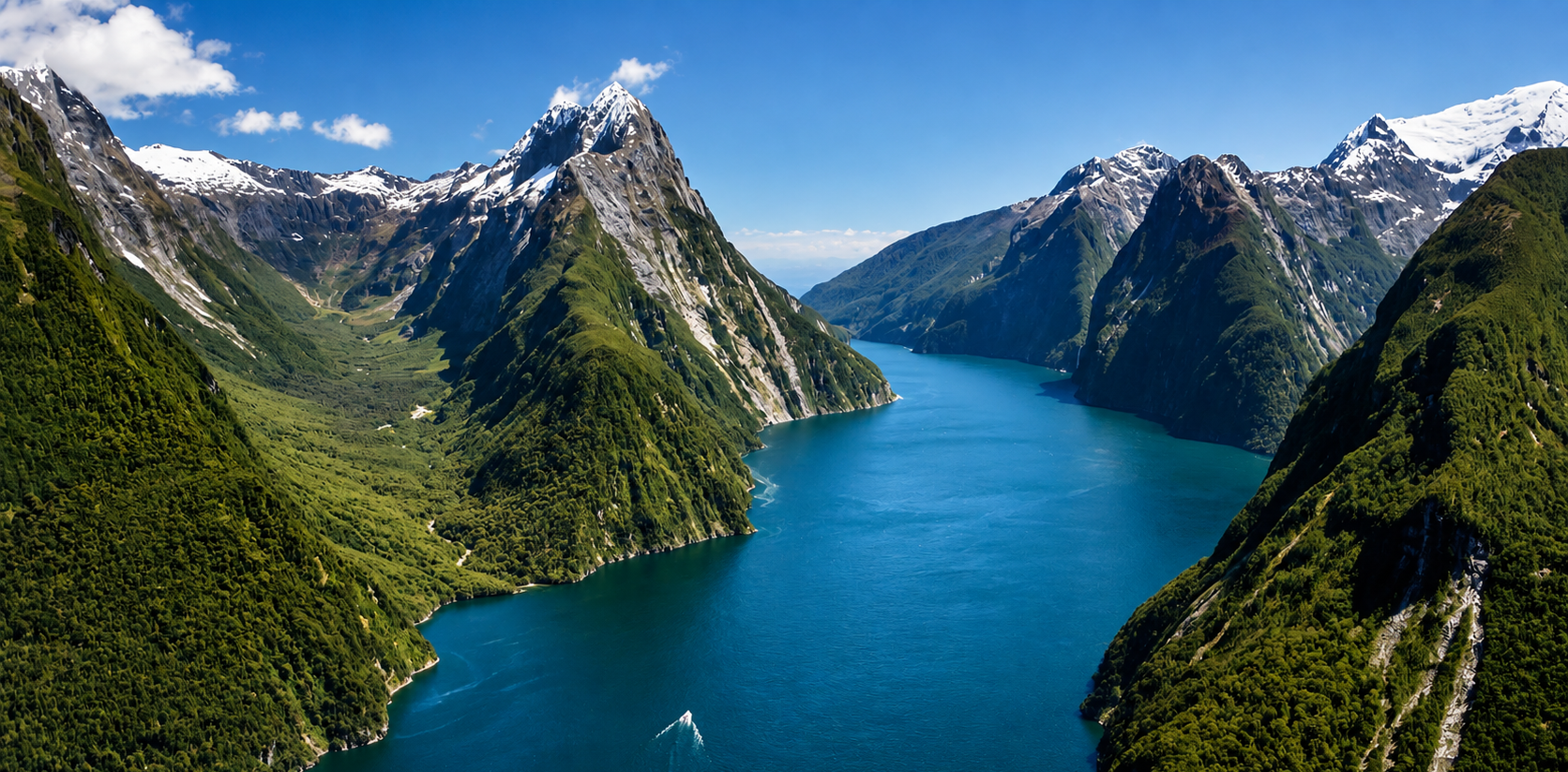
5. See Fiordland From the Air
Best for: Photography, special occasions and travellers wanting the biggest possible view
Allow: Around an hour or more depending on the flight
My pick: A flight that includes both alpine terrain and a fiord if the budget allows
My verdict: Expensive, but one of the few experiences that shows you what Fiordland actually looks like as a whole
There is a problem with exploring Fiordland from the road.
Roads barely go anywhere.
Most of the region is mountain, forest, lake or fiord, with huge areas that have no normal road access at all.
From the ground, you keep seeing pieces of Fiordland.
From the air, you begin seeing how those pieces connect.
That is what makes scenic flying here different.
What You See From Above
Shortly after leaving Te Anau or Manapouri, the town and farmland begin disappearing beneath you.
The mountains take over remarkably quickly.
You see valleys running behind ranges that looked solid from the ground, lakes tucked into places you did not know existed and huge sections of forest with no visible development at all.
The fiords become much easier to understand as well.
From a boat, you are surrounded by walls.
From the air, you can see how those arms and channels cut into the coastline and how narrow the strip of mountains actually is between the inland lakes and Tasman Sea.
Scenic flights operate by fixed-wing aircraft, helicopter and floatplane, with departures available from Te Anau, Manapouri and Milford Sound. Some helicopter options can also include alpine or glacier landings when conditions allow.
Helicopter or Plane?
I would choose a helicopter if the landing and close-up mountain experience are important to you.
Helicopters can get you into places that feel incredibly remote and make it possible to stand in mountain terrain that would otherwise require serious time and mountaineering ability to reach.
A fixed-wing flight can make more sense if you want to cover a larger distance and see a broader portion of Fiordland.
Neither is automatically better.
Look at the route.
Where does it actually go?
Does it include Milford or Doubtful Sound?
Does it cross the Southern Alps?
Is there a landing?
Those questions matter more than comparing only the duration.
Is It Worth the Cost?
This is not a budget recommendation.
If you are trying to keep costs low, I would happily skip the flight and spend the money on Milford or Doubtful Sound instead.
There is more than enough spectacular scenery at ground level.
But if this is a major New Zealand holiday and you are choosing one experience to splurge on, Fiordland is one of the places where I think scenic flying makes sense.
You are paying for access to a view you cannot reproduce by driving to another lookout.
That is the difference.
Weather Will Decide
Scenic flying depends heavily on wind, cloud and visibility.
If the flight matters to you, book it near the beginning of your Fiordland stay rather than the final hour before you drive back to Queenstown.
That gives you a chance to move it if conditions do not cooperate.
And if the operator tells you the weather is unsuitable, take that as good news rather than bad service.
A cautious pilot is exactly what you want in this landscape.
Aotearoa Adventures Tip
If you are already planning a Milford Sound cruise, look carefully at whether a flight-and-cruise combination gives you the experience you want. Seeing the fiord once from water level and again from above can be a much better use of a big activity budget than booking several smaller sightseeing tours.
FIORDLAND
Which Fiordland Activities Are Actually Worth Paying For?
Fiordland can become an expensive destination if you start booking a cruise, scenic flight, glowworm tour and guided experience every day.
You do not need to.
The walking, Milford Road viewpoints, lakefronts and huge amount of scenery around Te Anau cost very little.
If I were travelling on a tighter budget, I would spend the majority of the activity budget on a Milford Sound cruise, then use hiking and self-guided exploring to fill the rest of the trip.
If I had more available, Doubtful Sound would be my next big spend because it gives you access to a part of Fiordland you simply cannot reach independently.
The glowworm caves sit in a useful middle ground. They are not cheap, but they fit easily into an evening and give you something completely different.
A scenic flight would be my luxury choice rather than something I considered essential.
I think this approach makes the affiliate links much more trustworthy as well. There is no need to push a booking after every paragraph. Milford, Doubtful, the glowworms and scenic flights are the experiences where paying actually gives the reader access to something they cannot simply walk to themselves.
Milford Sound or Doubtful Sound: Which Should You Choose?
This is probably the question most people ask once they realise doing both takes two full days.
For a first visit, I would choose Milford Sound.
You get the spectacular Milford Road as part of the trip, Mitre Peak is one of the classic Fiordland sights and the overall experience gives you a brilliant introduction to the region.
I would choose Doubtful Sound if I had already seen Milford, wanted fewer people around or valued remoteness more than iconic scenery.
Milford feels dramatic almost immediately.
Doubtful takes longer to reach and reveals itself more slowly.
One is not really better than the other.
If you can afford the time and cost, experience both.
Why I Would Stay in Te Anau Instead of Day-Tripping From Queenstown
If Fiordland is only a minor part of your South Island trip and Queenstown is your only base, organised day tours are useful.
If you have any flexibility, I would move to Te Anau.
The difference becomes obvious the morning you visit Milford.
Instead of starting with several hours of driving before you even reach Fiordland, you wake up beside Lake Te Anau and begin the Milford Road from there.
Doubtful Sound departures are nearby at Manapouri, the glowworm boat leaves from Te Anau itself and the Kepler Track begins just outside town. Official Fiordland guidance describes Te Anau as the base for Milford Sound, Doubtful Sound and the region's major walking experiences.
The town itself is relaxed and easy to walk around.
There are restaurants, accommodation options, a long lakefront and enough to do that an afternoon without a major booking never feels wasted.
I think three nights in Te Anau is a very good starting point.
Four is better if you want to see both major fiords.
How Many Days Do You Need in Fiordland?
You can visit Fiordland in one day.
I would not recommend building the trip that way unless you genuinely have no alternative.
With one day, choose Milford Sound and accept that you are getting a taste.
With two days, add a hike or Doubtful Sound.
With three days, you can experience Milford, Doubtful and still have an evening for the glowworm caves.
For me, three to four nights in Te Anau is ideal for a first visit. Official Fiordland planning advice also recommends staying several nights rather than treating the region as a single day trip.
The extra time is not only about fitting more activities in.
It gives you flexibility.
That matters enormously in Fiordland.
My Ideal 4-Day Fiordland Itinerary
I would arrive in Te Anau on the first afternoon without planning anything too ambitious. Walk beside the lake, settle into the town and take the glowworm cave trip later if the timing works. That makes arrival day feel useful without tiring yourself out before the bigger days ahead.
The second day would be Milford Sound. Leave Te Anau early, take your time along Milford Road and do not schedule anything important that evening. This is a full day even before you account for all the times you will stop because the view looks too good to drive past.
I would use the third day for Doubtful Sound. Drive the short distance to Manapouri, cross Lake Manapouri and let the entire day be about the journey into Patea. If your budget allows an overnight cruise, this is where I would extend the itinerary.
The fourth day would be for walking. Key Summit would be my first choice in clear weather, while one of the Kepler Track day walks works beautifully if you would rather stay closer to Te Anau.
If a scenic flight is a priority, I would book it early enough in the trip that it can move between these days if weather prevents flying.
When Is the Best Time to Visit Fiordland?
Fiordland works throughout the year, but the experience changes significantly with the seasons.
Summer, from December through February, gives you long daylight hours and the easiest conditions for most walking. It is also the busiest period, particularly around Milford Sound and the Great Walks. If you are travelling during the main summer holiday season, I would book accommodation and the major cruises ahead.
Autumn can be a lovely compromise. Visitor numbers begin easing and the temperatures are generally comfortable for walking, although daylight shortens and alpine conditions become more important as the season progresses.
Winter is beautiful but needs to be treated properly. Snow on the mountains completely changes the landscape, while the Milford Road can be temporarily closed for avalanche control when conditions require it. Higher walking routes become considerably more serious, and the alpine sections of the Great Walks should only be attempted by suitably experienced and equipped people.
Spring can be particularly dramatic, with snow remaining on the mountains and plenty of water moving through the valleys. It is also a changeable season, so I would keep the itinerary flexible and check current road and track conditions before setting out.
There is no season when I would expect completely predictable weather.
This is Fiordland.
What If It Rains?
Put your jacket on.
That sounds simplistic, but Fiordland is one part of New Zealand where waiting for a completely dry forecast can mean waiting a very long time.
Normal rain does not ruin the region.
It makes the forest look better and creates waterfalls across Milford and Doubtful Sound.
Obviously, there is a big difference between ordinary Fiordland rain and severe weather. Heavy rain can affect tracks, roads and river levels, and official warnings should always be taken seriously.
But if the forecast simply says showers?
I would not automatically cancel the day.
There is a decent chance Fiordland will look exactly as Fiordland is supposed to look.
Do You Need a Car in Fiordland?
Not necessarily.
You can travel from Queenstown to Te Anau by coach and join organised tours to both Milford and Doubtful Sound.
If you stay in Te Anau, several major activities either depart from town or offer transport.
I would still prefer having a vehicle if you enjoy independent travel.
A car gives you much more freedom to explore Milford Road, reach walking tracks, visit Manapouri and adjust your days around the weather.
The biggest advantage is stopping when you want to.
Fiordland has a frustrating habit of producing excellent views at places that were not on your itinerary.
If you are self-driving to Milford, remember that services and connectivity are limited after leaving Te Anau. Check the road status, fuel up and have everything you need before setting off.
Where Should You Stay in Fiordland?
For most people, I would choose Te Anau.
It gives you the best combination of convenience and location. You have accommodation, restaurants, shops and the lakefront, while still being right beside Fiordland National Park.
If Doubtful Sound is your main priority or you simply want somewhere quieter, Manapouri is an excellent alternative. It is much smaller than Te Anau and sits right beside the departure point for Doubtful Sound trips.
You can also stay at Milford Sound itself, although accommodation is far more limited.
The appeal of staying at Milford is obvious once the daytime traffic leaves. The fiord becomes much quieter and you get to experience the area at a time when most visitors are already travelling back towards Te Anau.
If you are booking a South Island trip during peak summer, I would sort out Te Anau accommodation reasonably early. The town is the main base for an enormous national park and demand can be high.
What Should You Pack for Fiordland?
The one thing I would not come without is a proper waterproof jacket.
Not something that looks waterproof enough for the walk between your car and the supermarket.
A real one.
I would also bring comfortable walking shoes, warm layers, a small daypack, water, sunscreen, insect repellent and something dry to change into after a wet day.
Sandflies are part of the Fiordland experience as well. DOC even specifically recommends repellent on some of the easier Kepler Track day walks.
They are tiny, persistent and completely unimpressed by how beautiful you think the scenery is.
Pack repellent.
A Few Fiordland Tips I Would Know Before Going
The biggest thing I would do differently from many first-time itineraries is leave some space.
Fiordland does not reward a schedule where every activity begins ten minutes after the previous one should theoretically finish.
Road conditions can change. Weather can change. Cruises can be affected. You may simply stop somewhere and decide you want to stay longer.
I would also check the weather and road information every morning rather than assuming yesterday's forecast still applies.
Do not rush Milford Road, do not ignore winter walking advice and do not be afraid of ordinary rain.
Most importantly, do not spend three days in Queenstown and then tell yourself that Fiordland is adequately covered by a fourteen-hour coach day.
If you have the time, move south.
Stay in Te Anau.
Give the region a few days.
It deserves them.
Final Thoughts: Is Fiordland Worth Visiting?
Without question.
Fiordland is one of the places I would be most reluctant to leave out of a South Island trip.
There are other parts of New Zealand with mountains, lakes and native forest, but the combination here feels different. Everything is on a bigger scale and much of the landscape still feels as though people have barely made a mark on it.
You can drive through a huge glacial valley in the morning, cruise beneath waterfalls in Milford Sound a few hours later and finish the day back beside Lake Te Anau.
The next morning you can cross Lake Manapouri and travel over a mountain pass into Doubtful Sound, where there is almost nothing around you except water, forest and mountains.
Another day can be spent walking above the bushline at Key Summit, underground beneath Lake Te Anau or looking down on the entire landscape from a helicopter.
There is plenty to do, but I do not think Fiordland is really about collecting activities.
It is about the feeling of being somewhere much larger and wilder than you are.
That is why the rain does not bother me as much here. The clouds suit the mountains. The waterfalls need the weather. Even the long road into Milford feels like part of the experience rather than an inconvenience.
So stay longer than one day if you possibly can.
Drive the Milford Road without rushing it. Cruise Milford Sound. Go somewhere quieter in Doubtful Sound. Walk into the forest. Accept that your jacket will probably get wet and that the sandflies will eventually find you.
And give yourself enough time for the weather to surprise you.
Because Fiordland does not always give you the trip you planned.
Quite often, it gives you something better.