

TONGARIRO NATIONAL PARK
5 Best Things to Do in Tongariro National Park
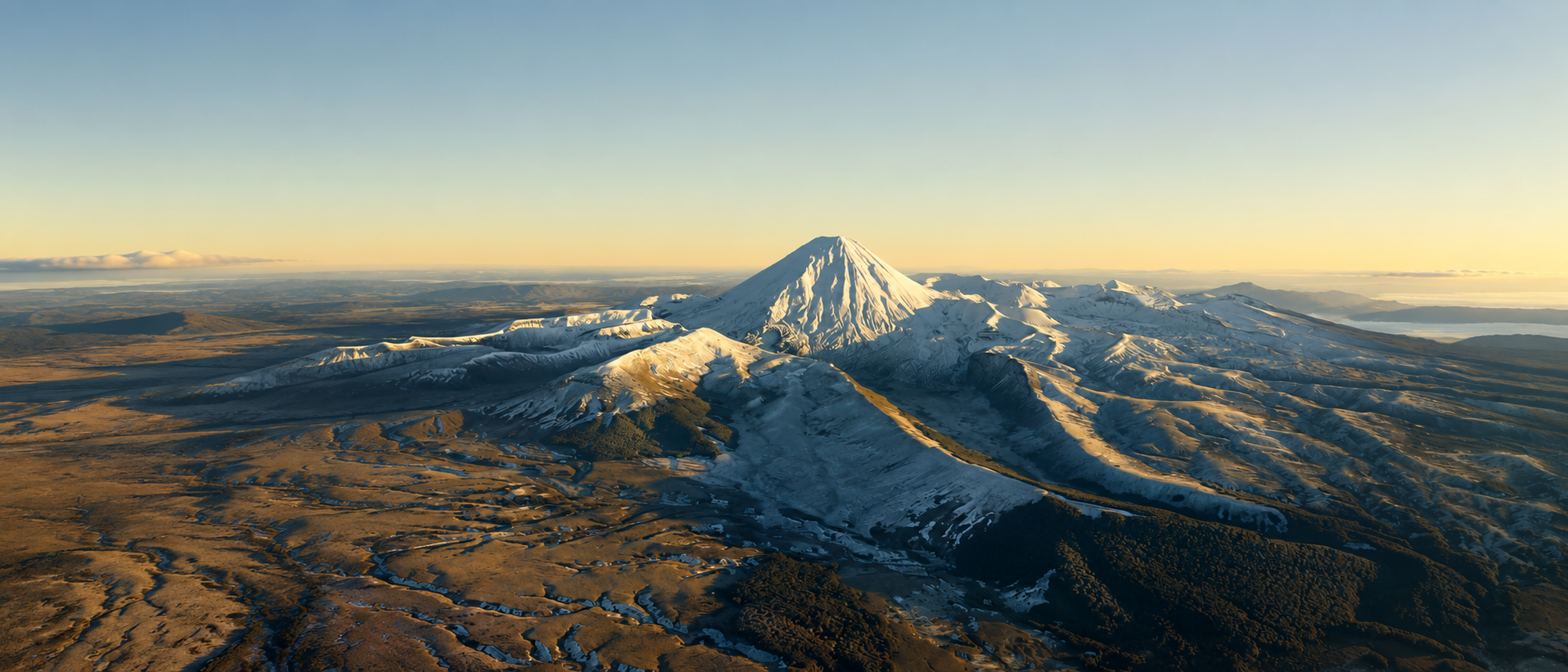
Tongariro National Park is one of those places that reminds you just how wild New Zealand can be. Its volcanic peaks rise above a landscape of lava fields, tussock-covered valleys, alpine lakes, waterfalls and native forest. On a clear day, the scenery is spectacular. When the clouds roll in, the entire place can feel dramatic and almost otherworldly.
Located in the heart of the North Island, Tongariro is New Zealand’s oldest national park and is recognised as a dual World Heritage area for both its natural landscape and its cultural importance. The mountains are deeply significant to local iwi, particularly Ngāti Hikairo ki Tongariro and Ngāti Tūwharetoa. (Govt NZ)
From a Central North Island point of view, I think one of the biggest mistakes visitors make is treating Tongariro National Park as somewhere they visit only to complete the Alpine Crossing. The crossing deserves its reputation, but there is far more here than one famous walking track.
You can walk beneath waterfalls, visit volcanic crater lakes, ride a gondola high onto Mount Ruapehu, explore shorter tracks around Whakapapa or see the entire volcanic plateau from the air.
These are my five best things to do in Tongariro National Park.
Plan your Tongariro adventure
Find guided walks, transport, sightseeing experiences and day tours around Tongariro National Park.
View Tongariro tours and activities
Best for: Experienced walkers, volcanic scenery and a full-day adventure
Allow: Approximately 6–8 hours
Difficulty: Challenging
My opinion: The park’s most impressive experience, but only in suitable conditions
The Tongariro Alpine Crossing is easily the best-known activity in the national park, and in the right conditions it deserves the attention it receives.
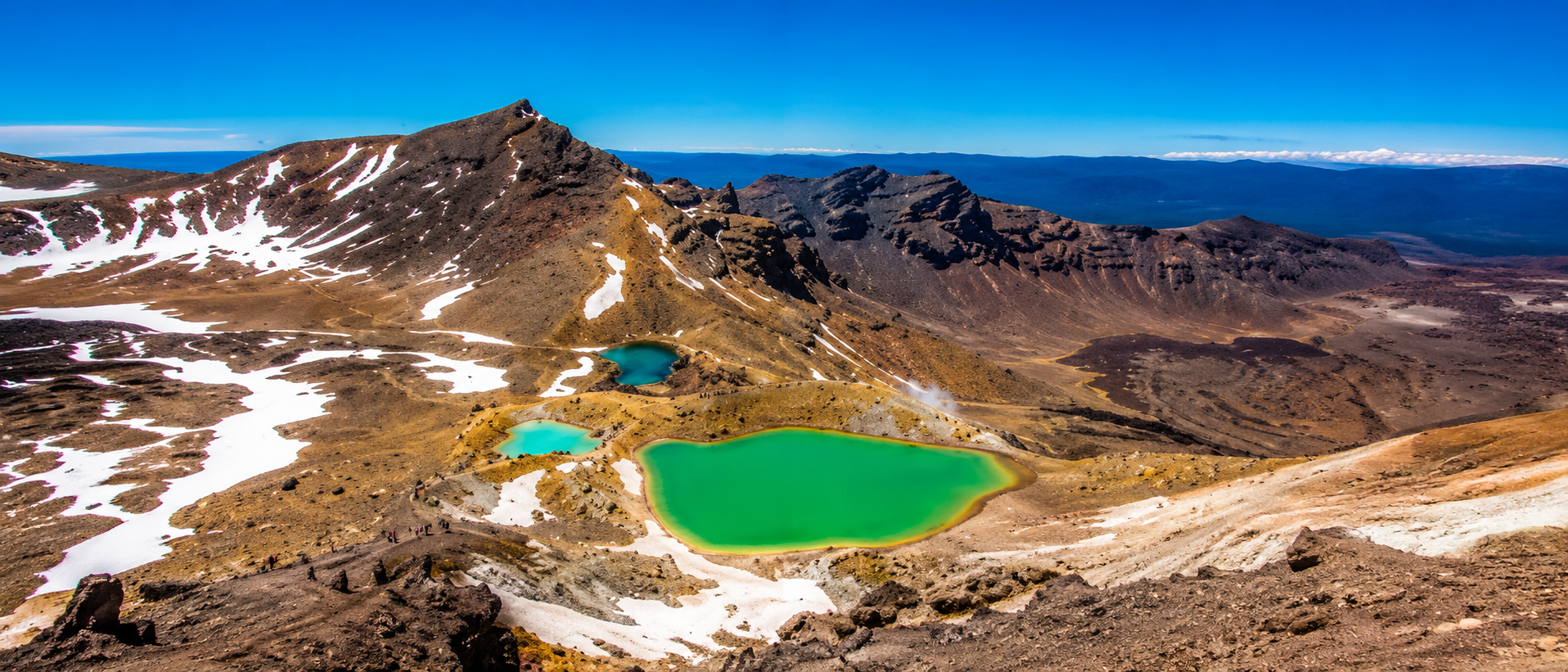
The route crosses a raw volcanic landscape between Mount Tongariro and Mount Ngāuruhoe. Along the way, walkers encounter old lava flows, steep volcanic slopes, Red Crater, the Emerald Lakes and views across the wider Central Plateau.
The crossing is approximately 20 kilometers long and normally takes between six and eight hours. It is not a casual sightseeing walk. There are sustained climbs, exposed sections, loose volcanic terrain and a long descent towards Ketetahi. (Govt NZ)
What makes the crossing special is the variety packed into a single day. One moment you are walking through an open valley, and the next you are standing above brightly coloured lakes surrounded by red, black and brown volcanic rock. There are few other day walks in New Zealand that feel quite like it.
However, I strongly recommend taking the weather seriously. Tongariro can be calm and sunny at lower elevations while Red Crater is experiencing strong winds, low cloud or freezing temperatures. DOC applies a “Not Recommended Today” advisory when forecast conditions reach potentially hazardous levels. (Govt NZ)
During winter, the crossing becomes an alpine mountaineering route involving snow, ice and avalanche terrain. Visitors without suitable winter skills should join an approved guided trip rather than attempting it independently.
My recommendation
Book a shuttle rather than trying to organize two vehicles. The crossing finishes at a different road end from where it begins, and parking around the trailheads is restricted. DOC recommends booking the crossing, while people using shuttle or guided walking services require a track booking. (Govt NZ)
A guided walk is also worth considering when conditions are uncertain or when you want to learn more about the landscape. A good guide adds context to the volcanic formations, Māori cultural history and changing alpine conditions rather than simply leading you along the track.
Book your crossing
Compare transport and guided hiking options before choosing your walking date.
Book a Tongariro Alpine Crossing shuttle
View guided Tongariro Crossing walks
Important cultural reminder
The mountain summits and alpine waterways are sacred. Visitors are asked not to climb the summits, touch or enter the lakes, or leave the marked track. (Govt NZ)
2. Hike to Tama Lakes
Best for: Volcanic views without completing the full crossing
Allow: Approximately 5–6 hours
Distance: Around 17 kilometres return
Difficulty: Moderate to challenging
My opinion: The best alternative to the Alpine Crossing
Tama Lakes is my top recommendation for people who want a proper Tongariro day walk but are not interested in the logistics or crowds associated with the Alpine Crossing.
The track begins at Whakapapa Village and follows part of the Taranaki Falls route before continuing into an increasingly open volcanic landscape. As you move further from the village, the vegetation becomes lower and the views of Mount Ruapehu and Mount Ngāuruhoe become more impressive.
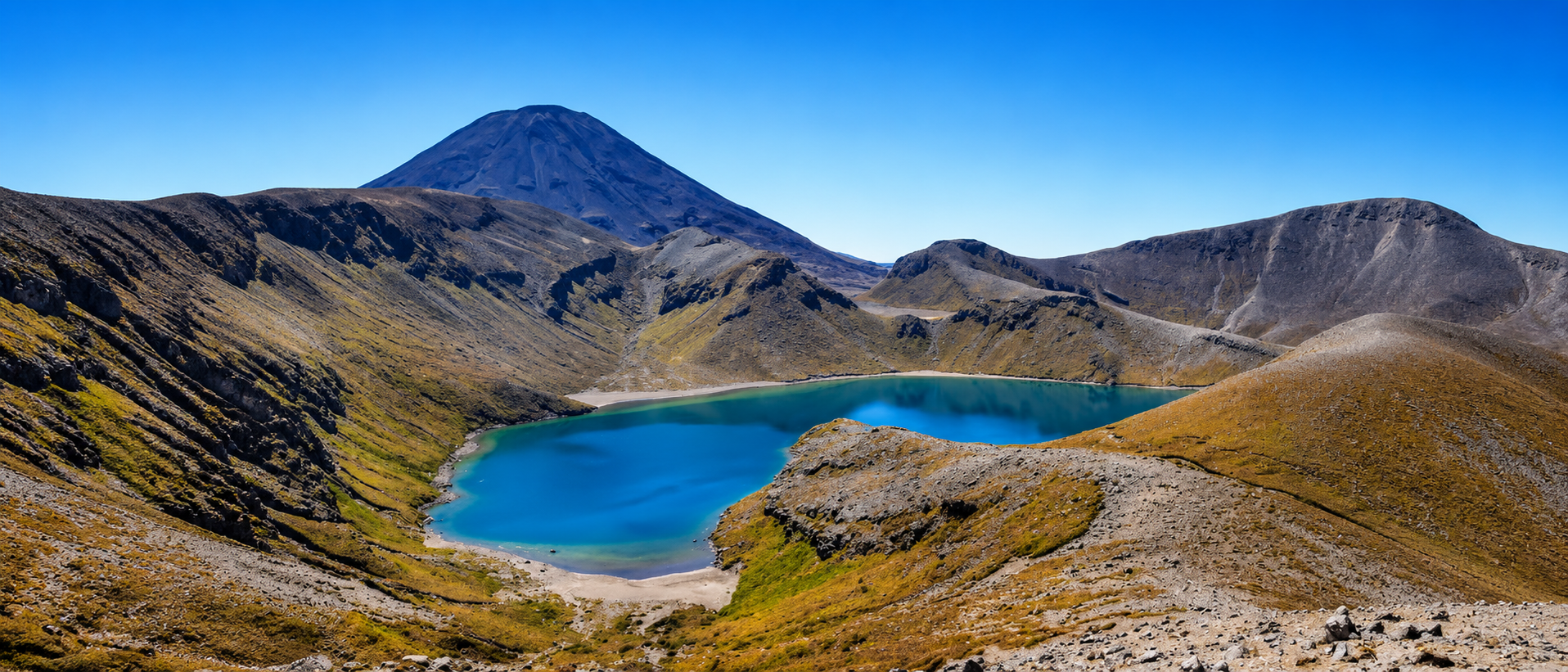
The walk leads to Lower Tama Lake, which sits inside an old explosion crater between Ruapehu and Ngāuruhoe. Walkers can continue towards the viewpoint above Upper Tama Lake, although this final climb is steeper, rougher and considerably more exposed.
The complete Tama Lakes walk is approximately 17 kilometres return and usually takes five to six hours. DOC describes it as involving less climbing and less exposure than the Tongariro Alpine Crossing, although it remains an alpine walk with rapidly changing weather and limited shelter. (Govt NZ)
What I like about Tama Lakes is that it still delivers the enormous volcanic views people come to Tongariro to see. You get waterfalls, tussock valleys, old lava formations and crater lakes without requiring a shuttle at the end of the day.
It can also feel much quieter than the crossing, particularly once you move beyond Taranaki Falls.
My recommendation
Start early and treat Tama Lakes as a full-day hike rather than an extended afternoon walk. The route is exposed, and strong winds can make the upper section far more difficult than the distance suggests.
On a clear, settled day, continue to the Upper Tama viewpoint. When the cloud is low or the wind becomes uncomfortable, Lower Tama Lake is a sensible turnaround point.
Bring warm layers, a waterproof jacket, food and plenty of water even when Whakapapa Village feels mild.
Find somewhere to stay nearby
Staying around Whakapapa or Waimarino National Park makes it easier to begin the walk early.
3. Walk the Taranaki Falls Track
Best for: A shorter walk, families and first-time visitors
Allow: Around two hours
Distance: Approximately 6 kilometers
Difficulty: Easy to moderate
My opinion: The best shorter walk in the national park
Not everyone has the time, fitness or desire to spend an entire day crossing alpine terrain. For a shorter introduction to Tongariro National Park, Taranaki Falls is the walk I would recommend first.
Beginning near the Tongariro National Park Visitor Centre at Whakapapa, the loop passes through tussock, native beech forest, old lava flows and open sections with views towards Mount Ruapehu and Mount Ngāuruhoe.
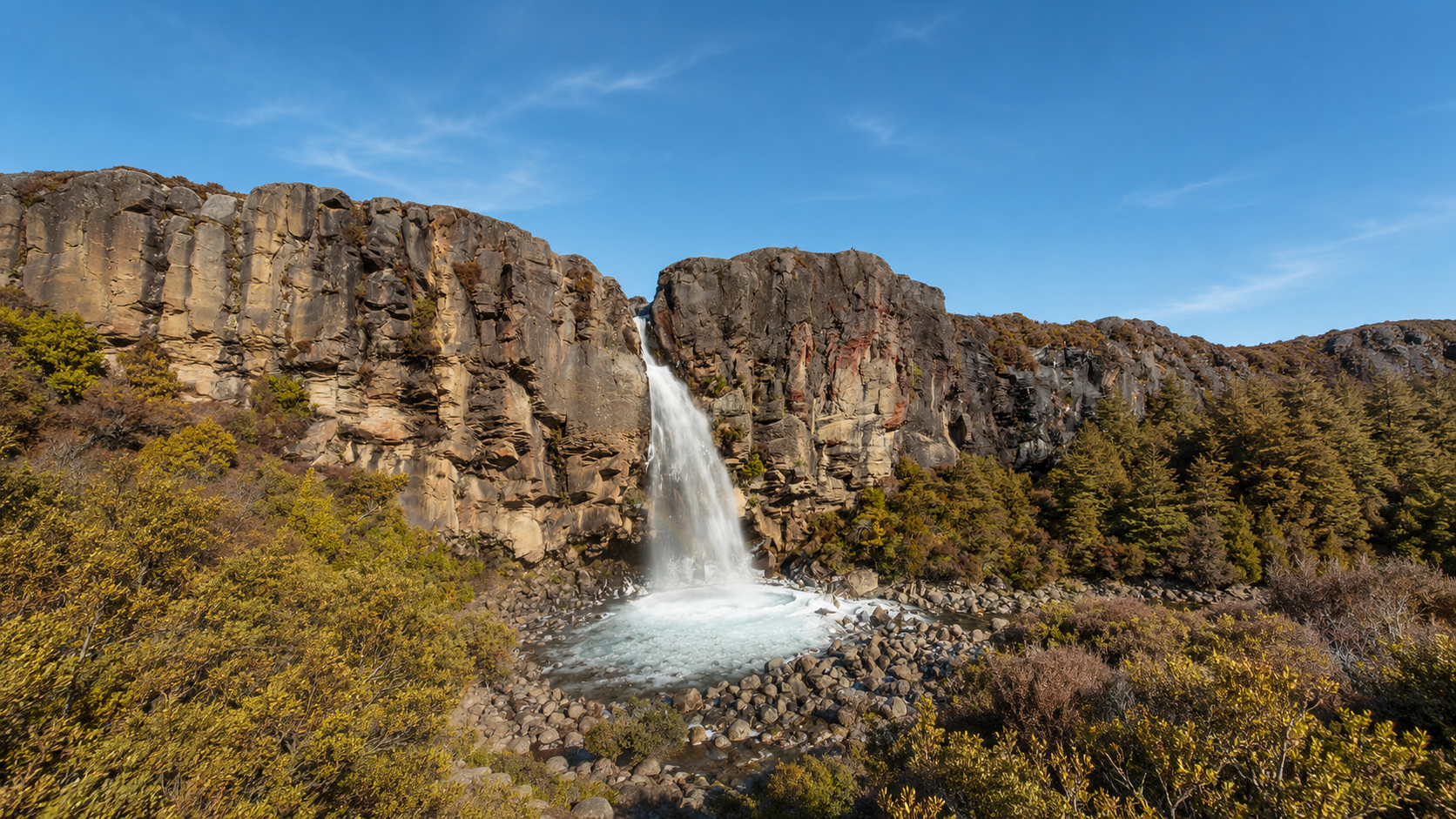
The main attraction is the 20-metre Taranaki Falls, which drops over the edge of an ancient lava flow created by an eruption from Ruapehu thousands of years ago. (Govt NZ)
The waterfall is impressive, but the full loop is what makes this walk worthwhile. The lower track feels sheltered and green, while the upper section opens into a much wider volcanic landscape. Completing the loop gives you far more variety than simply walking directly to the falls and returning the same way.
This is also an excellent backup option when the Alpine Crossing is not recommended. Conditions still need to be checked, but the track is lower, shorter and easier to turn around on.
My recommendation
Walk the loop using the lower track on the way to the waterfall and return along the upper track. This creates a natural progression from forest and streams into the open mountain landscape.
Take your time around the falls, but remain careful near the water and rocks. Wet volcanic rock can be surprisingly slippery.
After the walk, stop at the Tongariro National Park Visitor Centre. It provides current track and weather information as well as displays covering the park’s volcanoes, cultural history, plants and wildlife. (Govt NZ)
Turn it into a full day
Combine Taranaki Falls with Whakapapa sightseeing or a guided volcanic experience.
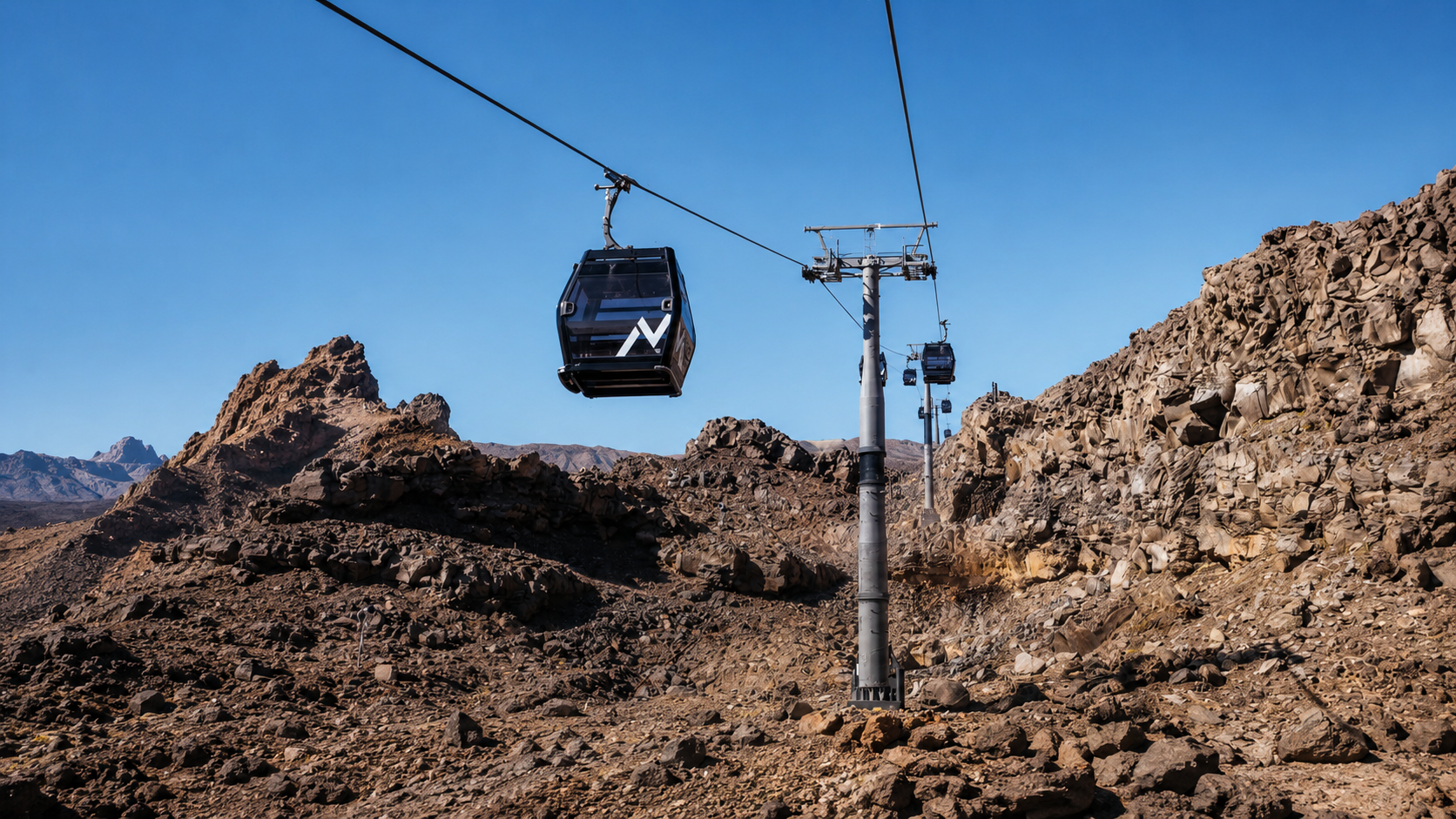
Best for: Mountain views, families, snow experiences and visitors who do not want a long hike
Allow: Half a day
Difficulty: Easy
My opinion: The easiest way to experience the scale of Mount Ruapehu
Whakapapa provides a completely different way to experience Tongariro National Park. Instead of walking between the volcanoes, you travel up the slopes of Mount Ruapehu and look out across the Central Plateau.
The Sky Waka gondola climbs to an elevation of approximately 2,020 meters, giving passengers expansive views over the surrounding volcanic landscape. At the upper station, visitors can enjoy the viewpoints and visit Knoll Ridge Chalet when facilities are operating. (Whakapapa)
This is one of the best choices for families, visitors with limited mobility or travelers who want mountain scenery without committing to a demanding walk.
The gondola experience is highly weather dependent. On a clear day, the views can stretch across the plateau and reveal just how enormous the volcanic landscape is. In thick cloud, there may be very little to see. Check the mountain report before driving up Bruce Road.
During winter, Whakapapa becomes a skiing and snowboarding destination. Beginner facilities, sightseeing rides and snow-play activities generally operate at different stages of the season, depending on weather and snow coverage. Whakapapa currently lists its 2026 winter season from 30 May to 25 October, with terrain opening progressively as conditions allow. (Whakapapa)
My recommendation
Do not book the gondola simply because it fits your itinerary. Choose the clearest available day. The experience is much better when you can actually see beyond the mountain.
Even outside the ski season, the drive from Whakapapa Village up Bruce Road is worthwhile. The landscape becomes increasingly barren and volcanic as you gain elevation, providing plenty of places to stop and take in the scenery.
Plan your Whakapapa visit
Check current sightseeing, snow and mountain experiences before travelling.
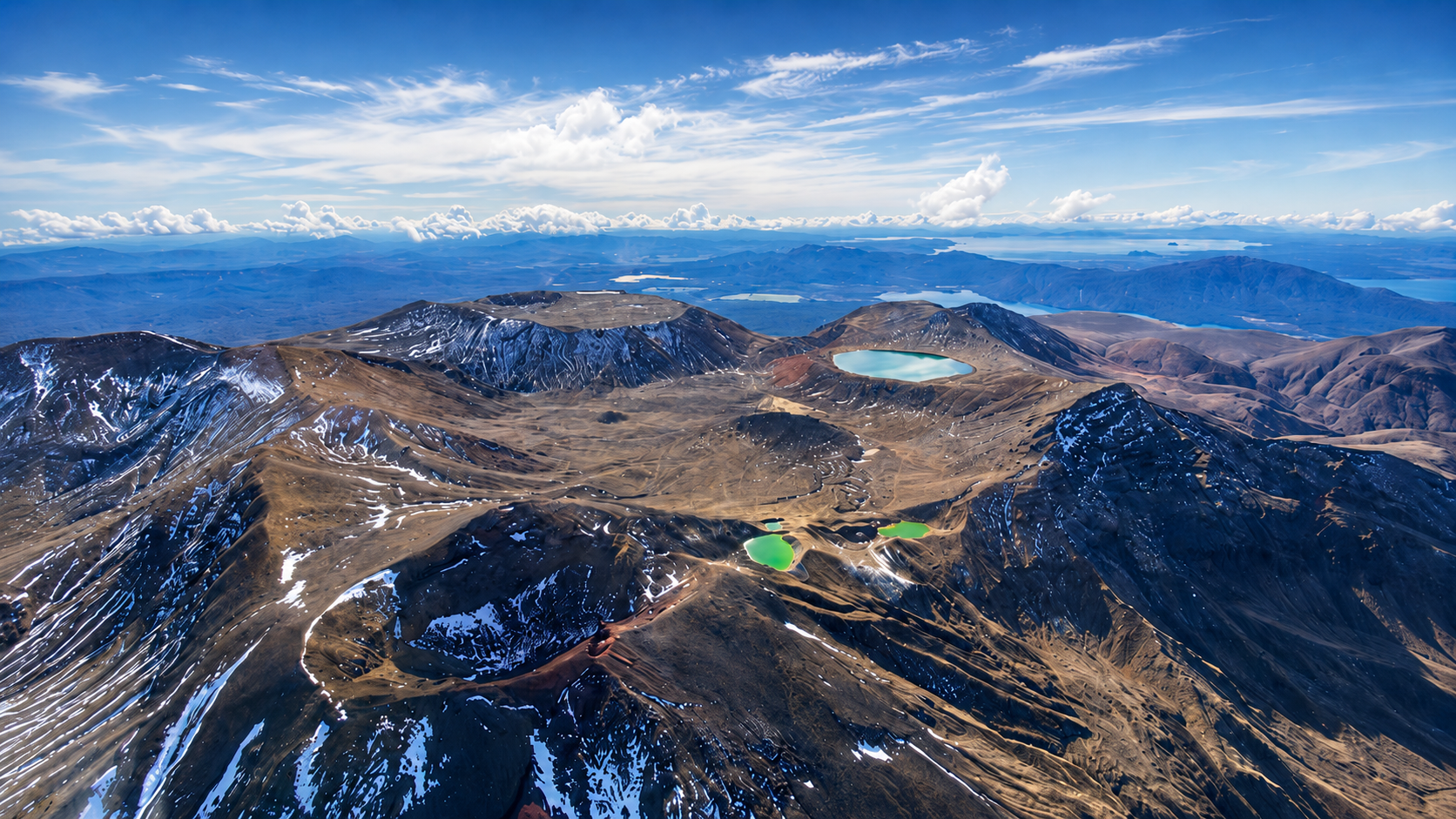
Best for: A special occasion, photographers and seeing the full volcanic landscape
Allow: Approximately one to two hours, depending on the experience
Difficulty: Easy
My opinion: Expensive, but one of the most memorable ways to see Tongariro
Walking through Tongariro allows you to appreciate the details of the landscape, but flying above it reveals how the entire area fits together.
From the air, you can see the scale of Mount Ruapehu, the cone of Mount Ngāuruhoe, the craters of Mount Tongariro, old lava flows and the huge open spaces surrounding the national park. Scenic flights are among the activities available around the National Park and Ruapehu area, although departure points and routes vary between operators. (Visit Ruapehu)
I would not describe this as a budget activity, but it offers something that cannot be recreated from the roadside. It is particularly appealing to visitors who cannot complete the longer walks or who have already explored the park on foot.
It is also a good option for photographers, provided the conditions are clear. As with any mountain flight, weather can lead to delays, route changes or cancellations, so it is sensible to avoid scheduling it immediately before leaving the region.
My recommendation
Book your flight near the beginning of a two- or three-day stay. That gives the operator some flexibility to move your booking if low cloud or strong winds affect the original departure time.
Look carefully at the flight route before booking. Some scenic flights focus mainly on Lake Taupō, while others include the volcanic peaks of Tongariro National Park.
See Tongariro from above
Compare flight durations, departure points and routes before booking.
View scenic flights over Tongariro National Park


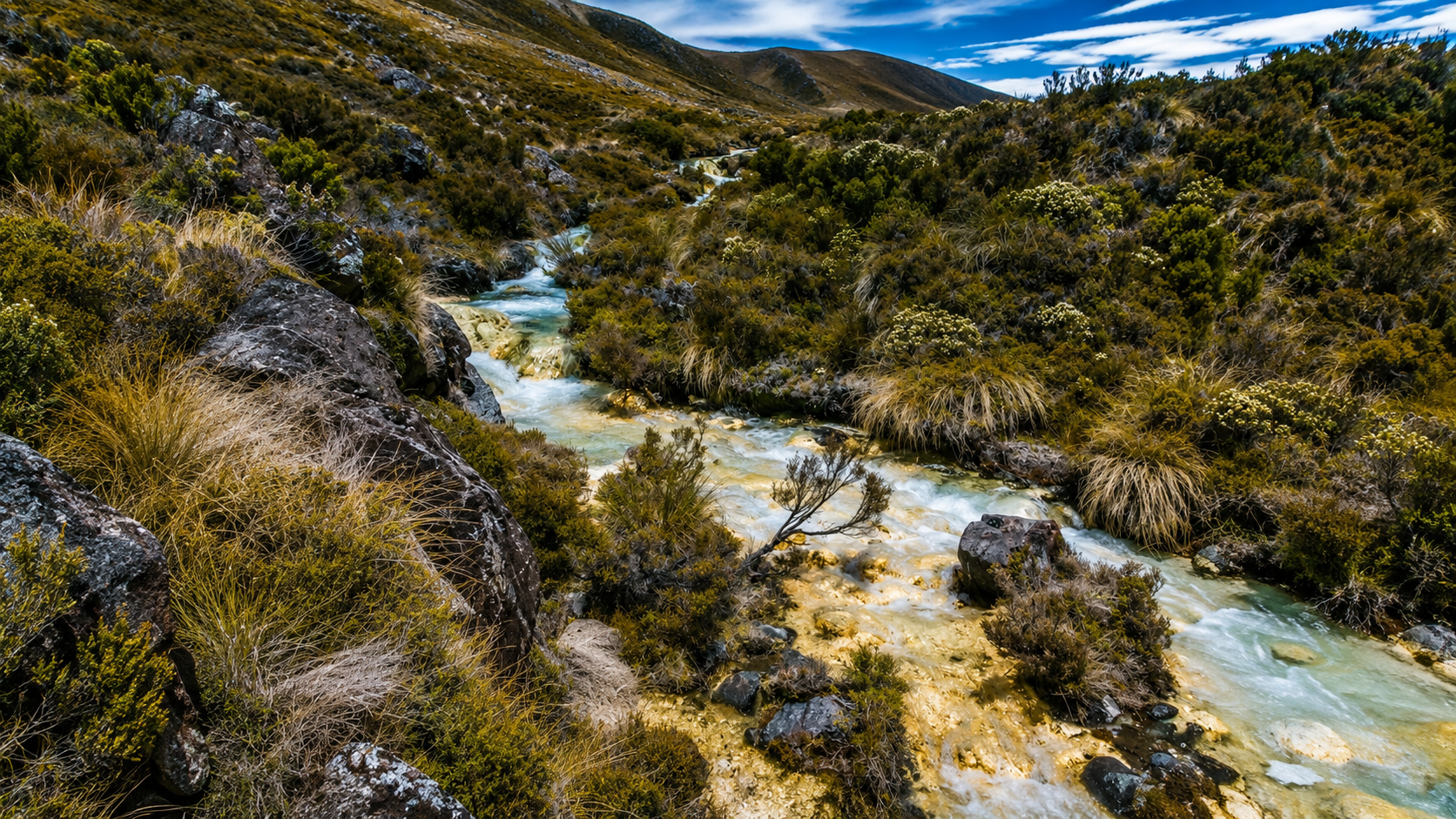
Tawhai Falls
Tawhai Falls is a quick stop beside State Highway 48 and a good addition when travelling between Waimarino National Park and Whakapapa.
The short track descends to viewpoints near the waterfall and river. The rocks near the water can be slippery, so children need close supervision. (Govt NZ)
It is also sometimes called “Gollum’s Pool” because the area was used as a filming location, making it popular with The Lord of the Rings fans.

Silica Rapids
Silica Rapids is a quieter 7-kilometre loop beginning near Whakapapa Village. The track passes through native forest, tussock and wetland areas before reaching pale mineral terraces created by silica-rich water. DOC lists the walk as taking approximately two and a half hours. (Govt NZ)
This would be my choice for visitors who want a peaceful walk and are more interested in varied landscapes than dramatic summit views.

Waitonga Falls
On the southern side of the park, Waitonga Falls is reached from Ohakune Mountain Road. At 39 metres, it is the highest waterfall in Tongariro National Park, and the track passes through mountain beech and kaikawaka forest. (Govt NZ)
On a calm, clear day, the nearby alpine wetlands can also provide beautiful reflections of Mount Ruapehu.

Where to Stay Near Tongariro National Park
There is no single perfect base for every visitor. The best location depends on the activities you plan to complete.
Waimarino National Park is convenient for crossing shuttles, restaurants and accommodation close to the western side of the park.
Whakapapa Village is the most convenient base for Taranaki Falls, Tama Lakes, Silica Rapids and the road to Whakapapa.
Tūrangi is a strong option for the Tongariro Alpine Crossing, especially if you also want to explore Lake Taupō, the Tongariro River or nearby rafting and fishing experiences.
Ohakune works particularly well for Whakapapa, Waitonga Falls and activities around the southern side of Mount Ruapehu.
Book accommodation
Compare lodges, motels, holiday parks and self-contained accommodation around Tongariro.
When Is the Best Time to Visit?
For summer hiking, the most popular period is generally from November through to April. Longer daylight hours and reduced snow cover make the main walking tracks more accessible, although alpine weather can still occur at any time.
Winter completely changes the park. Snow transforms the mountains and creates excellent sightseeing, skiing and snowboarding opportunities, but exposed walking tracks can require mountaineering skills, navigation experience and avalanche equipment.
Personally, I think early autumn is one of the best times to explore the park. The busiest summer period has started to settle, while there is often still enough daylight for longer walks. Regardless of the month, the weather forecast matters more than the date on the calendar.
Essential Tongariro National Park Tips
Check the DOC track alerts and mountain forecast before leaving your accommodation. Conditions can change quickly, even during summer.
Carry warm, waterproof and windproof clothing on longer walks. Do not rely on the conditions you see from the car park.
Bring sufficient drinking water. Water found along the Tongariro Alpine Crossing is not considered suitable for drinking, and DOC recommends carrying two to three litres for the crossing. (Govt NZ)
Remain on marked tracks, take all rubbish with you and use toilets where provided.
Do not fly a drone without authorisation. Unauthorised drone use is prohibited within Tongariro National Park, and DOC advises that permits are not generally approved there. (Govt NZ)
Most importantly, respect the cultural significance of the park. Do not climb the sacred summits or enter, touch or swim in the alpine lakes and waterways.
Is Tongariro National Park Worth Visiting?
Absolutely. Tongariro National Park is one of the most distinctive landscapes in New Zealand and deserves more than a rushed stop between Taupō and Wellington.
The Tongariro Alpine Crossing may be the headline attraction, but it is not the only reason to visit. Tama Lakes offers an outstanding full-day alternative, Taranaki Falls is one of the North Island’s best shorter walks, and Whakapapa makes the mountains accessible to people who do not want a demanding hike.
My recommendation is to allow at least two days. Use the clearest day for your main alpine activity and keep a shorter walk or sightseeing experience available as a backup. In Tongariro, flexibility is not wasted time—it is often the difference between an average visit and an unforgettable one.
Start planning your Tongariro adventure