

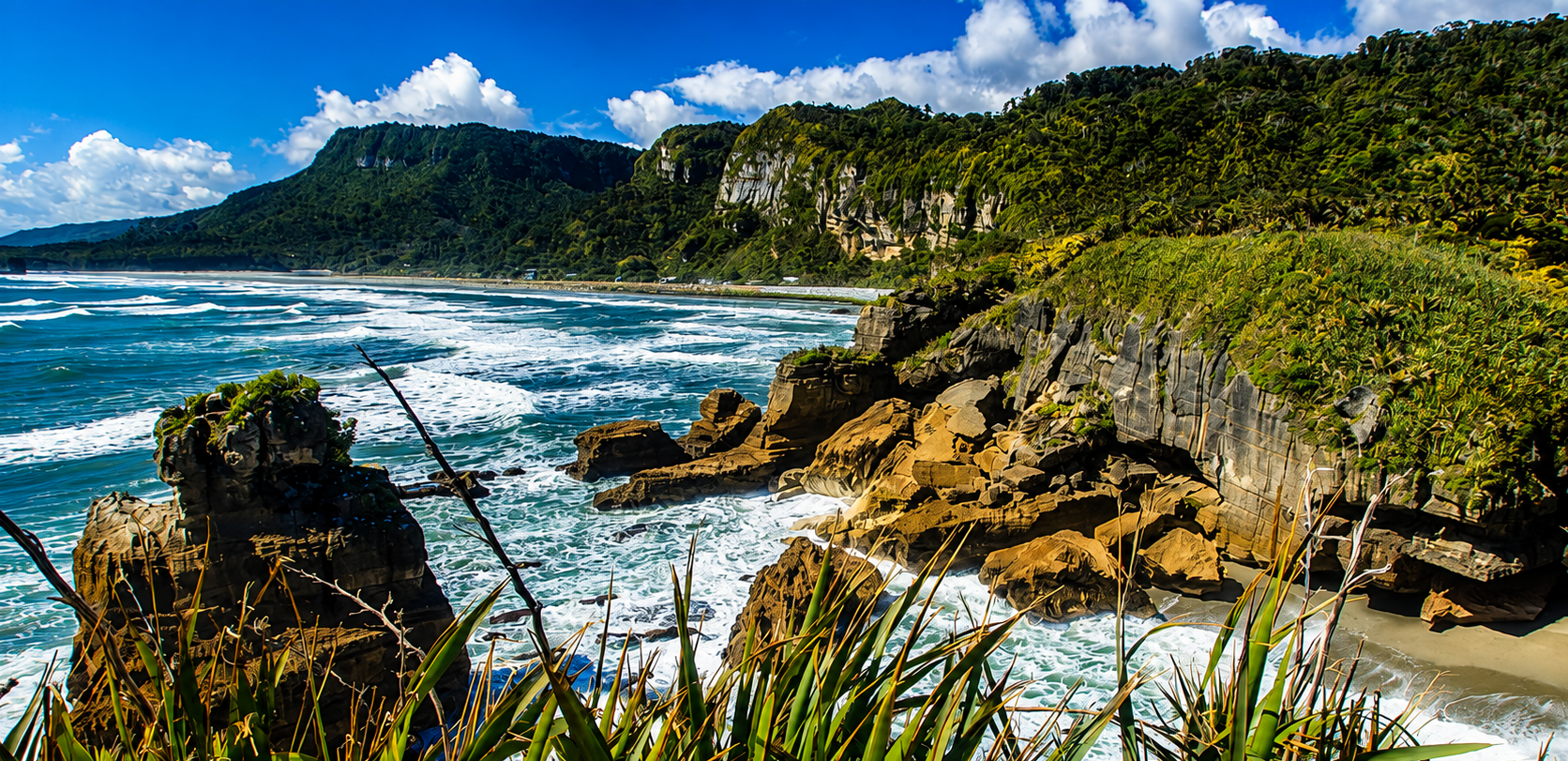
WEST COAST
5 Best Things to Do on the West Coast, New Zealand
The West Coast is one of those parts of New Zealand where I think the journey matters just as much as the places you eventually reach.
On a map, State Highway 6 looks fairly straightforward. You follow the coast, pass through a handful of small towns and gradually work your way between the Tasman Sea and the Southern Alps. In reality, the drive rarely feels that simple. There is always another beach, river, short walk or viewpoint that makes you want to stop, and a journey that looked perfectly manageable when you planned it can very easily take twice as long once you are actually there.
That is not a problem. It is probably the best way to travel the West Coast.
Te Tai Poutini stretches for hundreds of kilometres, from the remote northern roads around Karamea to the forests and rivers of Haast in the south. The landscape changes constantly along the way, but there is a wildness that connects the whole region. Rainforest grows almost to the ocean in places, glaciers descend from the Southern Alps towards temperate forest, rivers carry glacial water out towards the Tasman Sea and small towns sit between huge areas of mountains and bush. The main State Highway 6 route through the region covers close to 600 kilometres between Karamea and Haast when the northern detour is included, so this is not somewhere I would try to see in a couple of rushed days.
The weather is part of the experience as well. The West Coast receives plenty of rain, particularly in the higher country, and that rain is one of the reasons the forests are so green, the rivers carry so much water and waterfalls appear almost everywhere after a storm. Coastal areas regularly receive between 2,000 and 3,000 millimetres of rain annually, with considerably more falling at altitude.
I would not come here expecting every day to be blue skies and perfect reflections.
I would come with a proper waterproof jacket, a little flexibility and enough time to change the plan if necessary.
For Aotearoa Adventures, I also think the West Coast is a particularly good destination because you do not need to book an expensive activity every day. Some of the best places are completely free. You can walk through rainforest, stand above a turquoise gorge, watch the Tasman Sea crash into limestone cliffs and spend an afternoon at a glacier viewpoint without buying another ticket.
Then, if you want one genuinely memorable paid experience, you can put the money towards something like a glacier heli-hike, scenic flight or cycling experience that gives you access to something you would struggle to recreate independently.
For a first West Coast road trip, these are the five experiences I would build the journey around.
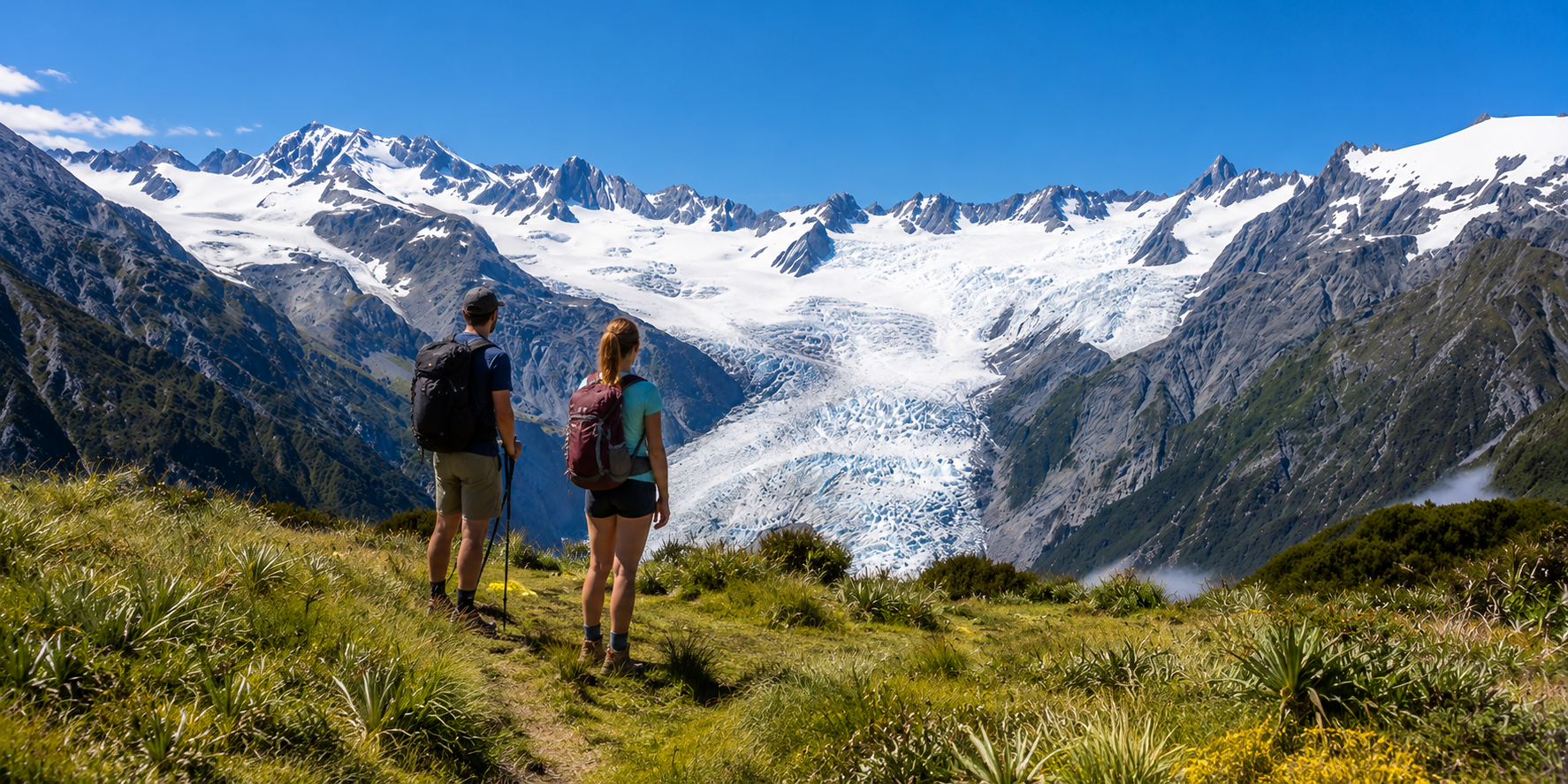
1. Experience Glacier Country at Franz Josef and Fox Glacier
Best for: First-time West Coast visitors, glaciers, hiking and major adventure experiences
Allow: At least one full day, preferably two
My pick: Explore both Franz Josef and Fox rather than treating them as competitors
Big experience: Glacier heli-hike or scenic flight
Glacier Country is probably the part of the West Coast that surprises first-time visitors the most.
You are standing in temperate rainforest, surrounded by ferns, moss and huge native trees, yet just above you are glaciers and snow-covered peaks belonging to the Southern Alps. The transition between the coast and the mountains happens incredibly quickly, and there are very few places where those landscapes sit so close together.
Franz Josef Glacier/Kā Roimata o Hine Hukatere and Fox Glacier/Te Moeka o Tuawe sit within Westland Tai Poutini National Park. The wider Glacier Country landscape runs from high alpine environments and glaciers through rainforest and wetlands all the way to the Tasman Sea.
I would give this area at least two nights if your itinerary allows it.
The extra time is useful because the weather plays such an important role here. A clear morning can disappear behind cloud surprisingly quickly, while a day that looked hopeless at breakfast can suddenly improve in the afternoon. If you have booked a helicopter experience, having another day available gives you some protection against weather cancellations as well.
Franz Josef Glacier
Franz Josef is the busier of the two main glacier settlements and probably the place most visitors recognise first.
One thing worth knowing before you arrive is that you cannot simply walk directly up to the glacier anymore.
The glacier has retreated significantly, and changes in the Waiho River valley mean the current public track finishes at a viewpoint rather than continuing further towards the ice. DOC specifically notes that the river has cut off foot access farther up the valley, and visitors must stay behind the barriers because rockfall, flooding and rapid river changes make the area beyond them dangerous.
I think understanding that beforehand changes the experience.
If you arrive expecting to stroll along a path until you can practically touch the glacier, you are likely to be disappointed.
If you arrive understanding that you are looking into a landscape that is actively changing, the valley becomes much more interesting.
You can see where the glacier once occupied far more of the valley, and tracks such as Sentinel Rock include interpretation showing just how dramatically the ice has retreated. DOC records more than three kilometres of retreat since 1909 from the Sentinel Rock viewpoint.
The short Franz Josef glacier walk is still worth doing. It takes you through rainforest to views up the Waiho Valley towards waterfalls, mountain peaks and the upper glacier. I would combine it with one of the nearby short tracks such as Peters Pool or Douglas Walk rather than simply driving to the end of the road, taking a photograph and leaving.
Fox Glacier
Fox Glacier has a slightly different feel.
The township is smaller and generally quieter, but there are still excellent glacier activities, scenic flights and walks. Fox is also the natural base for Lake Matheson, which is one of the classic West Coast stops.
On a calm morning, Lake Matheson can reflect Aoraki/Mount Cook and Mount Tasman across the water.
The important part of that sentence is on a calm morning.
You cannot book the reflection.
If the lake is windy, the surface will move. If the mountains are covered in cloud, there is nothing for the lake to reflect. That does not make the walk a waste of time. It is still a beautiful forest and lake walk, but I would avoid arriving with one exact photograph in mind and expecting the weather to provide it on demand.
Franz Josef and Fox are close enough that there is little reason to choose one and completely ignore the other. The drive between the settlements is only around half an hour, so I would think of them as different parts of the same Glacier Country stay.
If You Actually Want to Walk on a Glacier
This is where a heli-hike becomes worth considering.
Because the glaciers are no longer safely accessible on foot from the valley, guided glacier walks use helicopters to reach the ice. DOC specifically notes that helicopter access is now the safe way for guided visitors to get onto Franz Josef Glacier.
That makes a heli-hike very different from paying for an attraction you could almost reproduce yourself.
You cannot independently walk up the public track and get onto the glacier.
A heli-hike takes you somewhere genuinely inaccessible.
You fly from the valley into the alpine environment, land on the ice and then explore with a qualified guide using the appropriate equipment. The exact route varies because the glacier itself is constantly changing. Ice caves, crevasses and formations that exist one week may look very different later.
If I were choosing one major paid West Coast adventure, this is where I would seriously consider spending the money.
It is expensive, but the combination of the helicopter flight, glacier landing and time walking on the ice is very different from simply adding another scenic viewpoint to the trip.
Heli-Hike or Scenic Flight?
If you are trying to choose between them, think about what you actually want from the experience.
I would choose a heli-hike if walking on the glacier itself is the goal. It gives you the more physical and immersive experience, and you spend time actually moving across the ice rather than only seeing it from above.
I would choose a scenic flight if you want the broadest possible view of the glaciers and Southern Alps, have limited time or are travelling with people who do not want the physical side of a heli-hike.
A scenic flight also lets you see just how close the glaciers, rainforest and coastline really are.
Neither is automatically better.
The best one is the one that gives you the experience you are actually interested in.
What About the Weather?
This is the part I would plan carefully.
Helicopter flights depend on cloud, visibility and wind. A booking can be moved or cancelled because conditions are not suitable.
That is not poor service.
That is exactly what you want from a company flying around the Southern Alps.
If a glacier flight is one of your priority West Coast experiences, book it near the beginning of your Glacier Country stay. If everything works on the first morning, perfect. If it does not, you have another opportunity.
Paid Parking at Franz Josef
DOC currently charges for parking at the Franz Josef Glacier access area, so this is worth knowing before you arrive. The current DOC page lists parking at $2.50 per half hour up to a daily maximum of $20.
Prices and arrangements can change, so I would still check the current information when planning your visit.
Aotearoa Adventures Tip
Do not plan Glacier Country as a single frantic afternoon. Stay at least two nights if you can, book any helicopter activity early enough to allow for weather changes, and use the remaining time to explore both Franz Josef and Fox.
COMPARE FRANZ JOSEF GLACIER HELI-HIKES
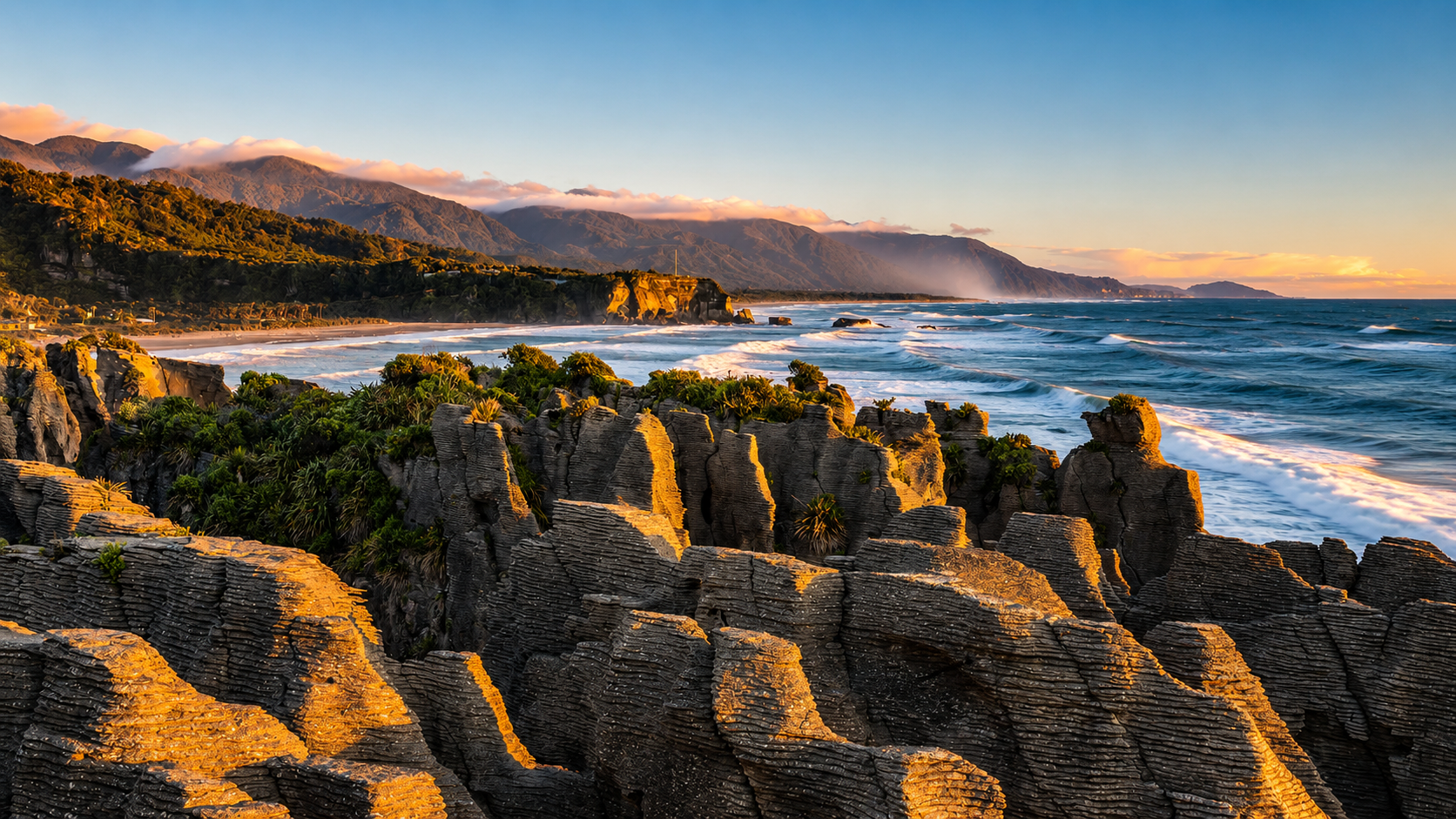
Drive the Great Coast Road and Explore Punakaiki
2. Drive the Great Coast Road and Explore Punakaiki
Best for: Road trips, families, photographers and anyone who loves wild coastlines
Allow: At least half a day around Punakaiki, preferably longer for the wider drive
My pick: Pancake Rocks followed by more time exploring Paparoa National Park
My verdict: One of the famous West Coast stops that genuinely deserves its reputation
There is a stretch of State Highway 6 between Westport and Greymouth where I would almost stop thinking about the road as transport.
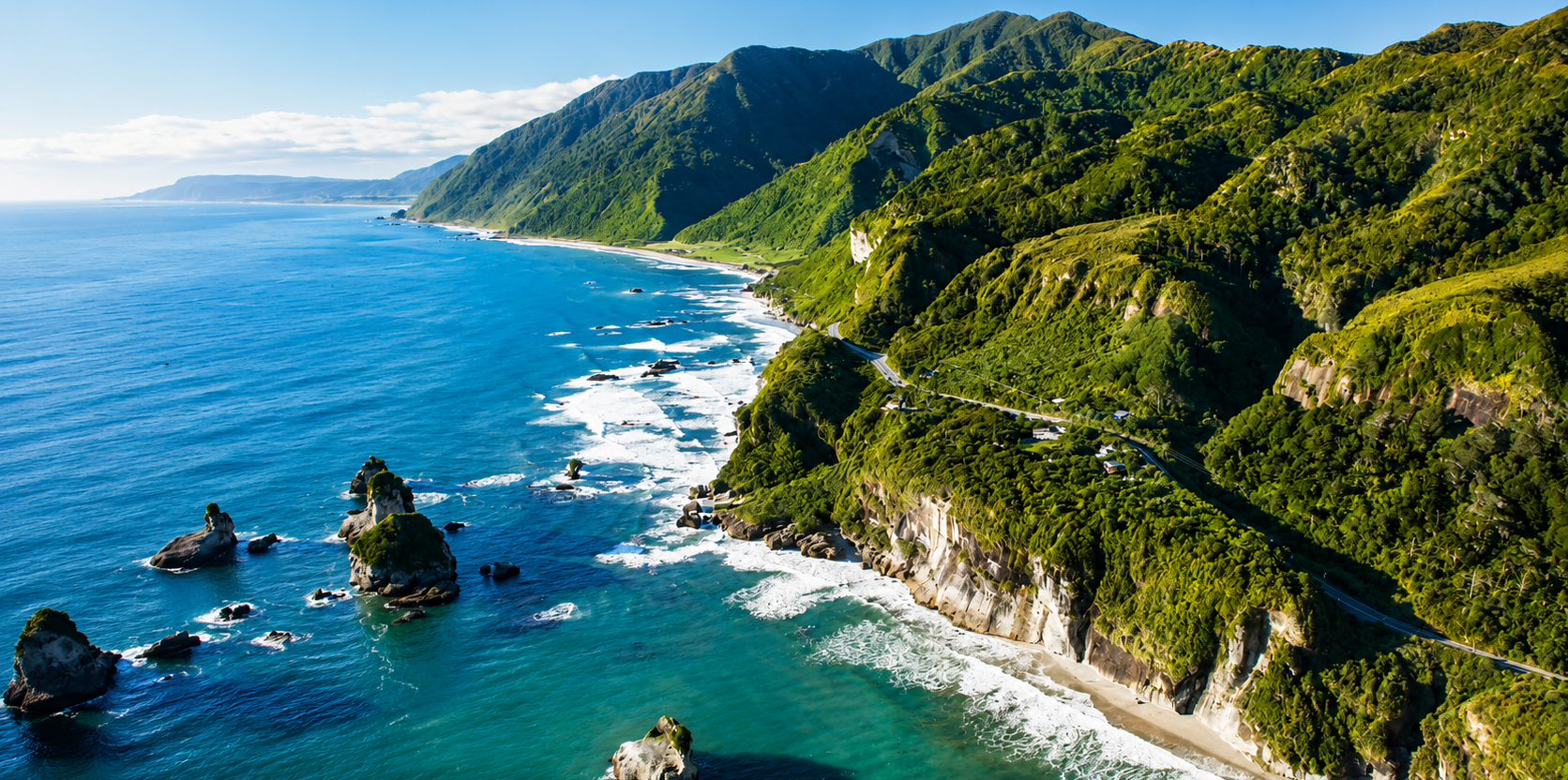
The Great Coast Road runs for roughly 100 kilometres along the Tasman Sea, with forest-covered hills on one side and an increasingly dramatic coastline on the other. The official West Coast touring route promotes it as one of the region's standout scenic drives, and it is one of those roads that works best when you are in no particular hurry.
The obvious highlight is Punakaiki.
But I would not make the mistake of arriving, walking around Pancake Rocks and immediately leaving again.
Punakaiki sits on the edge of Paparoa National Park, and the combination of rainforest, limestone and ocean gives this part of the Coast a character of its own.
Pancake Rocks and Blowholes
The Pancake Rocks at Dolomite Point are strange enough that the name hardly needs explaining.
Layers of limestone have been eroded into formations that genuinely do resemble stacks of pancakes, although the geology behind them is considerably more interesting than the name suggests. DOC explains that the limestone began forming from marine material around 30 million years ago before being lifted and gradually sculpted by rain, wind and seawater.
The walk itself is short and easy.
It is paved, family-friendly and accessible for most visitors, which makes it one of those rare West Coast stops where you can get a dramatic landscape without committing to a serious hike.
The rock formations would be worth seeing on their own, but the coastline makes the experience much better.
Below you, the Tasman Sea moves through narrow channels and caverns, with surge pools and waves exploding against the limestone.
When the conditions are right, the blowholes force compressed water and air upwards through the rocks and create huge bursts of spray. DOC says they are generally at their best around high tide when there is a south-westerly swell.
I would check the tide if you have flexibility, but I would not completely redesign a West Coast trip around it.
Even when the blowholes are quiet, the Pancake Rocks and coastline are still worth visiting.
Punakaiki Is Better in Rough Weather Than You Might Expect
This is another place where I would not be disappointed by a cloudy forecast.
A clear blue sky obviously looks beautiful, but Punakaiki suits rough weather remarkably well.
Dark cloud, large swell and waves smashing against the cliffs can make the whole place feel more dramatic.
There is a sensible limit, of course. Stay on the formed paths, obey closures and do not climb beyond safety barriers simply because the sea looks impressive. DOC specifically warns visitors to remain on the track because of dangerous cliffs, water and the need to protect nesting birds and rare coastal plants.
The Tasman Sea is not somewhere I would test how committed I am to getting a better photograph.
Do More Than the Pancake Rocks
If you have a little more time, I would add another short Punakaiki walk.
Truman Track is one of the obvious options. It takes you through subtropical forest before emerging onto a wild section of coastline with cliffs, caverns and a waterfall dropping towards the beach. The walk is only about 15 minutes each way.
That is an excellent example of the West Coast in miniature.
You walk through dense green forest and then, almost without warning, arrive at a rough Tasman coastline.
The two landscapes sit almost on top of each other.
The Great Coast Road Deserves Time
If you are driving between Westport and Greymouth, I would leave far more time than the basic driving estimate.
There are beaches, coastal viewpoints and short walks throughout the route.
Cape Foulwind near Westport is another worthwhile detour if you are coming from the north, particularly for the coastal walkway and fur seal viewing area.
This is a section of New Zealand where trying to make up time defeats the point.
You came because the road is beautiful.
Let it take longer.
Punakaiki Parking
DOC currently charges for the Dolomite Point car park at the Pancake Rocks. The current site lists a rate of $2.50 per half hour up to $20 for the day.
Again, I would check current rates at the time of travel, but it is worth knowing that the main visitor car park is no longer simply a free stop.
Aotearoa Adventures Tip
If the forecast gives you some rough weather but the roads and tracks remain safe, Punakaiki would not be the place I cancelled first. A powerful Tasman Sea suits the landscape incredibly well.
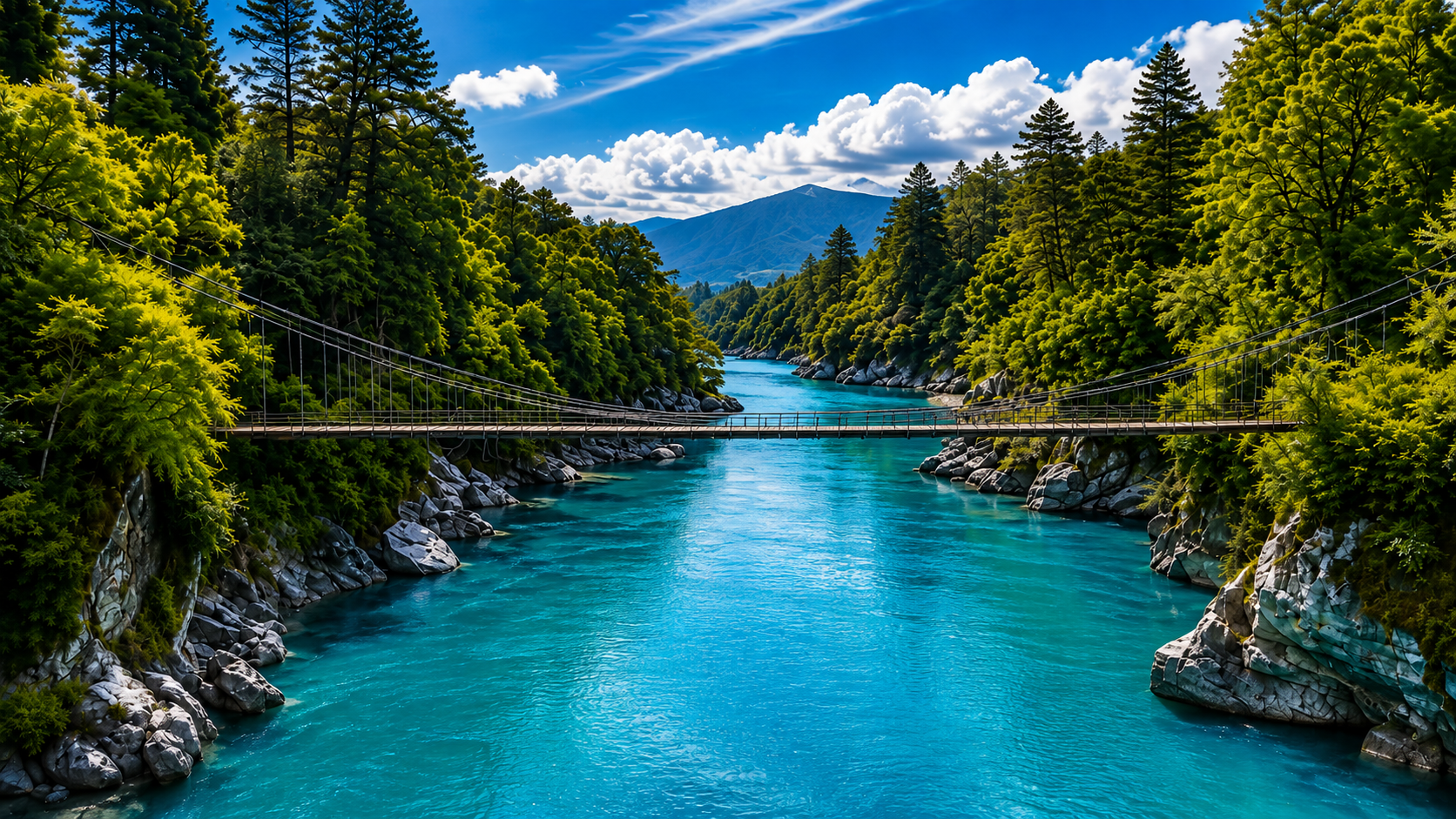
Walk Through Hokitika Gorge and Spend Time in Hokitika
3. Walk Through Hokitika Gorge and Spend Time in Hokitika
Best for: Short walks, photography, families and road trippers
Allow: Around half a day when combined with Hokitika
My pick: Do the full gorge loop rather than stopping at the first viewpoint
My verdict: One of the easiest detours to recommend on the central West Coast
Hokitika Gorge is one of those places that looks slightly suspicious in photographs.
The water can appear so blue that it is easy to assume somebody has been enthusiastic with the editing.
Under the right conditions, it really can look like that.
The Hokitika River carries fine glacial sediment, giving the water a vivid blue-green colour against the surrounding rainforest and grey rock. The exact colour changes with river and weather conditions, so I would not expect it to look identical every time you visit.
That unpredictability is part of the West Coast.
Getting to the Gorge
Hokitika Gorge sits inland from the town rather than directly beside State Highway 6.
The drive takes roughly 30 minutes from Hokitika and carries you through farmland towards the foothills of the Southern Alps.
It is enough of a detour that I would allow time for it rather than trying to squeeze the visit between two long driving days.
Once you reach the reserve, the walk begins almost immediately in dense West Coast forest.
The first viewpoint is only a few minutes from the car park and is wheelchair accessible. From there, you can continue towards the lower suspension bridge and then complete the full loop via the upper bridge.
The walk is easy enough that I think there is very little reason to rush back after the first photograph if you have the time.
The Suspension Bridges
The lower bridge gets you directly above the river and gives you a much better appreciation of the colour and movement of the water.
Continue farther and the track winds through mature forest before reaching the upper suspension bridge, which spans roughly 90 metres across the main river channel.
From here, you get broader views towards the gorge, surrounding forest and foothills.
This is the version of Hokitika Gorge I would want to experience.
Not simply the first lookout.
Do Not Swim in the Gorge
The water looks incredibly inviting.
It is not a safe swimming hole.
DOC is very clear that the Hokitika River is cold, deep, swift and dangerous even when it appears calm, and people have drowned here. Swimming is not advised.
I would take that warning seriously.
There are plenty of places in New Zealand where getting into the water is part of the experience.
This is not one of them.
Don't Skip Hokitika Town
I would not drive out to the gorge and then immediately continue south without spending time in Hokitika itself.
Hokitika is one of the West Coast towns that works well as more than a fuel stop.
The Tasman Sea sits right beside town, there is a long beach, plenty of local art and pounamu businesses, and the town's gold-rush and greenstone history gives it more character than simply being another place on State Highway 6.
The beachfront is particularly easy to enjoy in the evening.
If the weather is clear, the sunset over the Tasman Sea can be excellent. If it is cloudy, the driftwood-covered coastline still feels appropriately West Coast.
This is also a useful place to stop for a night because it puts you close to both the gorge and the West Coast Wilderness Trail.
What About the Water Colour After Rain?
This is worth understanding.
The West Coast gets heavy rain, and river conditions can change quickly.
If you arrive immediately after significant rainfall, Hokitika Gorge may not have the bright turquoise colour you saw in the photographs.
That does not mean the trip has been ruined.
The forest, bridges and gorge are still beautiful.
If you are staying nearby for more than one day and the weather settles, you can always consider returning later.
Aotearoa Adventures Tip
Take insect repellent. The forest and river environment is exactly where West Coast sandflies like to remind visitors that they also live here.
And give Hokitika itself a little time. I think the West Coast becomes more interesting once you stop treating the towns simply as places between the scenery.
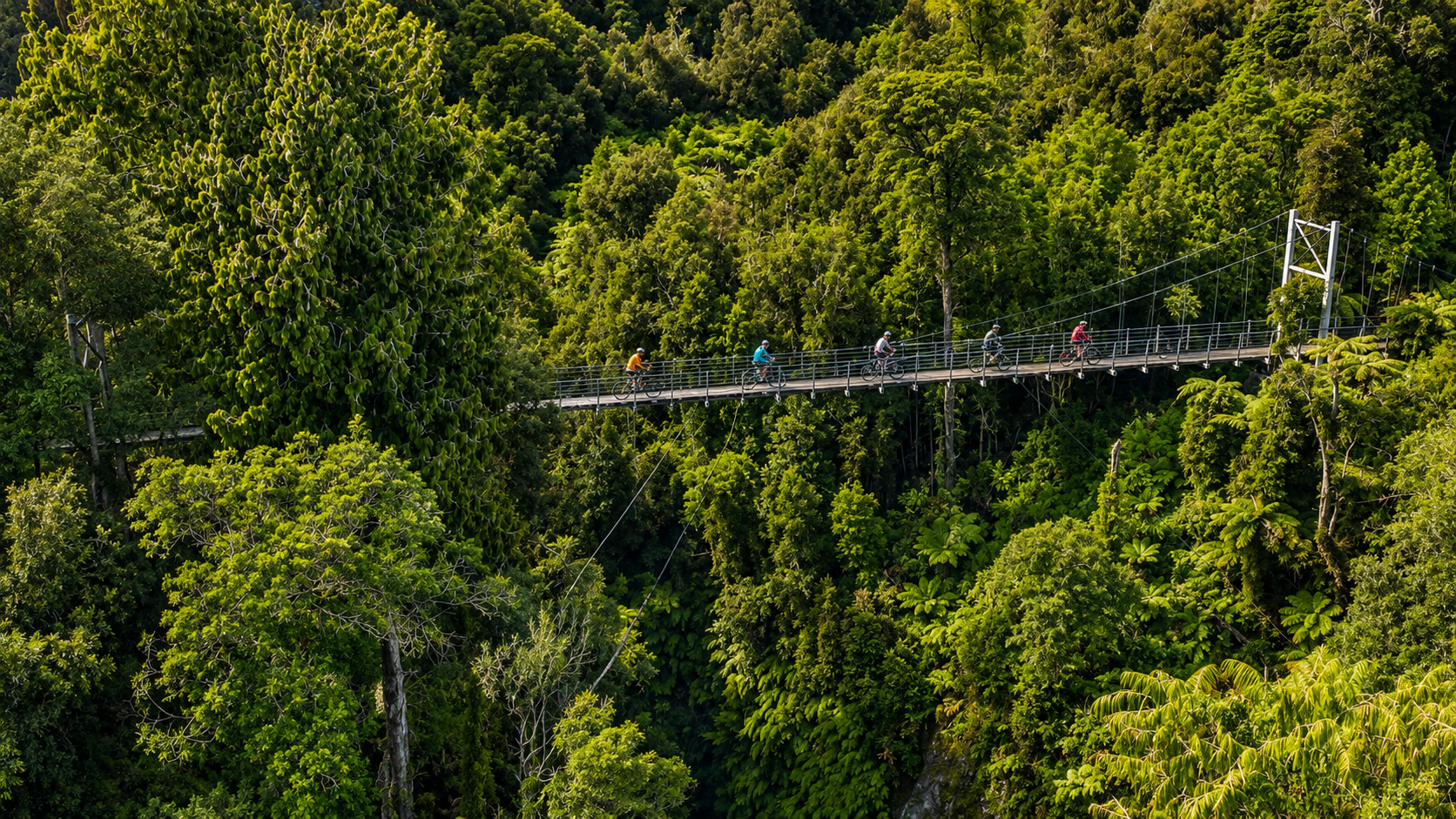
Cycle Part of the West Coast Wilderness Trail
4. Cycle Part of the West Coast Wilderness Trail
Best for: Cyclists, couples, active families and travellers wanting a day out of the car
Allow: A few hours to four days
My pick: A day section around Lake Kaniere and Hokitika for most road trippers
My verdict: One of the best ways to experience the Coast slowly without committing to a major hike
After several days travelling the West Coast, there is a point where even the most enthusiastic road-tripper starts wanting to get out of the car.
The West Coast Wilderness Trail is a very good way to do it.
The full trail runs for approximately 133 kilometres between Greymouth and Ross and normally takes three to four days. It is mainly Grade 2/easy riding, with some Grade 3/intermediate sections on roads. More than 120 kilometres of the trail is off-road.
What makes the trail particularly appealing is that you do not need to ride all 133 kilometres to enjoy it.
There are shorter day sections, which are far easier to fit into a normal South Island road trip.
What the Trail Is Like
This is not primarily a technical mountain-bike trail.
The scenery and history are the main reasons to ride it.
The route moves through native rainforest, wetlands, old gold-mining country and around lakes and glacial rivers. In places, you follow historic bush tramways and water races originally built during the region's mining era.
That gives the trail much more character than simply cycling beside the highway.
One section can feel enclosed beneath tall forest while another suddenly opens towards the Southern Alps.
The riding itself is generally manageable enough that you have time to look around rather than spending the whole day concentrating on surviving the next corner.
Which Section Would I Choose?
For somebody doing a broader West Coast road trip, I would not automatically recommend starting in Greymouth and completing the entire trail.
I would choose a good section that fits the rest of the itinerary.
The Lake Kaniere area is particularly attractive. The official trail route follows historic water races and passes through valuable native forest, with birdlife and views around the lake.
The section towards Hokitika also makes sense because you can finish near a town with plenty of accommodation and places to eat.
If you have more time and genuinely enjoy cycling holidays, the full three- or four-day ride becomes much more appealing. Luggage transfers and accommodation packages can take much of the logistical work out of it.
Should You Hire an E-Bike?
For most holiday riders, I think an e-bike is a great idea.
The trail is not brutally difficult, but even an easy 30 or 40 kilometres can feel very different when you have already spent several days hiking and driving.
An e-bike lets you concentrate more on the scenery and makes it much easier for people with different fitness levels to ride together.
There is no particular achievement in arriving at the café twenty minutes before everyone else.
A good holiday ride is one where the group still wants to speak to each other afterwards.
Full Trail or One-Day Ride?
I would complete the full trail if cycling was one of the main reasons for the West Coast trip.
You get more of the gold-mining history, forest transitions and smaller settlements, and travelling between towns by bike gives you a very different connection with the region.
I would do a day ride if the Coast was part of a larger South Island road trip.
That gives you the best part of the cycling experience without using four days of an itinerary that may also need to include Glacier Country, Punakaiki and Haast.
Check Current Trail Conditions
The West Coast is a wet and dynamic environment, and storms can affect tracks and bridges.
The official Wilderness Trail site maintains current trail information, so I would check it before committing to a longer ride rather than relying only on an older itinerary.
Aotearoa Adventures Tip
If you are organising a one-way section, sort out the return shuttle before you start.
Reaching the end of a beautiful 30-kilometre ride and remembering that your vehicle is still 30 kilometres away is not the ideal finish.
This is also one of the West Coast experiences where an organised package can make genuine sense. Bike hire, transport and pickup are the annoying parts to organise independently, so a tour that solves those problems is actually adding something useful.
VIEW WEST COAST WILDERNESS TRAIL BIKE HIRE & TOUR
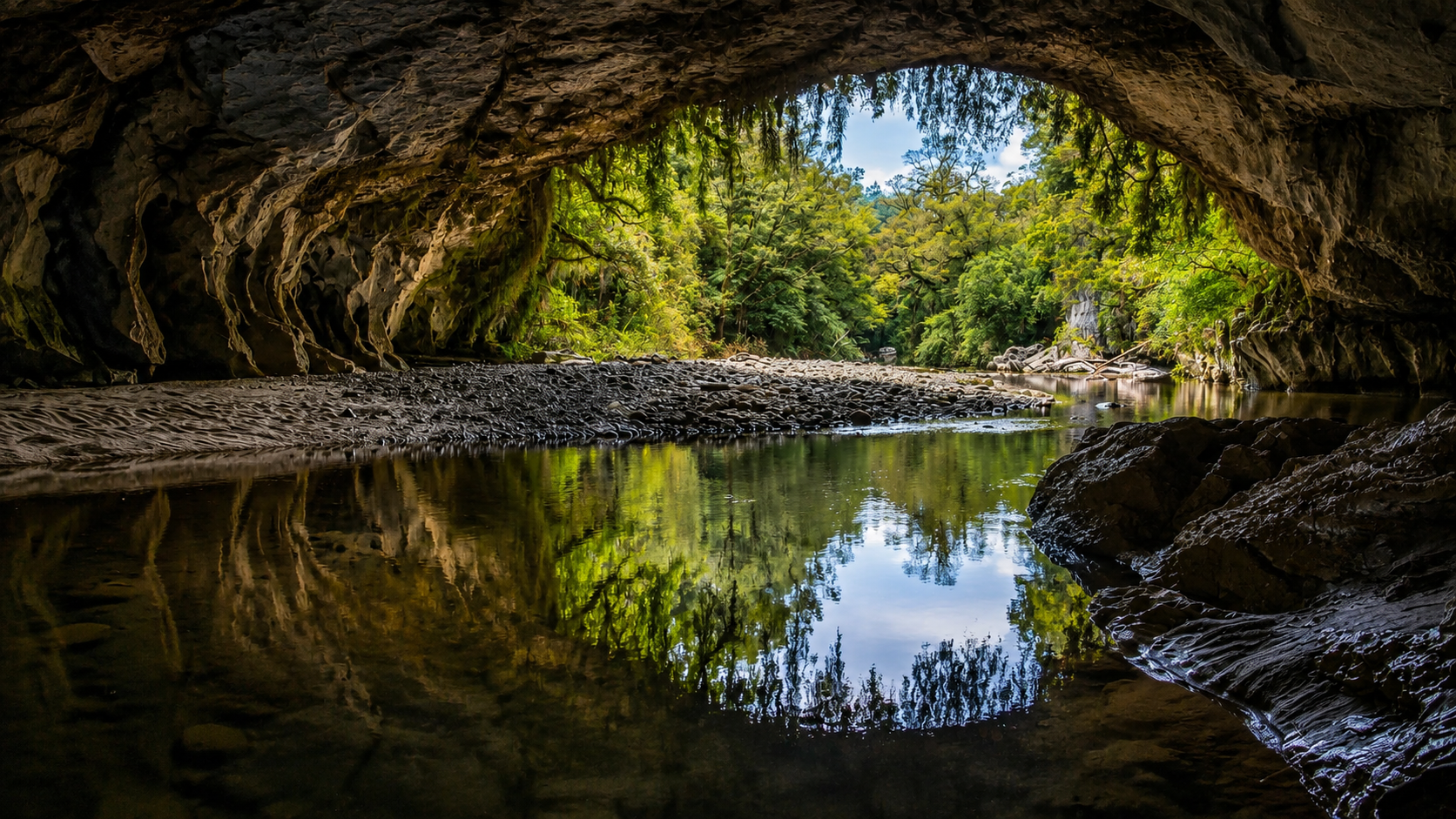
Head North to Karamea and Explore the Ōpārara Basin
5. Head North to Karamea and Explore the Ōpārara Basin
Best for: Rainforest, caves, geology and travellers who enjoy quieter places
Allow: At least one full day around Karamea, preferably two nights
My pick: Ōpārara Arch plus the Moria Gate and Mirror Tarn Loop
My verdict: The West Coast experience I would choose if I wanted somewhere that still feels genuinely out of the way
Karamea is different from most of the places on this list because you do not simply pass it while following the main West Coast route south.
You have to decide to go there.
From Westport, the road continues north for around 95 kilometres before eventually reaching Karamea, and there is no through-road carrying you onward to Nelson. Once you are finished, you come back out the same way.
That extra effort keeps the area considerably quieter than many of the more famous West Coast stops.
And once you reach the Ōpārara Basin, the detour starts making sense.
This part of Kahurangi National Park is a landscape of ancient rainforest, dark tea-coloured rivers, limestone caves and enormous natural arches. It feels completely different from the glacier valleys in the south or the open coastline around Punakaiki.
There is a slightly prehistoric atmosphere to the place, especially when you are walking under huge trees with moss covering almost everything around you.
If a dinosaur walked across the track, it would obviously be concerning.
It would not feel completely out of character.
Ōpārara Arch
The main attraction is the enormous Ōpārara Arch.
The walk itself is surprisingly straightforward: approximately 1.1 kilometres return through beech and podocarp forest, taking around 30 minutes.
The fact that it is easy does not prepare you for the scale of the arch.
You follow the river through the forest and gradually begin seeing the limestone ahead before eventually standing inside the huge natural opening.
DOC describes the arch as being formed in 35-million-year-old limestone and reputed to be the largest limestone arch in Australasia.
Whatever measurement you use, it is enormous.
The Ōpārara River running beneath it has a dark, almost whisky-coloured appearance caused by tannins from the surrounding forest, and that colour adds to the whole atmosphere.
It feels older and stranger than most of the West Coast attractions farther south.
Moria Gate and Mirror Tarn
I would not drive all the way into the basin for one short walk.
Add the Moria Gate and Mirror Tarn Loop.
The track passes through old-growth rainforest, beneath the smaller Moria Gate limestone arch and past Mirror Tarn, where the forest can reflect beautifully in calm conditions. DOC notes that the area is home to native birds including weka, kākā and robins, with whio sometimes seen along the river.
This is the walk where I would slow down.
The landscape is not about one enormous viewpoint.
The forest itself is the attraction.
Huge rimu and kahikatea rise above moss-covered ground while vines twist through the canopy. The whole place feels damp, green and old.
That is the Ōpārara experience I would remember.
The Road Into the Ōpārara Basin
This part is important.
Access uses McCallums Mill Road, a narrow and steep gravel forestry road north of Karamea.
DOC says the road is not suitable for large vehicles or campervans, and there is a 2.8-metre height restriction in the area.
I would take that seriously rather than deciding your campervan has survived worse.
If your vehicle is too large, look at local transport or guided options from Karamea.
This is a much more pleasant solution than meeting an oncoming vehicle halfway along a narrow gravel section while sitting behind the wheel of a large motorhome.
Why I Think Karamea Is Worth the Detour
The main reason is that it shows you another version of the West Coast.
Franz Josef is dramatic.
Punakaiki is dramatic.
Hokitika Gorge is immediately colourful.
Ōpārara is quieter and more subtle.
You travel farther to reach it, walk through dense forest and find huge limestone formations hidden away from the main tourist route.
Those sorts of places often become the parts of a road trip that you remember most clearly.
Stay in Karamea
If you make the effort to travel north, I would stay rather than trying to drive up, see the arches and immediately return to Westport.
Karamea sits beside Kahurangi National Park and has access to numerous other walks, as well as the western end of the Heaphy Track area.
This is exactly the sort of destination where an extra night improves the experience.
There is very little value in travelling somewhere remote and then rushing through it.
Aotearoa Adventures Tip
Check your vehicle before planning Ōpārara. If you are in a campervan or large motorhome, arrange suitable transport rather than assuming the access road will be fine.
Once you are there, allow time for more than the main arch. The rainforest around Moria Gate and Mirror Tarn is every bit as important to the experience.
Which West Coast Experiences Are Actually Worth Paying For?
The West Coast is one of the easiest South Island regions to enjoy without constantly paying for attractions.
That is something I would take advantage of.
Punakaiki, Hokitika Gorge, many Glacier Country walks and Ōpārara's public tracks are either free or involve only normal access and parking costs. The landscape already provides plenty to do.
That means I would save the activity budget for experiences that genuinely give you something extra.
If I Was Travelling on a Tight Budget
I would focus on the free experiences.
Walk the glacier valleys.
Visit Lake Matheson.
Walk around Punakaiki.
Explore Hokitika Gorge.
Choose a short section of rainforest track.
Spend time on the beaches.
The West Coast does not become less impressive because you did not buy a helicopter ticket.
If I Could Choose One Big Paid Experience
I would look seriously at a glacier heli-hike.
It is expensive, but it gets you onto an environment that is no longer safely accessible from the public walking tracks.
That is exactly the kind of experience I think is worth paying for.
If I Wanted Something Less Expensive
I would look at bike hire or an e-bike day on the West Coast Wilderness Trail.
You still get a different perspective on the landscape, and it makes a nice change from several days of driving.
If I Was Planning a Once-in-a-Lifetime West Coast Trip
My bigger spend would probably go towards a glacier heli-hike or longer scenic flight, then I would keep the rest of the trip relatively simple.
That gives you one genuinely memorable premium experience without turning every day into another expensive tour.
Don't Miss Lake Matheson
Lake Matheson is close enough to Fox Glacier that I would almost treat it as part of the Glacier Country experience rather than a separate attraction.
The classic reason to visit is the possibility of seeing Aoraki/Mount Cook and Mount Tasman reflected in the water.
The best conditions tend to be when the lake is calm.
If you are staying near Fox Glacier, I would consider walking it early in the morning before wind picks up.
But even if the reflection never appears, the track is still worth doing.
You are walking through West Coast forest around a peaceful lake with the Southern Alps nearby.
That is a perfectly good experience without needing to reproduce somebody else's photograph.
Don't Rush Through Haast
If your West Coast trip is continuing south towards Wānaka, the Haast area deserves more time than many itineraries give it.
The road between Haast and Wānaka passes through Te Wāhipounamu South West New Zealand World Heritage landscapes, with rainforest, mountain valleys, waterfalls and rivers appearing throughout the drive. The official West Coast road-trip route from Queenstown to Haast specifically highlights the forested mountains and numerous waterfall stops along State Highway 6.
This is another part of the Coast where the driving time on the map is not really the driving time you should plan.
Stop at the waterfalls.
Take some of the short walks.
Give the weather space to do something interesting.
If you arrive in Wānaka an hour later than expected because you kept stopping, I would consider that a successful West Coast drive.
How Many Days Do You Need on the West Coast?
The answer depends on how much of the Coast you are actually trying to see.
For the central route between Punakaiki and Glacier Country, I would aim for at least four nights.
Five or six is better if you want to cycle, spend more time around Hokitika or have some flexibility for glacier weather.
If you are adding Karamea and Ōpārara in the north, I would allow at least seven days overall.
The Coast is long, and the roads are scenic enough that constantly trying to reach the next town before dark becomes tiring.
You also need to remember that some of the places in this guide are not beside State Highway 6. Hokitika Gorge requires an inland detour. Karamea is a major northern diversion. Glacier activities can be affected by weather.
The West Coast rewards extra time more than a perfectly optimised schedule.
My Ideal 7-Day West Coast Road Trip
If I were planning a first trip that included all five main experiences in this guide, I would give it about a week.
Day 1 – Karamea and the Ōpārara Basin
Stay around Karamea and give the Ōpārara Basin most of the day.
Walk to Ōpārara Arch, explore Moria Gate and Mirror Tarn, then return to Karamea without rushing.
This is not the day to start worrying about how quickly you can get south.
Day 2 – Karamea to Punakaiki
Drive back towards Westport and then follow the Great Coast Road south.
Stop along the coastline and reach Punakaiki with enough time to explore the Pancake Rocks.
If the tide and swell are not ideal for the blowholes, you can always return the following morning.
Day 3 – Punakaiki to Hokitika
Spend the morning on another Paparoa National Park walk before continuing south through Greymouth towards Hokitika.
Explore the town and beach in the evening.
Day 4 – Hokitika Gorge or Wilderness Trail
Use the morning for Hokitika Gorge, then spend the afternoon cycling a shorter section of the West Coast Wilderness Trail.
If cycling is a bigger priority, make this the full bike day and move the gorge into the previous or following morning.
Day 5 – Hokitika to Glacier Country
Drive south towards Franz Josef.
Explore the glacier valley in the afternoon and stay in Franz Josef or Fox Glacier.
Do not book a helicopter experience late in the afternoon unless you are comfortable with the possibility of weather changing the plan.
Day 6 – Glacier Country
This is the day I would reserve for the major experience.
Do the heli-hike or scenic flight if you have booked one.
Then explore Fox Glacier and Lake Matheson later if conditions are good.
If the flight is cancelled, you have an entire day of walks and viewpoints available while you wait for another opportunity.
Day 7 – Glacier Country to Haast and Wānaka
Continue south through South Westland towards Haast and over the pass.
Do not try to make up time.
Stop at the short walks and waterfalls along the way.
By the time you reach Wānaka, you will have seen how dramatically the South Island changes from wild coastline and rainforest back towards the drier interior.
Best Time to Visit the West Coast
There is no season when the West Coast suddenly becomes predictable.
That is worth understanding from the beginning.
Summer – December to February
Summer gives you the longest daylight hours, which is incredibly useful for road trips.
There is more time for walking, cycling and stopping along the route without constantly watching sunset.
It is also a busier period, particularly around Glacier Country and the main holiday season.
And yes, it can still rain heavily.
This is the West Coast.
Summer is not a guarantee of dryness.
Autumn – March to May
Autumn is one of the periods I would happily recommend.
The main holiday crowds begin easing, walking temperatures can be comfortable and there is still enough daylight for good road-trip days.
As the season progresses, mountain weather becomes more relevant, but the coast itself can still be excellent.
Winter – June to August
Winter is quieter and can be beautiful around the glaciers, particularly when there is fresh snow across the higher Southern Alps.
The shorter daylight does mean you need to plan your driving more carefully.
If you are crossing alpine passes to reach or leave the Coast, check road conditions before travelling.
Spring – September to November
Spring can give you dramatic mountain scenery, plenty of water in the rivers and rapidly changing weather.
It can also be one of those times where you experience three different seasons before lunch.
I would pack accordingly.
Do You Need a Car on the West Coast?
For this style of trip, I would definitely want one.
The West Coast is made for stopping.
A vehicle lets you pull into short walks, beaches and viewpoints that would be difficult to fit into a rigid tour schedule.
There are other ways to reach the region, including the TranzAlpine train to Greymouth, but once you begin exploring north or south, having independent transport makes life much easier.
A campervan also suits the Coast extremely well, but it comes with one important warning:
not every side road is suitable for a campervan.
The Ōpārara road is a perfect example.
Know the size and limitations of your vehicle and follow local restrictions.
Being on holiday does not make a six-metre motorhome smaller.
Where Should You Stay on the West Coast?
I would move as you travel rather than trying to choose one central base.
The Coast is simply too long for constant backtracking.
Karamea
Stay here if you are exploring Ōpārara and the northern end of the Coast.
It is remote enough that staying overnight is part of the appeal.
Punakaiki
This is a good place to spend a night if you want more than a quick Pancake Rocks stop.
You can explore Paparoa National Park in the morning or evening when fewer day visitors are around.
Hokitika
Hokitika is probably my favourite practical central stop.
It gives you accommodation, food, the beach, access to Hokitika Gorge and easy links into the Wilderness Trail.
Franz Josef
Stay here if you want the widest choice of Glacier Country activities and easy access to the Franz Josef valley.
Fox Glacier
Fox is smaller and quieter, and I particularly like it for access to Lake Matheson.
For a two-night Glacier Country stay, either Franz Josef or Fox works perfectly well.
You do not need to change accommodation between them unless you want to.
Haast
Haast is a useful stop if you want to slow the journey between Glacier Country and Wānaka.
It also gives you more time to explore South Westland rather than treating it as a corridor between two more famous destinations.
Is the West Coast Expensive?
It does not have to be.
This is one of the parts of the South Island where I think you can control the activity budget fairly easily.
Most of the natural highlights are free or inexpensive.
Your main costs are likely to be transport, accommodation and food unless you add premium experiences such as helicopter trips.
If you want to spend less, walk.
If you want one big experience, choose it carefully.
I think that is much better than booking a collection of average tours simply because they are available.
For Aotearoa Adventures, this is also how I would approach the affiliate links.
Use strong booking calls where there is a genuine decision to be made: heli-hikes, scenic flights, bike hire and guided Ōpārara experiences.
Leave the free attractions alone.
The reader is far more likely to trust a glacier recommendation if the article has just spent several sections helping them enjoy places without spending anything.
The West Coast for Families
The West Coast works very well for families because so many of the best experiences involve short walks rather than major hikes.
Punakaiki is easy.
Hokitika Gorge has short options.
The glacier valleys include family-friendly tracks.
Lake Matheson is manageable for active families, and shorter sections of the Wilderness Trail can work well for confident young cyclists.
The main challenge is driving distance.
I would avoid planning huge driving days with children and then expecting everyone to happily complete three walks when you arrive.
Break the journey up.
The Coast gives you plenty of reasons to do that anyway.
The West Coast for Adventure Travellers
If your version of the West Coast needs more adrenaline, there is plenty available.
Glacier heli-hiking is the obvious standout, but you can also look at scenic flights, skydiving around Glacier Country, kayaking, mountain biking, rafting and more demanding hiking.
The West Coast Wilderness Trail can become a multi-day cycling trip, while the national parks contain much more serious tramping routes beyond the easy walks covered in this guide.
I would still resist the temptation to make every day an organised adventure.
Part of what makes the West Coast special is moving through the landscape independently.
West Coast or Queenstown?
They are almost opposites, which is exactly why I would include both on a South Island trip.
Queenstown is easier if you want organised adventure, restaurants, nightlife and a huge range of bookable activities.
The West Coast is better for road trips, rainforest, glaciers, wild coastline, small towns and a feeling that the landscape is still deciding what happens.
Queenstown gives you energy.
The West Coast gives you space.
I would not choose between them unless the itinerary forced me to.
A Few West Coast Tips I Would Know Before Going
Give yourself more time than the navigation app suggests. The road may technically take three hours, but you are unlikely to drive it without stopping.
Keep a waterproof jacket somewhere you can actually reach. Burying it beneath six bags in the boot defeats the purpose.
Carry insect repellent. Sandflies are particularly fond of visitors standing still near rivers, lakes and forest.
Keep an eye on the fuel gauge. Settlements can be spread out, especially once you move into South Westland or head north towards Karamea.
Download maps and anything else you need before heading into more remote areas. Mobile coverage is not guaranteed everywhere.
Check the road after major weather. The West Coast is dynamic, and State Highway 6 can be affected by slips, flooding and fallen trees.
Do not treat every beach as safe for swimming. The Tasman Sea can be rough, and many isolated beaches are not patrolled.
Most importantly, leave enough room for spontaneous stops. Some of my favourite West Coast places are exactly the sort of places you would drive straight past if you were twenty minutes late for something.
Final Thoughts: Is the West Coast Worth Visiting?
Absolutely.
In fact, I think the West Coast is one of the parts of the South Island that benefits most from being given proper time.
It is not a destination built around one famous attraction.
The whole journey is the experience.
One day you can be standing in temperate rainforest looking towards a glacier. The next you are watching the Tasman Sea explode through limestone blowholes. A day later you might be cycling beside a glacial river, crossing a suspension bridge above turquoise water or driving a gravel road into a forest where enormous limestone arches have been hidden for thousands of years.
Then there are all the places between those things.
Beaches without names you recognise.
One-lane bridges.
Small towns.
Rivers.
Waterfalls beside the highway.
Roadside lookouts where you stop for five minutes and stay for half an hour.
That is what I think makes the West Coast special.
It is a place where the planned highlights matter, but the spaces between them matter just as much.
So do the glacier experience if you have always wanted to walk on ice. Visit Punakaiki. Go out to Hokitika Gorge. Get on a bike for a day and travel slowly through the forest. If you have enough time, make the detour to Karamea and see just how quiet the South Island can still feel.
But do not race from one attraction to the next simply because your itinerary says you should.
Let the weather change something.
Stop when the coast looks good.
Take another walk because you saw a sign beside the road.
Arrive slightly later than planned.
The West Coast is one of those places where that usually means you are travelling it properly.