

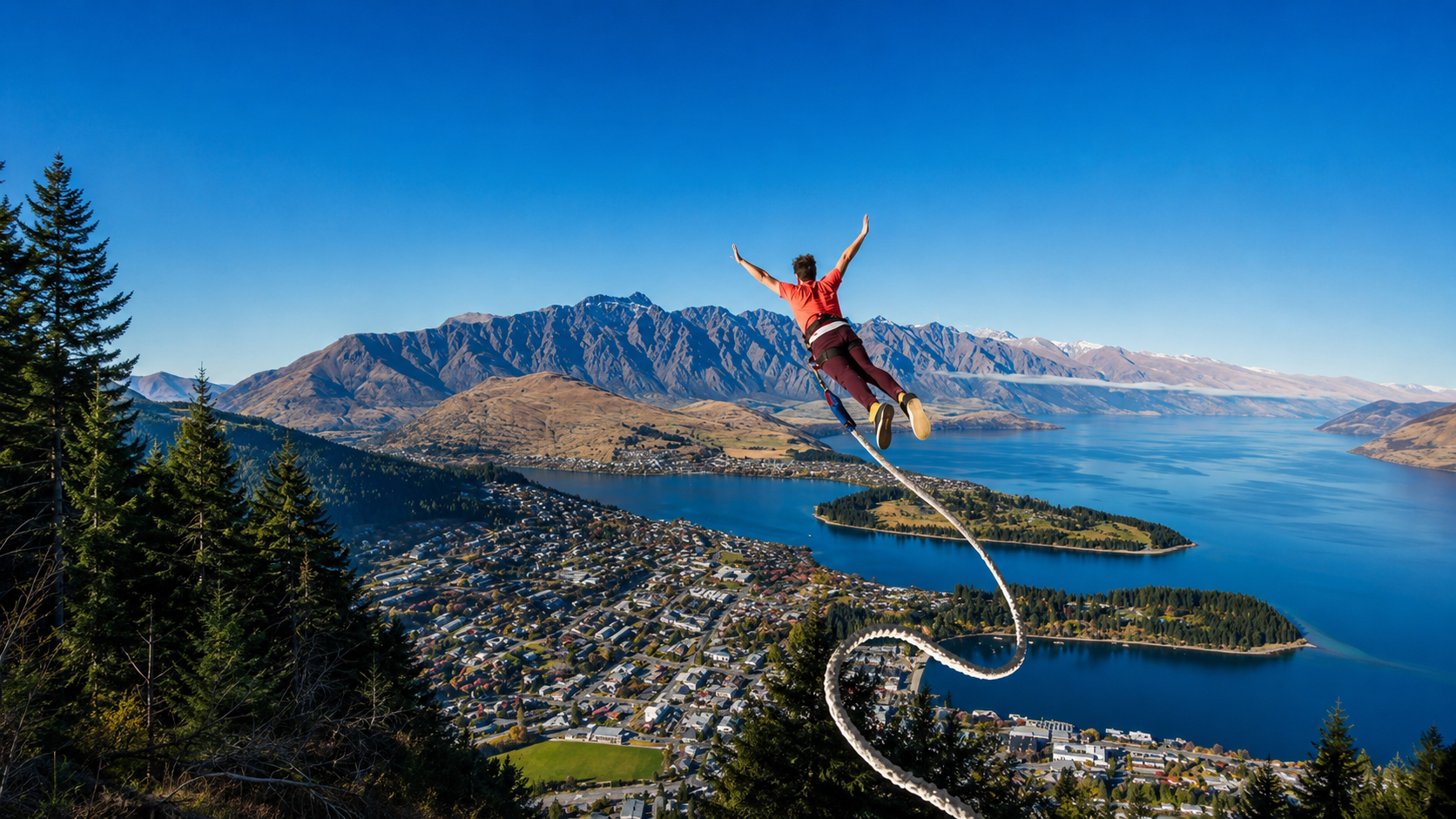
BUNGY JUMPING
5 Best Places to Bungy Jump in New Zealand: The Complete Guide
There are easier ways to see New Zealand than standing on the edge of a bridge with a bungy cord attached to your ankles.
They are also considerably less memorable.
Bungy jumping has become so closely connected with New Zealand adventure travel that it is difficult to imagine Queenstown without it. The most famous jump of all, Kawarau Bridge, became the world’s first commercial bungy site in 1988 and helped turn an activity that most people would once have considered completely unreasonable into one of New Zealand’s best-known visitor experiences.
What I find interesting about bungy is that the height is only part of the experience. A 134-metre jump into the Nevis Canyon is obviously very different from a 35-metre bridge jump at Hanmer Springs, but the intimidating moment is remarkably similar. You still have to walk towards the edge, look down and deliberately make the decision to leave something perfectly solid.
There is no aircraft carrying you into the sky and no tandem instructor attached to your back making the final decision for you.
With bungy, you have to jump.
That is exactly why people remember it.
New Zealand currently has everything from the enormous Nevis Bungy outside Queenstown to river, harbour and historic bridge jumps in Taupō, Auckland and Hanmer Springs. Some allow tandem jumps, some offer a water touch and one is more than three times the height of most of the others.
If I were choosing the five best bungy jumps in New Zealand, these are the ones I would put at the top of the list.
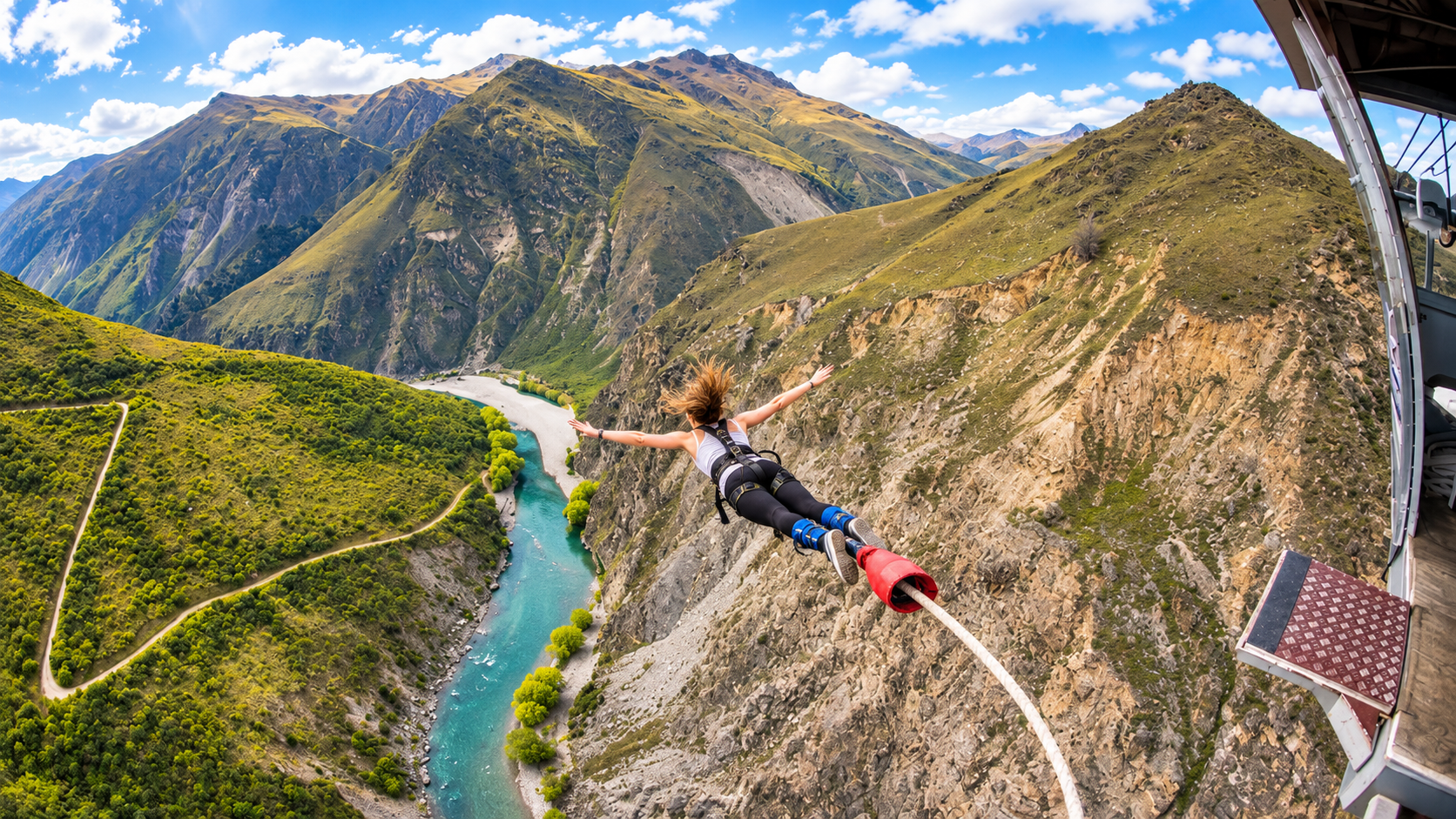
1. Nevis Bungy, Queenstown – The Biggest Bungy Jump in New Zealand
Best for: Serious adrenaline seekers and bucket-list travellers
Height: 134 metres
Freefall: Around 8.5 seconds
My pick: The jump to choose if height is the reason you came
Important: Solo only
The Nevis Bungy is what happens when a normal bungy jump no longer sounds frightening enough.
At 134 metres, it is New Zealand’s highest commercial bungy jump, dropping from a suspended pod above the remote Nevis River canyon outside Queenstown. The freefall lasts around 8.5 seconds, which may not sound particularly long when you are reading this from somewhere safe, but I suspect your opinion of eight and a half seconds changes slightly when there is nothing underneath you.
The setting makes the experience even more intimidating.
This is not a platform sitting conveniently beside downtown Queenstown. The Nevis Playground sits roughly 45 minutes from town in a remote high-country canyon, and access is by AJ Hackett’s 4WD transport rather than self-drive. The journey along the gravel access road is part of the experience, and the complete trip from central Queenstown takes around four hours.
By the time you reach the site, there has been plenty of time to think about what you have booked.
Possibly too much time.
The Nevis Pod
The jump platform itself is suspended above the canyon.
That matters psychologically.
At a normal bridge bungy, there is still a bridge around you. At Nevis, you move into a pod suspended high over the valley, with the Nevis River sitting an uncomfortable distance below.
The scenery is spectacular, but this is one of those occasions where I am not sure everybody is concentrating on the scenery.
Then comes the edge.
The jump master prepares you, you move forward and eventually reach the moment where there is really nothing left to do except jump.
This is the part of bungy that makes it different from almost every other adventure activity.
You have time to think.
You can see the drop.
You know exactly what is coming.
And then somebody counts down.
What Does 134 Metres Feel Like?
The extra height fundamentally changes the jump.
At Kawarau or Taupō, the drop happens quickly. You leave the platform, accelerate and soon feel the cord begin taking over.
At Nevis, there is enough distance for you to experience genuine freefall.
You keep falling.
And falling.
There is a point where your brain has probably expected the cord to do something by now and it apparently has other plans.
Then the bungy begins stretching, the fall slows and you rebound through the canyon.
That extra time is why I would choose Nevis if the challenge itself was the main reason for booking.
Is Nevis a Good First Bungy?
It depends on you.
There is no rule saying your first bungy needs to be small.
If you are the type of person who knows that doing Kawarau will simply result in you wondering what Nevis would have been like, I would go straight to Nevis.
On the other hand, if you are genuinely uncertain whether you will be able to step off the platform, Kawarau gives you the classic experience with a much less intimidating drop.
Nevis is not automatically “better” simply because it is higher.
It is more extreme.
There is a difference.
Who Can Jump?
The current minimum age is 13, with adult consent required for participants under 15. Jumpers must currently weigh between 45 and 127 kilograms, and unlike Kawarau, Nevis Bungy does not offer a tandem option.
That solo requirement feels appropriate.
Nobody else is going to solve this one for you.
Aotearoa Adventures Tip
If Nevis is one of the main reasons you are travelling to Queenstown, book it reasonably early in your stay rather than leaving it until the final afternoon.
Also give it the time it deserves. The full experience takes around four hours from Queenstown, so I would not pack another major booking immediately afterwards.
You have just voluntarily fallen 134 metres into a canyon.
You are allowed to have lunch.
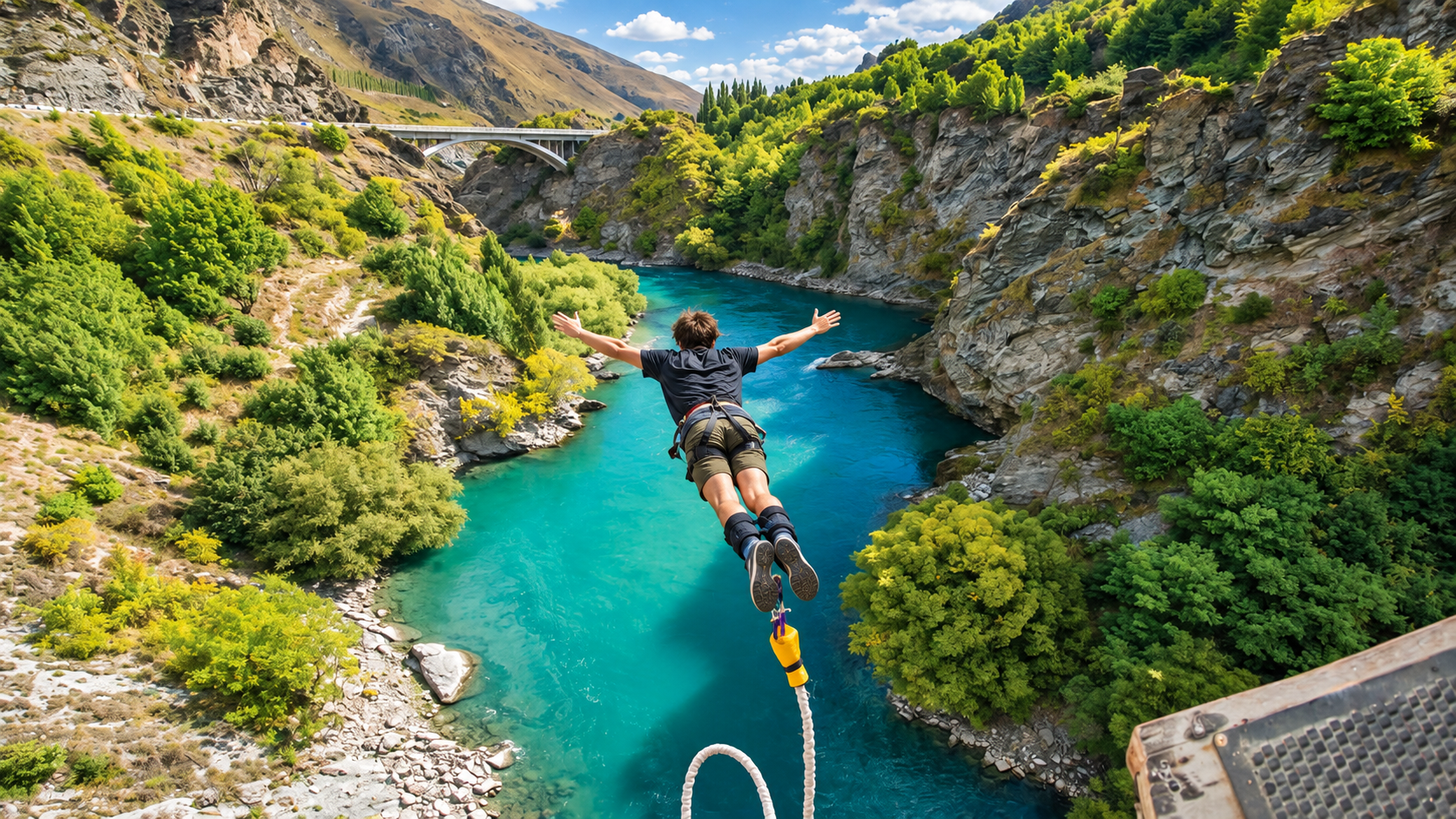
2. Kawarau Bridge Bungy – The Original New Zealand Bungy
Best for: First-time bungy jumpers, couples and anyone interested in the history of New Zealand adventure tourism
Height: 43 metres
Freefall: Roughly 2–3 seconds
My pick: Probably the best first bungy in New Zealand
Bonus: Tandem and water-touch options
If Nevis is about doing the biggest possible jump, Kawarau Bridge is about doing the original.
This is the site that helped make bungy jumping famous.
AJ Hackett and Henry van Asch established commercial bungy jumping here in 1988, using the historic suspension bridge above the Kawarau River. More than three decades later, people are still walking onto the same bridge, looking down at the same river and asking themselves roughly the same question:
Why did I book this?
The jump is 43 metres, which is considerably lower than Nevis but still high enough to feel completely unreasonable when your toes reach the edge.
Why Kawarau Is Such a Good First Bungy
For me, the great thing about Kawarau is that it feels like a complete experience without needing to be the biggest jump.
The bridge is beautiful.
The Kawarau River runs directly underneath you.
There are viewing platforms where friends and family can watch, and the whole site has an atmosphere that builds as you see other people take their turn.
Watching does have one disadvantage.
You start noticing the different approaches people take.
Some people walk out calmly, listen to the countdown and dive straight away.
Others reach the edge and suddenly discover that they would like another five minutes to reconsider several important life decisions.
Both are completely normal.
The Water Touch
Kawarau is also one of the jumps where you can request a water touch, depending on conditions.
The crew adjusts the jump based on factors such as your weight and river level, with the aim of getting you close enough to the water for anything from a light touch to a more enthusiastic dunk. It cannot be guaranteed, but it adds another element to the experience if conditions allow.
Personally, if I had already convinced myself to jump from the bridge, I think I would ask.
You may as well make the photograph interesting.
Tandem Bungy
Another major advantage is the tandem option.
Kawarau allows two people to jump together, which makes it particularly appealing for couples, friends or family members who want to share the experience. Current limits allow solo jumpers from 35 to 160 kg and tandem combinations up to 235 kg, subject to the operator’s requirements and assessment.
For some nervous jumpers, having someone beside them makes the whole thing feel easier.
For others, it means having somebody next to you loudly explaining that they have changed their mind at exactly the wrong moment.
Either way, you will probably remember it.
Easy to Add to a Queenstown Trip
Kawarau is also much easier logistically than Nevis.
The Bungy Centre sits around 25 minutes from Queenstown on the road towards Gibbston, and you can self-drive and park there. Transport options also operate from Queenstown.
That makes it very easy to combine with an Arrowtown or Gibbston day.
In fact, if you are cycling through the Gibbston area, the bridge sits alongside the wider trail network, so you can quite literally spend the day enjoying wineries and scenery while other people voluntarily throw themselves towards the river.
Kawarau or Nevis?
This is probably the biggest bungy decision in New Zealand.
I would choose Kawarau if you want history, atmosphere, a tandem option or a first jump that feels intimidating without being overwhelming.
I would choose Nevis if the whole reason you are bungy jumping is to find out whether you can make yourself step off something enormous.
If money and nerves allow, there is always a third option.
Do both.
Aotearoa Adventures Tip
If you are nervous, I would avoid spending an hour standing on the viewing deck watching people before your jump.
A little observation is useful.
Forty-seven detailed studies of other people's facial expressions may not be.
Check in, listen to the crew and get it done.
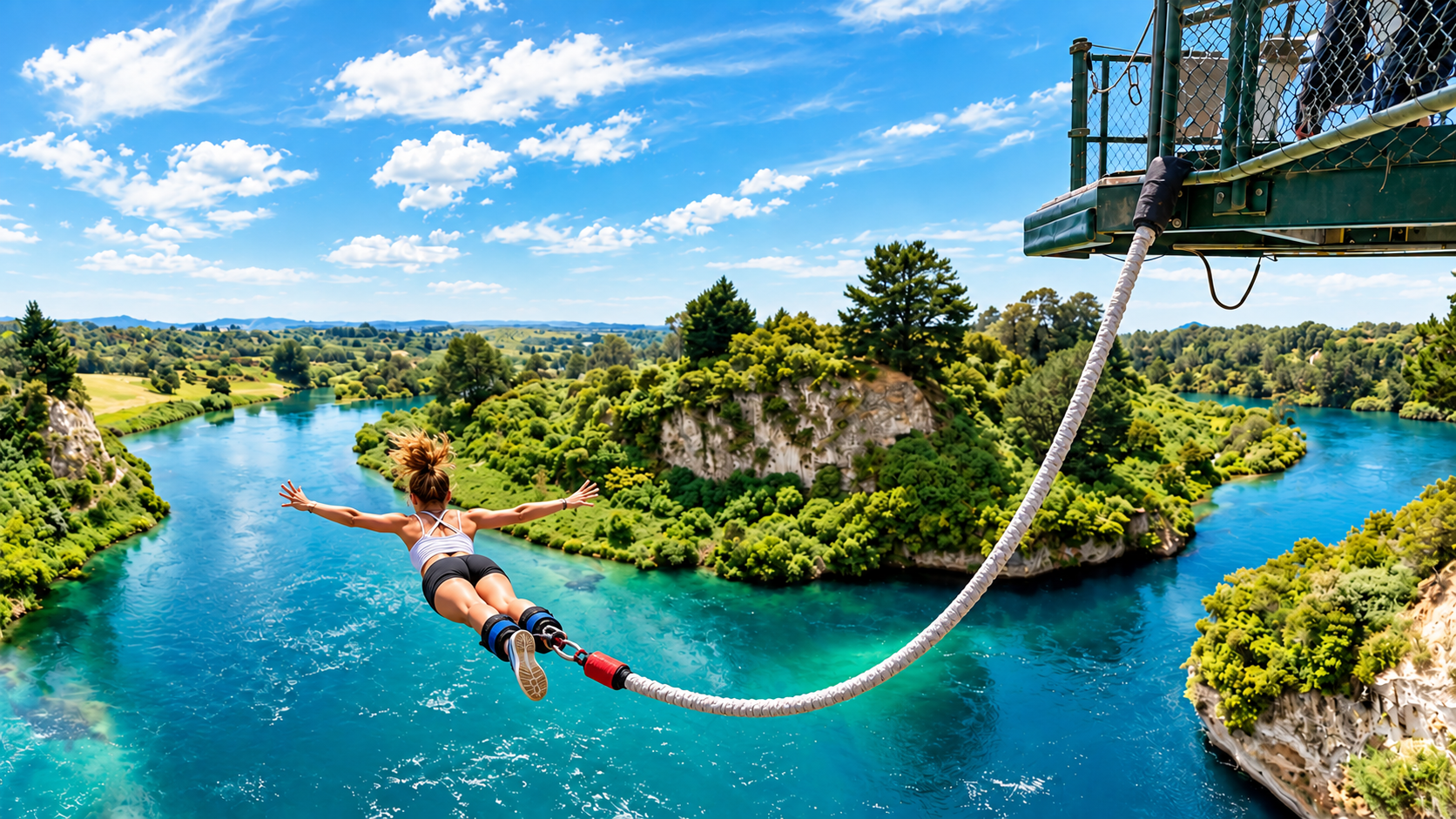
3. Taupō Bungy – My Pick for the North Island
Best for: North Island road trips, first-time jumpers and couples
Height: 47 metres
Setting: Waikato River gorge
My pick: The best all-round North Island bungy
Bonus: Tandem and water-touch options
Taupō is one of those towns where adrenaline activities make complete sense.
You can skydive above Lake Taupō, jet boat along the Waikato River, raft nearby rivers and hike through volcanic country.
So it seems only reasonable that somebody built a platform over a river gorge and started encouraging visitors to jump from it.
The Taupō Bungy is 47 metres high, slightly higher than Kawarau, and sits on a cantilever platform extending over the Waikato River. The operator describes it as New Zealand’s only cliff-top bungy site and the country's highest water-touch bungy.
The location is excellent.
You are looking directly into the blue-green Waikato River, with bush and steep riverbanks surrounding the platform.
It feels surprisingly wild considering central Taupō is only a few minutes away.
The Platform Makes It Feel Different
Most people imagine bungy jumping from a bridge.
Taupō is different because the purpose-built platform extends out from the cliff.
That means there is very little visual distraction.
You walk towards the end and the river is simply sitting underneath you.
The river also gives you something very obvious to focus on during the jump, particularly if you have requested a water touch.
Current conditions determine whether that is possible, so it cannot be guaranteed.
Tandem or Solo?
Like Kawarau, Taupō offers tandem bungy jumping.
That makes it a particularly good option for travellers who want to jump together.
Current requirements list a minimum age of 10 and minimum weight of 35 kg. Solo jumpers can currently weigh up to 140 kg, while tandem participants have a combined limit of 180 kg and cannot differ by more than 30 kg.
The full experience is relatively easy to fit into a day as well, with the operator recommending roughly an hour.
That leaves plenty of time for other Taupō activities.
Whether you actually feel like doing another adrenaline activity immediately afterwards is a separate question.
Taupō Bungy or Taupō Skydive?
If you are deciding between the two, they are far more different than people sometimes realise.
Skydiving gives you altitude, huge views and a long build-up inside the aircraft.
Bungy is shorter but psychologically more direct.
You stand at an edge and decide to leave it.
For some people, skydiving actually feels easier because the tandem instructor is managing the exit.
At the bungy platform, everybody is waiting for you.
If you want the bigger scenic experience, choose the skydive.
If you want the bigger test of nerve, I would choose the bungy.
Or you can apparently decide that one encounter with gravity is inadequate and do both.
Build a Taupō Adventure Day
The bungy site sits on Spa Road and is easy to combine with other attractions around the Waikato River.
Huka Falls is nearby, as are jet boating and various walking tracks, while Tongariro National Park is farther south.
There are also bungy-and-jet-boat combinations available, making Taupō particularly good if you want one dedicated adventure day.
Aotearoa Adventures Tip
If you're travelling mainly through the North Island, I would not feel that you need to wait for Queenstown to bungy jump.
Taupō is a proper destination jump in its own right.
The river setting is fantastic, the logistics are easy and you can still tell everybody you voluntarily threw yourself head-first towards the Waikato River.
CHECK TAUPŌ BUNGY AVAILABILITY
4. Auckland Harbour Bridge Bungy – The Best City Bungy
Best for: Auckland stopovers, first-time visitors and travellers without time to reach Queenstown or Taupō
Height: 40 metres
Setting: Waitematā Harbour
My pick: The most convenient major bungy in New Zealand
Bonus: Tandem and possible ocean touch
Auckland is probably not the first place most people imagine when they picture bungy jumping in New Zealand.
That is exactly what makes this one interesting.
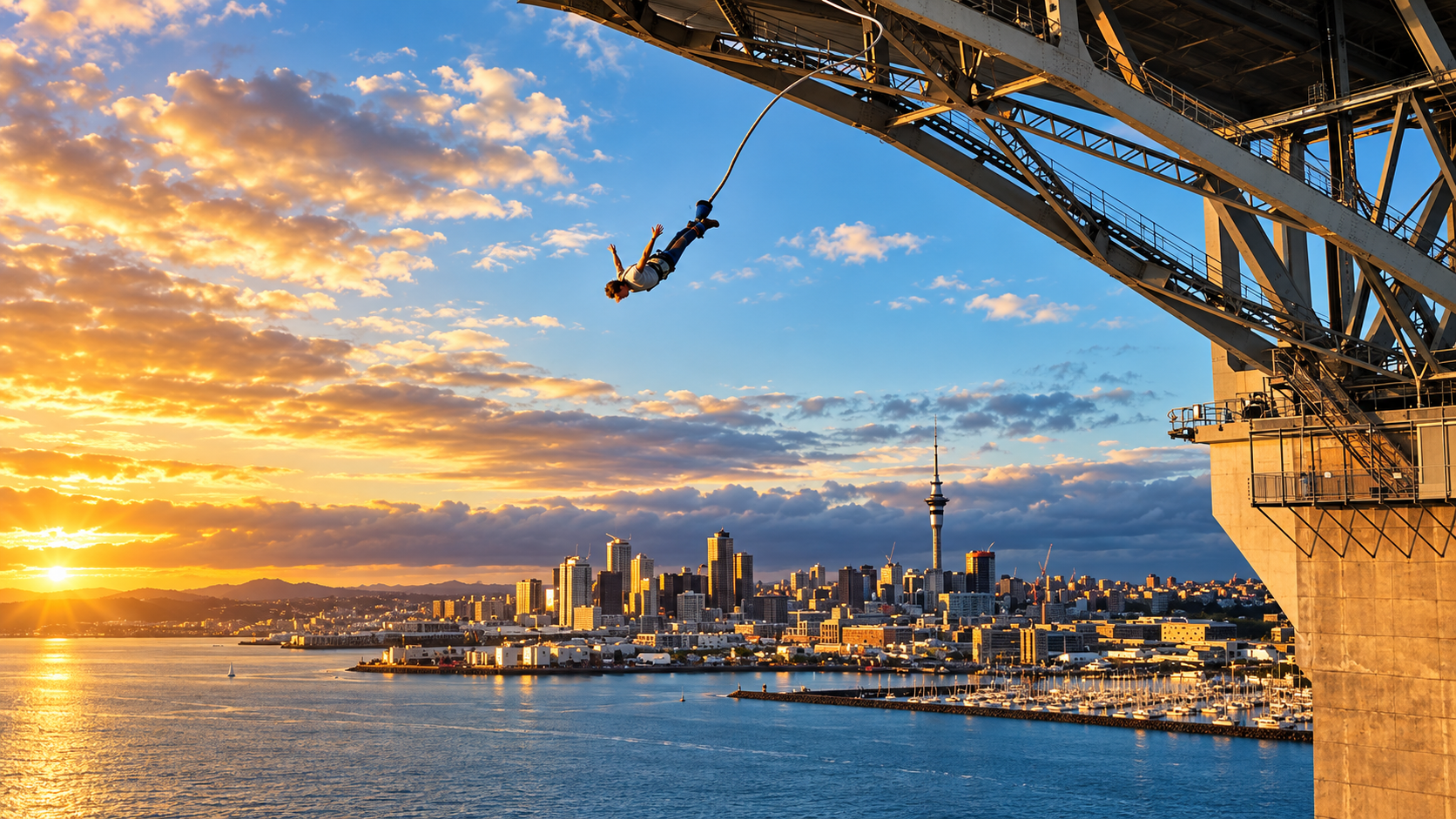
Instead of alpine mountains or a remote river gorge, you climb beneath one of the country's busiest bridges and jump directly above Waitematā Harbour.
The Auckland Harbour Bridge Bungy is a 40-metre jump from a purpose-built pod attached beneath the central arch of the bridge. It is also currently the only commercial bungy in New Zealand or Australia offering the possibility of an ocean touch.
It gives the entire experience a very different character.
Cars continue travelling above you while boats move around the harbour below.
Somewhere nearby, thousands of perfectly sensible people are commuting to work.
You are preparing to jump from their bridge.
The Walk Out Is Part of It
You do not simply step from the car park onto the bungy platform.
The experience takes you out onto the Harbour Bridge structure towards the jump pod.
That gradual approach builds anticipation in much the same way as the flight to altitude does before a skydive.
The difference is that you can see exactly where you are going.
There is plenty of time for the bridge to become higher than you remember from driving over it.
Ocean Touch
Like Kawarau and Taupō, you can request a water touch, although the operator cannot guarantee it because tides and conditions affect what is possible.
The fact that it is seawater rather than a river gives Auckland its own little claim to fame.
If you are going to jump into the harbour, you might as well at least ask how close they can get you.
Tandem Option
Auckland also allows tandem bungy jumping.
Current requirements set a minimum age of 10, a weight range of 35–150 kg and a maximum tandem weight of 150 kg, with no more than a 30 kg difference between tandem participants.
That makes it another good first-jump option if sharing the experience matters.
The Main Advantage: Convenience
This is what makes Auckland particularly useful for international visitors.
The bridge bungy base is around five minutes' drive from the city centre at Westhaven Marina, and the operator suggests allowing roughly two hours for the experience.
You do not need to build a road trip around it.
You can be staying in central Auckland, do a bungy jump in the morning and be eating lunch in the city afterwards.
That is difficult to beat for convenience.
Is the Sky Tower SkyJump a Bungy?
Not quite.
Auckland's SkyJump drops you from 192 metres, which sounds much bigger than the Harbour Bridge Bungy, but it is a wire-guided descent rather than a traditional elastic-cord bungy jump.
Both are adrenaline activities.
They just produce very different sensations.
If your goal is to say you have actually done a New Zealand bungy, choose the Harbour Bridge.
If the idea of stepping from the Sky Tower appeals more, SkyJump is a separate experience worth considering.
Aotearoa Adventures Tip
Auckland is the jump I would recommend to somebody who keeps saying:
“I really want to bungy in New Zealand, but I don't think my itinerary goes anywhere near Queenstown.”
Problem solved.
You do not need mountains behind you for stepping off a bridge to feel dramatic.
5. Hanmer Springs Bungy – A Brilliant Addition to a Canterbury Road Trip
Best for: Christchurch travellers, families with older children and visitors wanting several activities in one place
Height: 35 metres
Setting: Waiau River
My pick: Combine it with jet boating or rafting
Bonus: Tandem option
Hanmer Springs does not receive the same bungy attention as Queenstown or Taupō, but I think it deserves a place on this list.
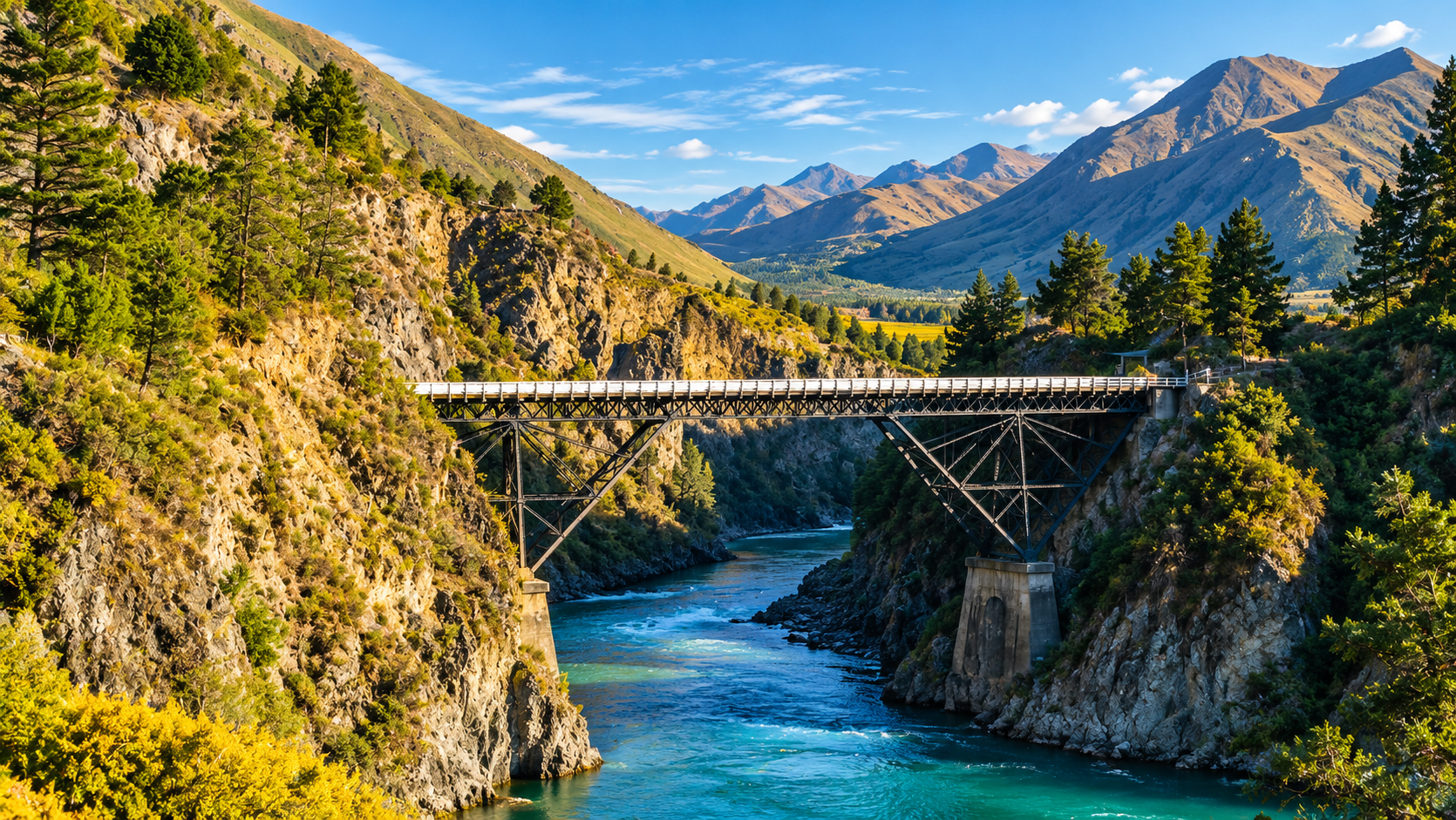
The bungy operates from the historic Waiau Ferry Bridge, around 35 metres above the Waiau River. It is Canterbury's only commercial bungy site and is operated by Hanmer Springs Attractions.
At 35 metres, it is the shortest jump among my five choices.
Do not mistake that for easy.
Standing 35 metres above a river is still standing 35 metres above a river.
The part of your brain responsible for basic self-preservation is unlikely to respond with:
“Excellent. This one is only 35 metres. Nothing to worry about.”
Why Hanmer Works
The main appeal is that bungy fits naturally into a broader Hanmer Springs trip.
The area already has rafting, jet boating, quad biking, mountain biking and the famous thermal pools.
That creates what I think is one of the best adventure combinations in New Zealand.
Spend part of the day making questionable decisions around the Waiau River.
Then sit in hot water for the rest of it.
There is a certain logic to that.
The Jump
The experience begins with a safety briefing before you move onto the historic bridge.
Unlike the water-touch options at Kawarau, Taupō and Auckland, Hanmer Springs says its bungy does not touch the water. Jumpers finish approximately two metres above the river before being collected from below.
The jump itself is quick, and the operator lists each bungy session at around 30 minutes, making it particularly easy to combine with another activity.
Tandem Bungy
Hanmer also offers tandem jumps, which again makes it attractive to friends and couples.
The current minimum age is 10, and jumpers must weigh at least 35 kg and be able to fit the safety equipment properly.
This makes Hanmer one of the more approachable options in the country for families travelling with adventurous teenagers.
Combine It With Something Else
This is where Hanmer probably beats the other bungy destinations for value.
The operator offers combinations pairing the jump with jet boating, rafting and quad biking, along with larger multi-activity packages.
If I were travelling from Christchurch and had a full day, I would probably combine bungy with either rafting or jet boating.
The activities all make sense together because they use the Waiau River and surrounding landscape rather than feeling like a collection of unrelated attractions.
Christchurch to Hanmer Springs
Hanmer Springs is roughly a 90-minute drive from Christchurch, which makes it possible as a day trip but much better as an overnight stop.
I would stay.
Do the adventure activities during the day, visit the thermal pools later and enjoy the village rather than immediately driving back to Christchurch.
Aotearoa Adventures Tip
If you are nervous about bungy and Nevis feels completely unreasonable, Hanmer is an underrated first jump.
The height is lower, the experience is quick and you can pair it with something like jet boating to make the trip feel like a complete adventure day rather than travelling there solely for thirty seconds of terror.
Which New Zealand Bungy Should You Choose?
This is how I would break it down.
For the ultimate jump: Nevis.
There really isn't much competition. At 134 metres, it is in a completely different category from the rest.
For your first bungy: Kawarau.
You get the history, classic bridge setting, water-touch option and the atmosphere of the World Home of Bungy.
For the North Island: Taupō.
The Waikato River gorge is beautiful, and the combination of tandem jumping, water touches and an easy location makes it an excellent all-round choice.
For convenience: Auckland.
You can fit it into a city stay without redesigning the entire itinerary.
For an adventure weekend: Hanmer Springs.
Bungy, rafting, jet boating, quad biking and thermal pools work extremely well together.
Nevis vs Kawarau: Which Queenstown Bungy Is Better?
This question deserves its own answer because so many people visit Queenstown knowing they want to bungy but are not sure which one.
I would not automatically say Nevis.
Nevis is bigger. Kawarau is more iconic.
The Nevis Bungy is 134 metres compared with 43 metres at Kawarau, and its 8.5-second drop is significantly longer. It also sits in a remote canyon and takes around four hours from Queenstown because of the access journey.
Kawarau is easier to reach, allows tandem jumps and offers the possibility of touching the river. It is also the historic commercial bungy site that started operating in 1988.
If this is your first jump and you are genuinely nervous, I would probably choose Kawarau.
If the reason you are bungy jumping is because you want to do something properly intimidating, choose Nevis.
And if you're already asking whether you should do both, I suspect you already know the answer.
Is Bungy Jumping Safe?
Bungy jumping is an adventure activity and it carries inherent risk.
That should not be hidden behind marketing language.
Use established commercial operators, listen carefully during the briefing and disclose relevant medical information when asked.
Operators have their own weight, age, medical and weather requirements, and the jump crew makes the final call about whether somebody can participate safely.
I would also avoid treating the eligibility information in any travel blog — including this one — as more authoritative than the operator.
If you have a medical condition, previous injury, pregnancy, high blood pressure concerns or anything else you think may affect your jump, contact the operator before booking.
That is much more useful than discovering a restriction after travelling across the country.
What Does Bungy Jumping Actually Feel Like?
The difficult part is the edge.
That is the part I would prepare for mentally.
You are normally surprisingly calm during check-in. There is paperwork, a harness, people talking and enough going on to keep you distracted.
Then you move towards the jump platform.
Things get quieter.
You start looking down.
The staff prepare the equipment and give you instructions.
Eventually you shuffle forward until your toes are somewhere they do not feel they should be.
This is the moment where every natural instinct tells you to move backwards.
The countdown begins.
The Jump
Once you actually leave the platform, everything happens quickly.
There is the initial sensation of falling, acceleration and a sudden realisation that yes, you really did just do that.
On smaller jumps, the cord begins taking effect surprisingly quickly.
At Nevis you get much longer to think about the fact that gravity is working exactly as advertised.
Then the cord stretches.
You slow.
Rebound.
Fall again.
The second movement is considerably easier psychologically because the decision has already been made.
You are along for the ride now.
Can You Bungy Jump Tandem in New Zealand?
Yes, but not at every site.
Kawarau Bridge, Taupō, Auckland Harbour Bridge and Hanmer Springs currently offer tandem options.
Nevis Bungy is solo only.
If doing the jump with a partner or friend matters to you, that immediately narrows the choice.
Kawarau would probably be my favourite tandem option because of the location and history.
Can You Touch the Water?
At some jumps, yes.
Kawarau, Taupō and Auckland can all offer water-touch options depending on conditions and operator judgement. None can promise the exact level of contact in advance because river or tidal levels and individual jump calculations affect what is possible.
Hanmer Springs specifically operates without a water touch, with jumpers finishing above the Waiau River.
Nevis is a very different experience altogether.
The river is a long way down.
You have enough to think about.
What Should You Wear?
You do not need special adventure clothing.
Comfortable clothes and secure footwear are the main things.
For Nevis and Auckland in particular, the operators recommend secure enclosed shoes, while winter visitors should dress warmly.
I would avoid anything loose that could fall away.
And dress for the location rather than how you want the bungy photo to look.
Being fashionable is considerably less important when you are hanging upside down beneath a bridge.
Should You Buy the Photos and Video?
This is one of the upsells I would seriously consider.
Unlike hiking to a viewpoint, you cannot simply repeat the moment ten minutes later because the first photograph was not very flattering.
Your facial expression during the first second of freefall may also turn out to be one of the most entertaining photographs ever taken of you.
That alone has value.
For a once-in-a-lifetime jump, I would probably get the media package if it comfortably fitted the budget.
But if money is tight, do not let photographs be the reason you skip the jump itself.
You will remember it without proof.
What If You Get to the Edge and Cannot Jump?
It happens.
Being nervous does not mean anything has gone wrong.
The jump crew work with first-time bungy jumpers constantly, and they know that the moment at the edge can be difficult.
The most useful advice is also the simplest:
Do not stay on the edge thinking for too long.
The more time you spend looking down and debating the situation, the more opportunities you give your brain to produce extremely convincing arguments for walking backwards.
Listen to the crew.
Look where they tell you.
When the countdown comes, go with it.
You did the difficult part when you booked the ticket.
When Is the Best Time to Bungy Jump in New Zealand?
Unlike skiing, bungy jumping is not really a seasonal New Zealand activity.
The major sites operate through the year, although weather can occasionally affect operations.
Summer gives you warmer temperatures and busy adventure towns.
Autumn is often a beautiful time around Queenstown and Taupō.
Winter completely changes the alpine scenery around Queenstown and Hanmer Springs, although you will definitely appreciate warm layers while standing around waiting to jump.
Spring brings longer days and changeable weather.
I would choose the season based on your wider New Zealand trip rather than planning an entire holiday around ideal bungy conditions.
Should You Book in Advance?
For the major sites, particularly Nevis, I would.
The Nevis Playground has limited transport departures, and the operator specifically recommends booking ahead, especially through summer and school-holiday periods.
For the other jumps, advance booking is still useful if your itinerary is tight.
The biggest mistake is giving yourself only one specific hour where the activity can possibly fit.
Keep some flexibility.
Adventure travel becomes much easier when every day is not planned to the minute.
My Pick: Which Bungy Would I Actually Choose?
If I could only do one bungy jump in New Zealand, I think my decision would come down to two.
Kawarau Bridge
I would choose Kawarau if I wanted the classic New Zealand bungy experience.
It has the history, river, old bridge and atmosphere.
It feels connected to the story of adventure tourism in Queenstown rather than simply being another high platform.
Nevis
I would choose Nevis if I knew I was going to spend the rest of the trip wondering:
“Why didn't I do the big one?”
At 134 metres, it is so much larger than the others that it almost belongs in its own category.
For a first jump, my sensible recommendation is Kawarau.
For the one I think you would talk about the longest?
Probably Nevis.
Final Thoughts: Is Bungy Jumping in New Zealand Worth It?
Bungy jumping is a strange activity when you really think about it.
You pay somebody.
They attach a cord to you.
Then you deliberately step off something that everybody else has been taught since childhood not to fall from.
And yet for a lot of travellers, it becomes one of the clearest memories of their New Zealand trip.
I think the reason has very little to do with freefall time.
It is the decision.
You stand on the platform knowing that you are frightened, wait for the countdown and then jump anyway.
For eight seconds at Nevis or only a few seconds at Kawarau, Taupō, Auckland or Hanmer, absolutely nothing else matters.
You are not thinking about tomorrow's itinerary.
You are not checking your phone.
You are definitely not answering work emails.
You are simply there.
If you want the original experience, go to Kawarau Bridge.
If you want New Zealand's biggest, take on Nevis.
If you are travelling the North Island, Taupō gives you one of the country's best river settings.
If Auckland is where your itinerary takes you, there is a perfectly good bridge waiting there.
And if you are heading through Canterbury, stop at Hanmer Springs, jump from the Waiau Ferry Bridge and recover afterwards in the hot pools.
You do not need to jump from every one.
You only need one good story.
Although knowing New Zealand adventure travellers, doing the first one may create an entirely different problem.
You might want another.
Ready to Bungy Jump in New Zealand?
I would compare the jump that actually fits your itinerary rather than choosing purely by height.