

WHITE WATER RAFTING
5 Best Places to Go White-Water Rafting in New Zealand: The Complete Guide
There is something about white-water rafting that makes perfectly sensible adults start shouting at rivers.
One minute you are sitting calmly in a raft listening to your guide explain paddle commands. A few minutes later, somebody is yelling “forward!” while the front of the raft disappears into a wall of white water and everyone is paddling as though the success of the entire expedition depends on the next three strokes.
Then you come out the other side laughing.
That is a large part of what makes rafting such a good New Zealand adventure activity.
Unlike bungy jumping or skydiving, the experience lasts much longer than the main adrenaline moment. You are travelling through a landscape rather than simply dropping through it, and the quieter sections between the rapids are often almost as memorable as the white water itself. You might be floating beneath native forest in Rotorua, moving through volcanic country around Tūrangi, surrounded by the cliffs of the Shotover Canyon or deep inside a South Island gorge where there is no road anywhere nearby.
New Zealand is particularly well suited to rafting because the rivers are so varied. You can take children down gentle Grade 2 water, give your first proper rapids a go on the Grade 3 Tongariro River or take things considerably further on the Kaituna, Shotover or Rangitata.
The trick is choosing the right river for you, rather than automatically assuming the highest grade must be the best.
For a first New Zealand rafting trip, these are the five destinations I would put at the top of the list.
1. Rotorua – Raft the Kaituna River and Tutea Falls
Best for: Adrenaline, waterfalls and anyone wanting one of New Zealand's signature rafting experiences
River: Kaituna River
Grade: Up to Grade 5
Big moment: Tutea Falls
My verdict: Probably the most distinctive short rafting trip in New Zealand
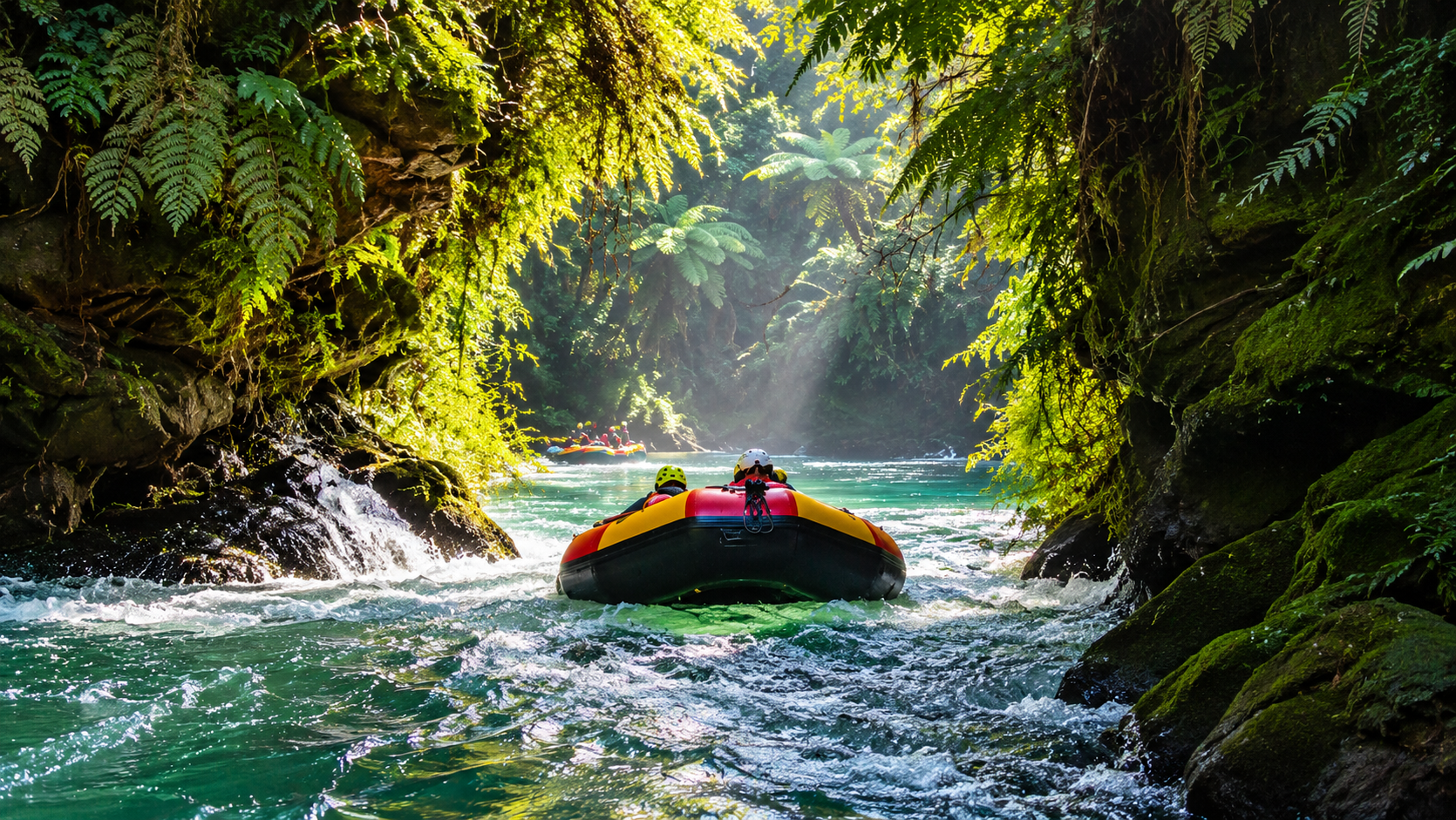
If somebody asked me to show them one photograph that explains why rafting in Rotorua belongs on an adventure website, I would show them a raft disappearing over Tutea Falls.
The Kaituna River flows through a remarkably narrow, green gorge around Okere Falls, roughly twenty minutes from Rotorua. The full Grade 5 rafting section includes 14 rapids and three waterfalls, with the biggest being the seven-metre Tutea Falls, widely promoted as the highest commercially rafted waterfall in the world.
Seven metres does not sound enormous when written on a screen.
It looks rather different from the front of a raft.
The river ahead appears to disappear, the guide gives the final instructions, everyone gets down into position and for a moment all you can really see is the lip of the waterfall.
Then the raft goes over.
It is fast, messy and considerably more fun than it has any right to be.
What Makes the Kaituna Different?
The Kaituna is not simply a long river containing one famous waterfall.
The whole environment works.
Native bush hangs over the canyon, the river twists through narrow volcanic rock and the rapids arrive quickly enough that the experience rarely feels as though you are sitting around waiting for something to happen.
Current commercial trips on the full section tackle 14 rapids and three waterfalls, with around 50 minutes of actual river action on some tours. The full Grade 5 option generally has a minimum age of 13, while some operators offer easier alternatives for younger participants.
The water is another pleasant surprise.
Compared with snow-fed South Island rivers, the Kaituna often feels considerably more comfortable.
You are still going to get completely wet.
At least your body may not immediately question every decision that brought you there.
Is Tutea Falls Scary?
It certainly looks intimidating.
But rafting a waterfall is different from standing above it independently and deciding what to do. You are in a professionally guided raft, the crew has already briefed everyone and there is a specific technique for the drop.
That does not mean the raft always stays perfectly upright.
Rafting would probably be less interesting if everything behaved politely.
What I would recommend is listening properly during the safety briefing rather than spending that time wondering how your GoPro angle looks.
When the guide gives a command, that command matters.
Is the Kaituna Suitable for First-Time Rafters?
Despite its Grade 5 classification, commercial Kaituna trips are commonly marketed to first-time rafters who meet the operator's age, fitness and water-confidence requirements. No previous rafting experience is normally required.
That makes the river unusual.
You can have never held a rafting paddle before and still potentially end the morning telling everybody that you rafted over a seven-metre waterfall.
I would, however, distinguish between inexperience and discomfort around moving water.
If you are deeply uncomfortable in water, speak to the operator before booking.
There are easier rafting trips elsewhere in New Zealand.
You do not receive extra points for choosing the most intimidating one.
More Than Just Adrenaline
One of the reasons I particularly like the Kaitiaki Adventures version of the Kaituna experience is the cultural context incorporated into the trip. Their guides share kōrero about the awa and its significance alongside the rafting itself.
That gives the experience more depth than simply arriving, falling off a waterfall and leaving.
Rotorua is at its best when the adventure and the place are connected.
What Else Can You Combine It With?
Rotorua is almost unfairly easy for building an adventure itinerary.
You could raft the Kaituna one day and then add mountain biking in Whakarewarewa Forest, ziplining, a guided Mount Tarawera experience or one of the geothermal areas.
There are also current packages combining Kaituna rafting with white-water sledging, ziplining or Mount Tarawera.
I would not automatically buy a combination just because it exists, but if two activities were already high on your list, the logistics can make sense.
Aotearoa Adventures Tip
If your main priority is adrenaline, this would probably be my first choice in the North Island.
Do not overthink the waterfall beforehand. The guide will explain exactly what you need to do.
You will have plenty of time to think about what just happened afterwards.
2. Taupō & Tūrangi – Raft the Tongariro River
Best for: First-time rafters, groups, families with older children and travellers exploring the Central Plateau
River: Tongariro River
Grade: Grade 3
Big appeal: More than 60 rapids through beautiful native river country
My verdict: The best all-round introduction to New Zealand white-water rafting
The Tongariro River does not have a seven-metre waterfall.
It does not need one.
This is probably the river I would recommend most confidently to somebody who says:
“I want proper white-water rafting, but I don't know whether I want anything completely mad.”
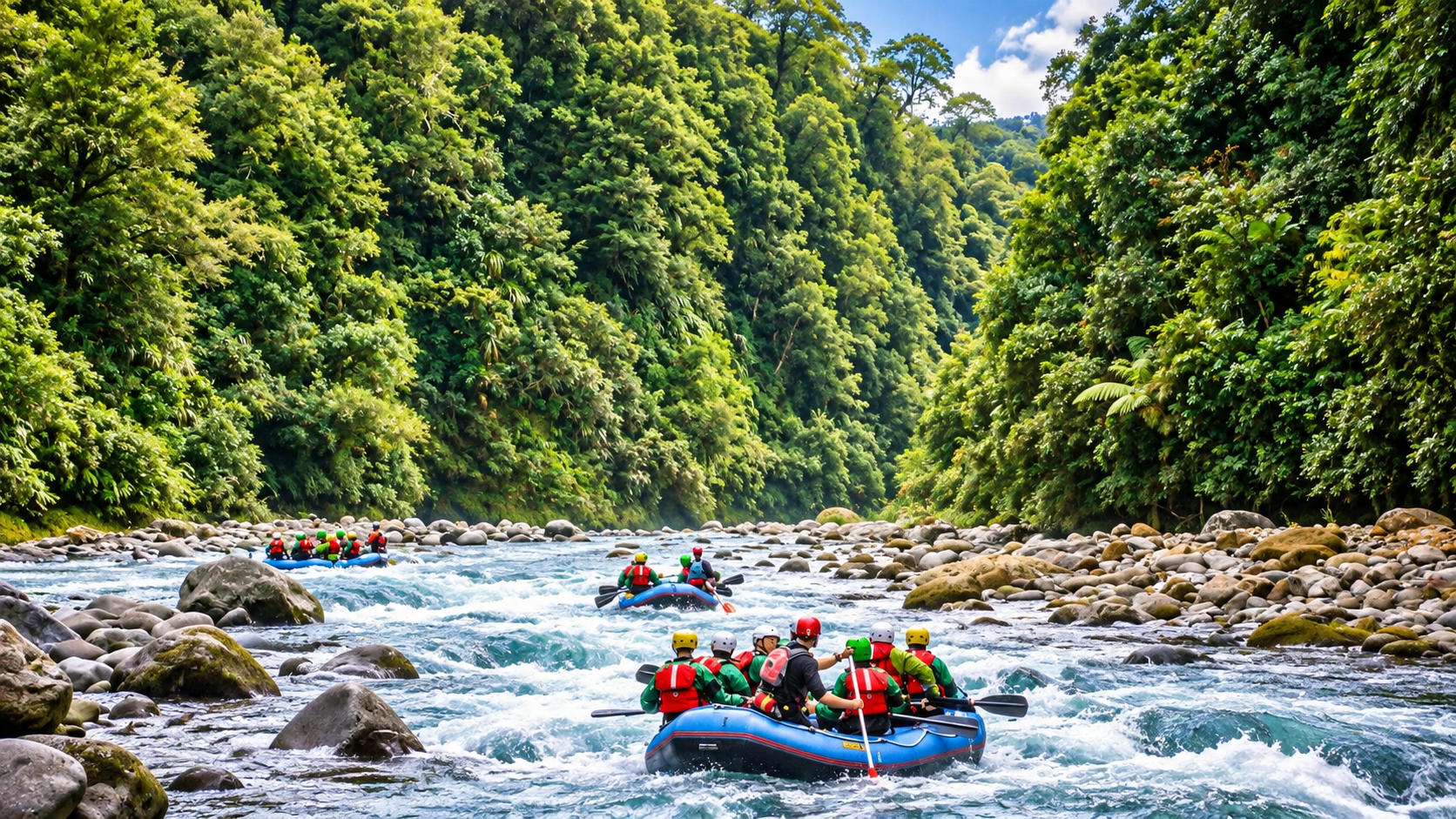
The classic Tongariro Whitewater trip is Grade 3, with more than 60 rapids over roughly two hours on the river. Current trips operate from Tūrangi and are suitable for both first-time and experienced rafters, with the standard white-water trip currently available from age 11.
Grade 3 is a really good place to begin.
The rapids are strong enough that you need to paddle, listen and work together, but there are also stretches where the river settles down and you can actually enjoy where you are.
And the Tongariro is a beautiful river.
What the Tongariro Trip Feels Like
The river starts teaching you fairly quickly.
After the safety briefing and practice, the raft begins working through a succession of rapids, bends and wave trains.
The great thing is that the rapids keep coming.
You do not spend twenty minutes floating between every exciting section.
One finishes, everybody settles back into the raft, and not long afterwards the guide is preparing you for another.
This gives the trip a really nice rhythm.
Paddle.
Rapid.
Laugh.
Regroup.
Repeat.
Somewhere along the way, you usually realise that the person sitting opposite you who looked extremely nervous at the beginning is now enthusiastically shouting at every wave.
That happens a lot on rafting trips.
The Scenery Is Underrated
The Tongariro River flows through country you cannot properly appreciate from the highway.
Once you are on the raft, steep banks and native vegetation begin hiding the roads and buildings, and sections of the river feel much more isolated than you would expect considering Tūrangi is nearby.
There is also a chance of seeing whio/blue duck, one of New Zealand's endangered native river birds. Tongariro River Rafting specifically highlights whio encounters as one of the wildlife possibilities on the trip.
If you see one, give it some appreciation.
It lives permanently beside Grade 3 rapids.
Your adventure holiday is apparently its normal Tuesday.
Do You Need Rafting Experience?
No.
Current Tongariro rafting guidance states that prior experience is not required and that first-timers are welcome. A moderate level of fitness is recommended for the Grade 3 trip because you do need to paddle and follow commands.
This is exactly why I like it as an introduction.
You get to learn how rafting works while still experiencing real rapids.
If somebody in the family wants something gentler, there are also Grade 2 family-floating options on the river.
That makes Tūrangi one of the best rafting bases for groups where not everybody wants the same level of adventure.
What About Swimming Ability?
Tongariro River Rafting currently accepts non-swimmers on its guided trips but asks guests to tell the guide so they can provide appropriate support.
Personally, if somebody was particularly nervous around water, I would discuss it with the company beforehand.
Knowing what to expect usually makes the entire experience much more enjoyable.
What Gear Is Provided?
One of the nice things about commercial rafting is that you do not need to turn up with your own collection of river equipment.
Current Tongariro trips provide items such as wetsuits, fleece layers, splash jackets, river shoes, helmets and personal flotation equipment, with extra cold-weather items available when needed. Guests generally bring swimwear and a towel.
This is useful because the Tongariro is not a tropical river.
You will appreciate the wetsuit.
Combine Rafting With Tongariro National Park
For Aotearoa Adventures, this is where the Tongariro trip becomes particularly valuable.
You can use Tūrangi as a base for rafting and combine it with the Tongariro Alpine Crossing, shorter national park walks, mountain biking or time around Lake Taupō.
I would avoid doing the Alpine Crossing and a rafting trip on the same day.
Technically, you might make the timings work.
Your legs may have a different opinion.
Spend one day hiking and one day on the river.
Aotearoa Adventures Tip
If you have never rafted before and want a trip where the whole river is enjoyable rather than one single giant feature, the Tongariro would be very high on my list.
It has enough white water to feel adventurous without making every first-timer wonder whether they accidentally booked an expedition.
3. Queenstown – Raft the Shotover River
Best for: Adventure travellers, dramatic scenery and visitors already building a Queenstown activity itinerary
River: Shotover River
Grade: Grade 3–5
Big appeal: Skippers Canyon and the Oxenbridge Tunnel
My verdict: Probably the most complete combination of rafting and scenery on this list
Queenstown has a habit of turning ordinary outdoor activities into considerably more dramatic versions of themselves.
Rafting is no exception.
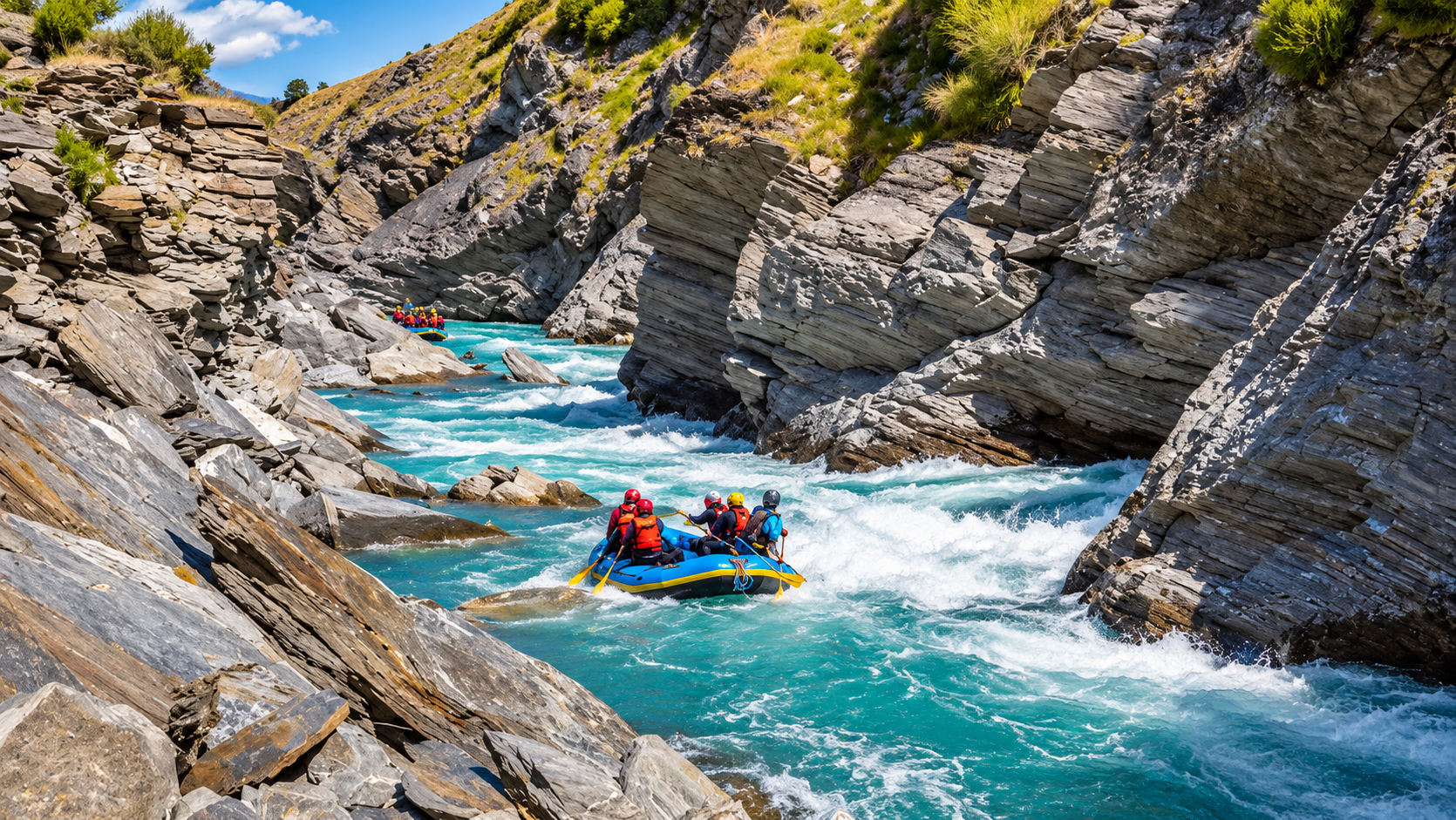
The Shotover River trip begins before you even reach the water because the journey takes you into historic Skippers Canyon, where the narrow road clings to the sides of an enormous gorge.
Then you get into the raft.
Commercial Shotover rafting currently takes on Grade 3–5 rapids and finishes by travelling through the historic 170-metre Oxenbridge Tunnel. The current season runs approximately October through April, and participants must be at least 13, water competent and have a moderate level of fitness.
That combination gives Shotover rafting a sense of progression that I really like.
The journey in is interesting.
The scenery is huge.
The river gets serious.
Then you disappear through a tunnel.
It is not difficult to see why the trip has remained one of Queenstown's signature adventures.
The Skippers Canyon Journey
People often focus completely on the rafting and forget that reaching the river is part of the experience.
Skippers Canyon is deep, steep and visually spectacular, with the access road cut into cliffs high above the river.
It is one of those journeys where you may find yourself looking out of the vehicle and being quietly pleased that somebody else is driving.
By the time you reach the put-in, Queenstown already feels a long way away.
Once You're on the Water
The Shotover is more technical and physically involved than an easier family rafting trip.
Your guide will teach the group the required commands before you begin, and once you reach the bigger rapids, everybody needs to work together.
That is one reason rafting is such a good group activity.
Nobody is simply a passenger.
Your guide is controlling the boat and making the important decisions, but the group contributes.
When everybody gets the timing right and the raft punches cleanly through a rapid, it feels genuinely satisfying.
When everybody gets absolutely soaked anyway, it still feels satisfying.
The Oxenbridge Tunnel
One of the strangest sections arrives towards the end.
The river journey passes through the 170-metre Oxenbridge Tunnel, a remnant of the region's gold-mining history.
For a moment, the dramatic open canyon disappears and you are rafting through darkness.
Then you emerge and continue into the final section of the trip.
It adds a little piece of local history to something that could otherwise simply be an adrenaline activity.
What If the Shotover Sounds Too Much?
Queenstown also has a useful alternative.
The Kawarau River rafting experience is generally Grade 2–3 and offers a more accessible trip, while still finishing with the roughly 400-metre Dog Leg rapid, promoted as New Zealand's longest commercially rafted rapid.
For a mixed group, that matters.
Not everyone needs Grade 5 water to have a good rafting day.
I would choose the Shotover if white water and adventure are the priorities.
I would choose the Kawarau if the group wants rafting with a little more breathing room.
Rafting or Jet Boating in Queenstown?
This is a good question because Queenstown is equally famous for both.
Jet boating is easier.
You sit down, hold on and let a highly skilled driver do the work.
Rafting asks more from you.
You need to paddle, listen and participate.
For that reason, rafting usually feels more like something you did, rather than something you rode.
If you only have time for one and want pure speed, choose the jet boat.
If you want an adventure that lasts longer and involves the group, I would choose the raft.
Aotearoa Adventures Tip
Queenstown is one of the easiest places in New Zealand to accidentally book too many activities.
I would not schedule Shotover rafting, Nevis Bungy and skydiving into the same afternoon even if some booking system claims it is physically possible.
Give the rafting half a day.
You are on holiday, not competing in an adventure decathlon.
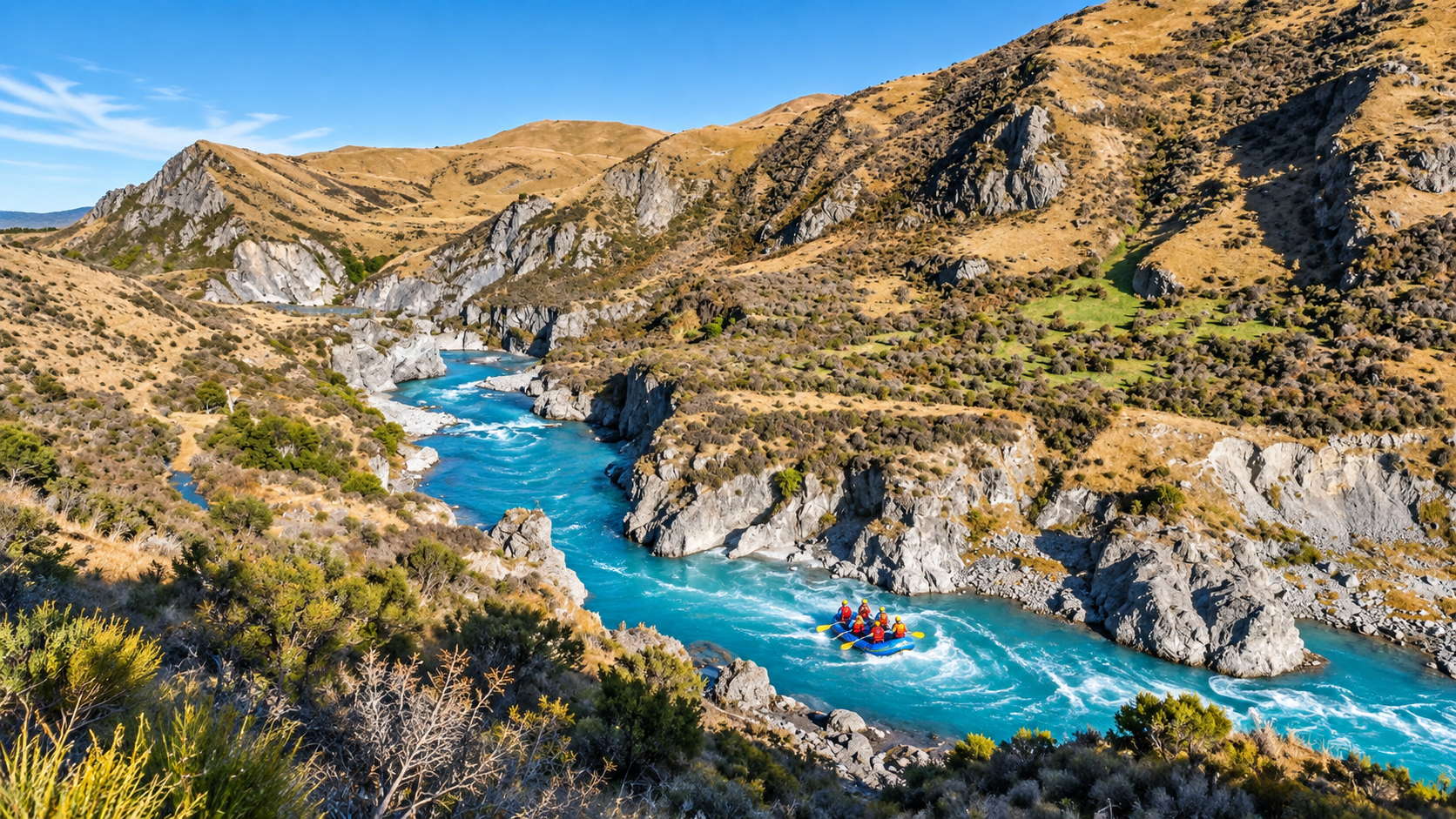
Canterbury – Take On the Rangitata River
4. Canterbury – Take On the Rangitata River
Best for: Big rapids, South Island road trips and people who want rafting to be the main event
River: Upper Rangitata River
Grade: Grade 2–5 options
Big appeal: Serious white water in spectacular Canterbury high country
My verdict: One of the most underrated major rafting experiences in New Zealand
The Rangitata is where I would send somebody who has looked at the more famous rafting destinations and said:
“That all looks good, but where can I have a proper day on the river?”
The Upper Rangitata flows out of the Southern Alps through a beautiful section of inland Canterbury before spreading into the enormous braided river system seen farther towards the coast.
Rafting trips operate on the upper gorge, where the river is much more confined and energetic.
Current Grade 5 trips include Grade 2 through Grade 5 rapids and around 2.5 hours actually in the raft. Participants taking the Grade 5 option currently need to be at least 13, weigh at least 40 kg and be able to swim. A separate Grade 2 trip is available from age five.
That range makes Rangitata particularly interesting.
The same destination can cater to a family looking for an easy river experience and adventurous adults looking for something substantially more serious.
The River Builds Gradually
One thing I like about the Rangitata experience is that the river does not immediately throw you into the biggest rapid.
There is time to get used to the raft.
You practise.
Learn how the group paddles together.
Get a feel for how the boat reacts.
Then the gorge begins becoming more serious.
That progression makes sense.
By the time the big water arrives, the raft is functioning more like a team and less like six strangers holding paddles.
Grade 5 Without Being Forced Into It
Another feature I particularly like is that the biggest Grade 5 section is not necessarily something every guest must complete.
Current Rangitata trips can allow guests who decide the largest rapids are too much to bypass them rather than forcing everyone through.
That is exactly how adventure tourism should work.
There is no shame in looking at a major rapid and deciding:
“Actually, I have had an excellent day already.”
Adventure is not improved by proving something to strangers.
The Landscape
The Rangitata valley is beautifully remote.
You are surrounded by South Island high country, huge mountains and open river landscapes rather than a developed adventure town.
That gives the experience a different character from Queenstown.
You have deliberately travelled here for the river.
There is less happening around you, and I think that is part of the appeal.
Where Is It?
The rafting base is around 25 minutes from Geraldine and approximately two hours from Christchurch. Current operations are seasonal, generally running from October through April.
For a normal South Island road trip, I would consider fitting it between Christchurch and destinations farther south rather than treating it as a return day trip from Queenstown.
Geraldine is an easy overnight base.
And there is another wonderfully New Zealand part to the current rafting trip: afterwards, the operator includes a hot shower and Kiwi-style barbecue.
There are worse ways to finish being repeatedly hit in the face by river water.
Aotearoa Adventures Tip
If you already know that gentle rafting will leave you wanting more, put the Rangitata high on the list.
This is where I would choose the river itself as the attraction rather than simply adding rafting to somewhere I was already visiting.
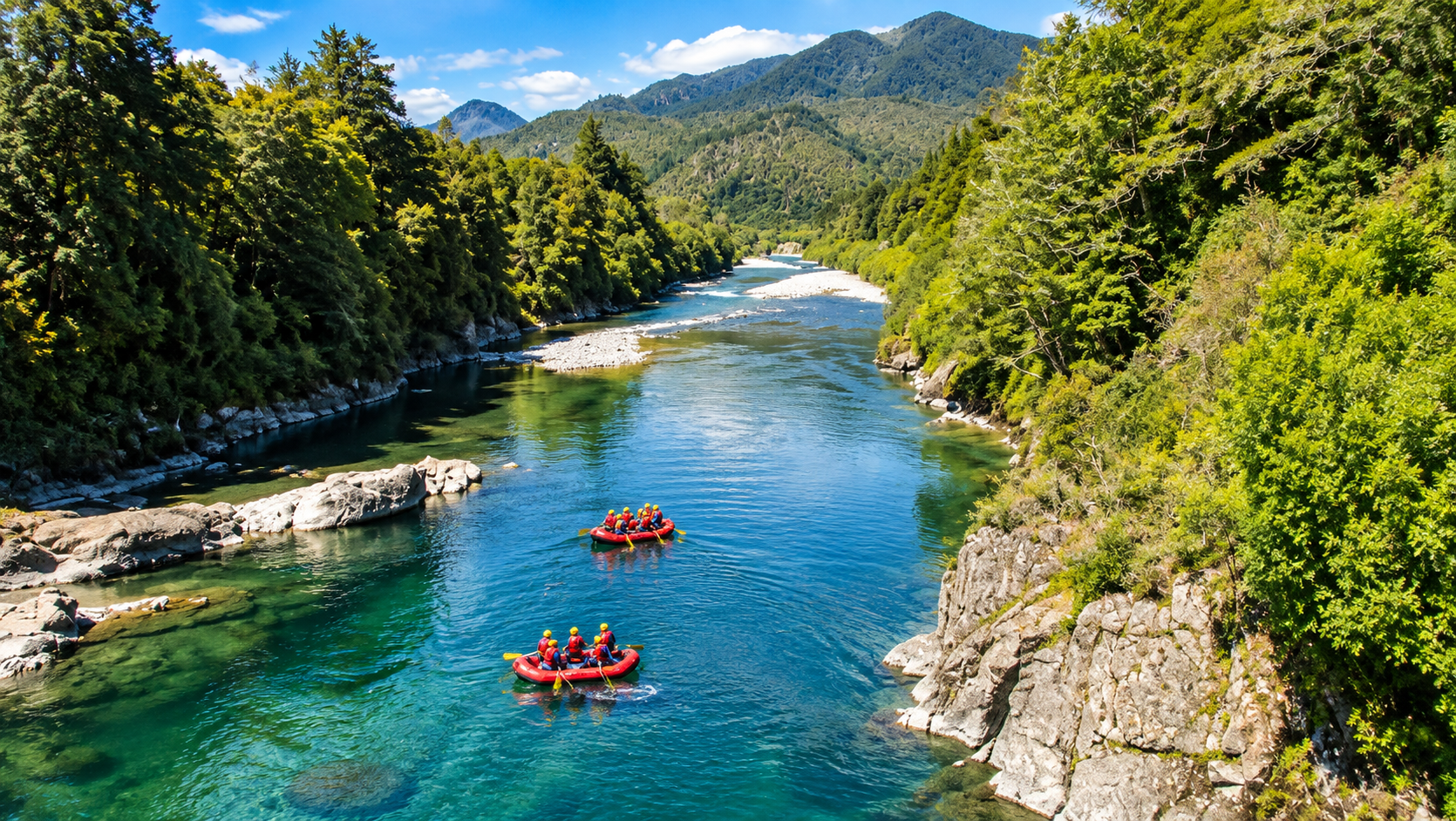
Murchison – New Zealand's White-Water Country
5. Murchison – New Zealand's White-Water Country
Best for: People who genuinely love rivers, repeat rafters and travellers exploring Nelson Tasman or the northern West Coast
Main river: Buller River, with numerous others nearby
Grade: Everything from easy family rafting to serious expedition water
Big appeal: Variety
My verdict: The best rafting destination for people who want more than one type of river trip
Murchison is different from the other four places in this guide.
The attraction is not one particular famous rapid.
It is the sheer number of rivers.
Murchison sits where several major river systems meet, and Tourism New Zealand describes it as the country's “whitewater capital”, with the Buller, Mangles, Matiri, Gowan, Glenroy, Matakitaki and Maruia among the waterways surrounding the town.
This is proper river country.
Rafting is not an activity somebody added because tourists were already visiting.
The rivers are one of the reasons to come.
The Buller River
For most first-time visitors, the Buller is the obvious starting point.
The river moves through huge gorges surrounded by native bush and offers everything from easier family-oriented rafting to stronger white-water sections.
Around Inangahua, the famous Earthquake Section offers a classic half-day Buller Gorge rafting trip. Current commercial trips are suitable for beginners as well as more experienced rafters and operate year-round subject to river conditions.
This gives the Buller a completely different feel from Kaituna.
There is no single waterfall everyone is waiting for.
You are travelling down a big river through a real gorge.
The journey is the attraction.
Murchison Gives You Options
This is where the destination becomes really interesting.
Local companies offer short family floats, half-day white-water trips, multi-day journeys and even remote expedition-style rafting on West Coast rivers. Ultimate Descents currently operates everything from Buller trips to multi-day and heli-rafting experiences.
If rafting is something you already know you enjoy, that variety is hard to beat.
You could come for an accessible half-day.
Or rafting could become several days of your South Island holiday.
Those are very different trips from the same little town.
Why Murchison Is Often Overlooked
It does not have Queenstown's reputation.
It does not have Rotorua's huge visitor numbers.
And many travellers simply pass through while driving between Nelson and the West Coast.
That is exactly why I think it deserves attention.
Murchison feels less like an attraction hub and more like somewhere outdoor people actually come to use the surrounding landscape.
It is also well placed for a wider road trip, sitting roughly between Nelson Tasman and the northern West Coast.
If you are heading from Abel Tasman towards Punakaiki, it can fit remarkably well.
Who Should Choose Murchison?
I would choose Murchison if you have rafted before and know you enjoy it.
I would choose it if you want fewer crowds.
I would choose it if the idea of a multi-day river trip sounds more exciting than completing another quick tourist activity.
And I would definitely choose it if you are the sort of traveller who sees the phrase heli-rafting on a remote West Coast river and immediately begins checking the budget.
Aotearoa Adventures Tip
Do not treat Murchison simply as somewhere to refuel between Nelson and the West Coast.
Stay a night.
The entire area makes much more sense once you realise that rivers are the destination.
Which New Zealand Rafting Trip Should You Choose?
This really comes down to what sort of experience you want.
If you want the most famous individual rafting feature, choose Rotorua.
Tutea Falls is distinctive enough that it belongs on a New Zealand adventure bucket list even if you have rafted elsewhere before.
If you are nervous or rafting for the first time, I would choose the Tongariro River.
Grade 3 gives you enough excitement to understand why people love rafting without making the entire morning feel like survival training.
If you are already going to Queenstown and want a genuinely adventurous half-day, the Shotover River is the obvious choice.
If the rapids themselves matter more than the destination around them, choose the Rangitata.
And if rivers are something you genuinely love and you want anything from a half-day trip to a remote expedition, Murchison is probably the most interesting destination of the five.
Understanding White-Water Rafting Grades
The grading system can look confusing when you first start comparing trips.
In simple terms, river difficulty normally runs from Grade 1 to Grade 6.
Grade 1 is relatively straightforward moving water.
Grade 2 introduces smaller rapids and more manoeuvring.
Grade 3 gives you proper white-water rafting with stronger waves, obstacles and active paddling.
Grade 4 becomes more powerful and technically demanding.
Grade 5 is serious white water requiring skilled commercial guiding and much more commitment.
Grade 6 is generally considered extremely dangerous and outside normal commercial rafting.
Tongariro River Rafting describes its Grade 3 trip as a moderate but exciting challenge suitable for most adventurous visitors, while its Grade 2 trip provides the easier family option.
The important thing is that grade alone does not tell you whether you'll enjoy the trip.
A fantastic Grade 3 river can be much more enjoyable than spending a Grade 5 trip terrified.
Choose the experience rather than the number.
Is White-Water Rafting Good for Beginners?
Absolutely.
In fact, commercial rafting is probably one of the easiest ways to experience serious-looking white water without already being a skilled paddler.
You do not need to know how to steer the raft.
That is your guide's job.
You do need to listen, paddle when asked and understand the safety instructions.
For beginners, I would particularly recommend:
Tongariro River – the best first proper white-water trip.
Kawarau River in Queenstown – another good Grade 2–3 option.
Buller River – plenty of options depending on conditions and the exact trip.
If you are confident and actively want something bigger, Kaituna can still work as a first rafting experience under professional guidance.
What Happens If You Fall Out of the Raft?
This is probably the question people worry about most.
And yes, people sometimes come out of rafts.
Commercial operators prepare for exactly that possibility.
Before the trip, your guide explains what to do if you end up in the river, how to position your body and how the crew will help you back into the raft.
Your flotation equipment is there for a reason.
What you should not do is suddenly invent your own rescue strategy.
Listen to the guide.
The briefing that seemed mildly entertaining while standing on dry land becomes considerably more relevant once you are in moving water.
Do You Need to Be Able to Swim?
This depends on the river and operator.
Some rafting companies accept non-swimmers on particular trips, while harder rivers may specifically require swimming ability.
For example, current Tongariro guidance says non-swimmers can participate but should inform their guide, while the Grade 5 Rangitata trip currently requires participants to be able to swim.
Never hide your swimming ability because you are embarrassed.
The guide needs accurate information.
Their job becomes much easier when yours starts with being honest.
Is White-Water Rafting Safe?
White-water rafting is an adventure activity involving real hazards.
River levels change.
People can fall from rafts.
Rocks, strong currents, cold water and other hazards are part of moving through a natural river environment.
That is exactly why I would always use an established professional rafting company and follow their instructions.
Commercial operators provide specialist equipment and qualified guides and can cancel or change trips when river or weather conditions make the planned route unsuitable.
A cancellation can be frustrating.
It is still preferable to somebody deciding that the river's current condition is “probably close enough”.
What Should You Wear White-Water Rafting?
For most New Zealand commercial trips, you do not need specialist rafting clothing.
Operators generally provide the technical gear, which can include a wetsuit, helmet, personal flotation device, splash jacket and river footwear.
Usually you will need:
- Swimwear
- A towel
- Any essential medication
- Warm clothing for afterwards
For the Tongariro, for example, current rafting packages supply wetsuits, fleece layers, splash tops, river shoes, helmets and flotation gear.
One thing I would not bring is anything you would be genuinely upset to lose in the river.
Your favourite expensive sunglasses have no emotional attachment to you.
The river will happily keep them.
When Is the Best Time to Go Rafting in New Zealand?
There is no single perfect rafting month because different rivers behave differently.
Summer
Summer is ideal for many travellers because temperatures are warmer and the longer daylight hours make road-trip logistics easier.
The Kaituna and Tongariro operate year-round under normal conditions, while some South Island trips are seasonal.
Autumn
Autumn can be excellent, particularly before some seasonal South Island operations close.
The Rangitata and Shotover currently generally operate into April.
Winter
Winter rafting can absolutely be possible on selected North Island rivers.
Just remember that cold river water feels remarkably committed to being cold.
Good equipment matters.
Spring
Spring can bring higher water flows as snowmelt and rainfall affect rivers, but exact conditions change constantly.
That is why river companies make operational decisions based on the actual water rather than a generic seasonal description on a travel website.
Rafting vs Jet Boating: Which Is Better?
This is another comparison worth making because several of the best New Zealand rafting towns also have excellent jet boats.
I would choose jet boating if you want speed without needing to do much physically.
You sit down and enjoy the driver's skill.
I would choose rafting if you want to participate.
The group paddles.
You learn commands.
You work together through the rapids.
You get wetter.
And by the end, it feels much more like something you completed.
For families or groups where some people are nervous about white water, the jet boat may be easier.
For a group of friends looking for an adventure they will talk about afterwards, I would probably choose rafting.
What Is the Best Rafting Trip for Families?
For younger children, I would avoid focusing on the famous high-grade trips.
Instead, look at Grade 2 family rafting.
Rangitata currently offers a Grade 2 trip from age five, while the Tongariro also has a gentler family float in addition to its Grade 3 white-water experience.
A family rafting trip should still be fun.
There is no value in choosing a river that makes half the group miserable simply because it looked more impressive in the brochure.
Which Rafting Trip Would I Choose?
For a first rafting trip, I would choose:
Tongariro River
It has enough white water to feel like a proper rafting experience, beautiful scenery and a long succession of manageable Grade 3 rapids.
For pure adrenaline, I would choose:
Kaituna River
Tutea Falls makes it unlike almost anything else.
For scenery and adventure together, I would choose:
Shotover River
Skippers Canyon alone makes the day interesting before the bigger rapids even begin.
For someone who already knows they love rafting, I would choose:
Rangitata or Murchison
These feel much more like destinations chosen because of the river itself.
My Ideal New Zealand Rafting Road Trip
If rafting was going to become a theme of a New Zealand adventure holiday, you could put together a surprisingly good journey.
Start in Rotorua with the Kaituna.
You immediately begin with the most dramatic individual drop.
Continue south to Tūrangi and raft the Tongariro, where the experience becomes longer, more flowing and considerably different.
Then head to the South Island.
Spend time in Murchison if your route comes through Nelson Tasman and experience the Buller.
Continue through Canterbury and tackle the Rangitata.
Finally, finish in Queenstown with the Shotover.
By that point, you would have rafted volcanic river gorges, native bush, alpine country and some of the most famous white water in New Zealand.
You would also have become extremely good at putting on a wetsuit.
Should You Book Rafting in Advance?
For the famous trips during peak travel periods, I would.
Kaituna, Tongariro and Queenstown rafting can all be popular, especially during the main summer season.
At the same time, rafting depends on river and weather conditions.
That means I would avoid building a completely inflexible itinerary where one cancellation ruins three other bookings.
Book the activities that matter most.
Then give the trip enough room to breathe.
That approach works throughout New Zealand, not just on rivers.
Final Thoughts: Is White-Water Rafting in New Zealand Worth It?
Definitely.
In fact, I think rafting is one of New Zealand's most underrated major adventure activities.
Skydiving gets the huge photographs.
Bungy has the terrifying edge.
Jet boats have the speed.
But rafting gives you something those activities do not.
You actually travel through the landscape.
You paddle into it.
You get soaked by it.
You spend enough time on the river to notice the forest, cliffs and mountains between the rapids rather than seeing everything disappear in a few seconds.
There is also something very human about a raft full of strangers becoming a team remarkably quickly.
At the start, everybody sits quietly while the guide explains what to do.
Twenty minutes later, those same people are shouting, paddling and laughing together because they have just somehow made it through another rapid.
If you want the biggest single moment, raft the Kaituna River and take on Tutea Falls.
If you are trying rafting for the first time, head for Tūrangi and the Tongariro River.
For a classic Queenstown adventure, choose the Shotover.
If you want big South Island rafting, make the trip to the Rangitata.
And if you want to go somewhere where rivers are not simply another attraction but part of the identity of the place, spend some time in Murchison.
Whichever you choose, arrive expecting to get wet.
Listen to your guide.
Paddle when they tell you to paddle.
And if somebody says they managed to stay completely dry during a white-water rafting trip, I would question whether they went rafting at all.
Ready to Go White-Water Rafting in New Zealand?
COMPARE ALL NEW ZEALAND WHITE-WATER RAFTING TOURS