

SCENIC FLIGHTS
5 Best Scenic Flights in New Zealand: The Complete Guide
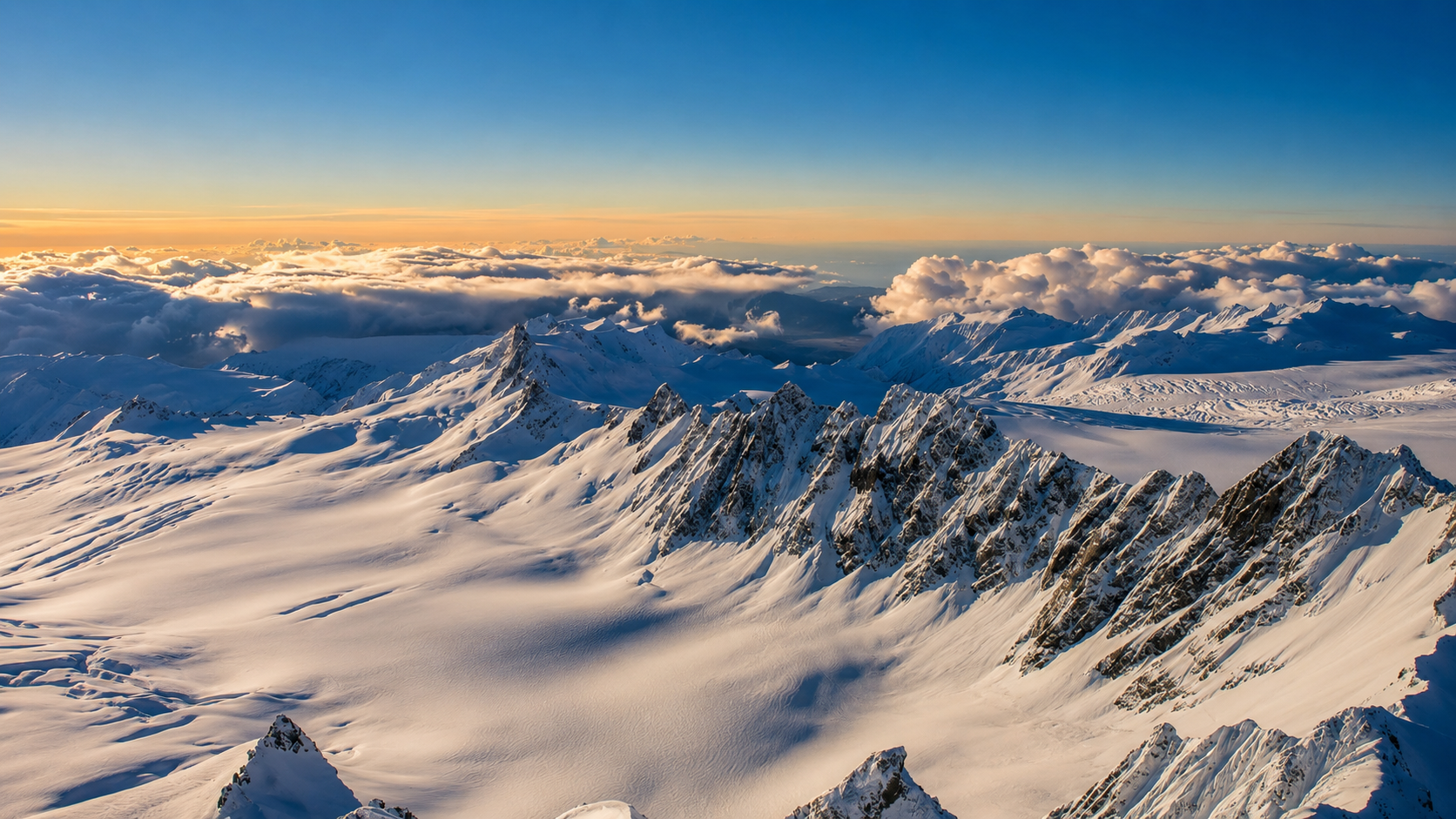
New Zealand looks impressive from the road. From the air, it becomes a completely different country.
Mountain ranges that seem enormous from ground level suddenly reveal glaciers hidden behind them. Braided rivers spread across entire valleys. Lakes appear in colours that almost look edited, and places that take hours to reach by road can pass beneath the aircraft in a matter of minutes.
That is what makes a scenic flight different from simply paying for a good view.
You are not just getting higher. You are seeing how New Zealand's landscapes actually fit together.
Nowhere is that more obvious than in the South Island. From a small plane or helicopter you can cross the Southern Alps, look down onto glaciers, fly alongside Aoraki/Mount Cook, follow enormous valleys towards the West Coast or pass over mountain ranges into Fiordland. In Kaikōura, the experience is completely different again: mountains rise almost directly beside the Pacific while sperm whales move through deep ocean water below.
Scenic flights are also one of those New Zealand activities where I think choosing the right location matters more than simply choosing the cheapest flight. A twenty-minute helicopter flight above Lake Wānaka is not the same experience as flying from Queenstown to Milford Sound, and neither is particularly comparable with circling above a whale off the Kaikōura coast.
These are the five scenic-flight experiences I would put at the top of the list.
1. Aoraki/Mount Cook – The Ultimate Alpine Scenic Flight
There are places where a scenic flight is a nice extra.
At Aoraki/Mount Cook, I think it is one of the activities that can genuinely change how you understand the national park.
From the ground, the mountains dominate everything. You can walk the Hooker Valley, explore the Tasman Valley and look towards Aoraki from several excellent viewpoints, but you are always looking into the mountains.
A scenic flight takes you above and between them.
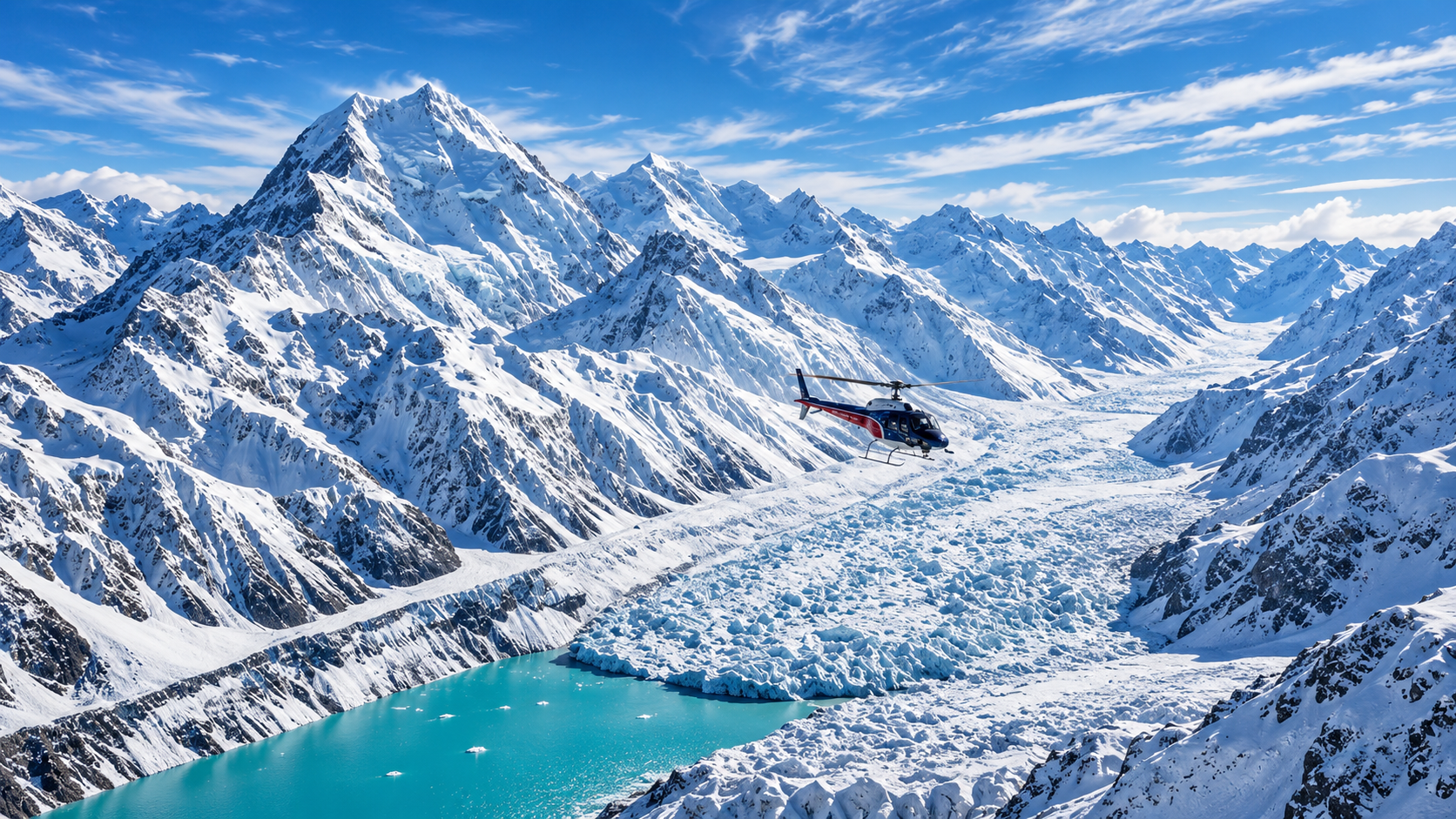
Suddenly you can see the enormous icefields sitting behind the ridgelines, understand how the glaciers flow through the valleys and appreciate just how large the Southern Alps actually are.
Mount Cook Ski Planes & Helicopters currently operates a range of flights from Aoraki/Mount Cook Airport, only a few minutes from the village. Options range from shorter 25-minute flights to longer journeys crossing the Main Divide towards the West Coast, with several including alpine or glacier landings.
The Tasman Glacier From Above
The Tasman Valley is impressive from the road, but flying above it is something else entirely.
From the air, you can see Tasman Terminal Lake stretching below you before following the glacier farther into the mountains. The landscape changes from rocky moraine and glacial lake to enormous areas of snow and ice as you approach the higher sections.
Current Mount Cook flights can include views of the Hochstetter Icefall, Aoraki itself, the Grand Plateau and the upper Tasman Glacier. Some itineraries include a glacier landing where the aircraft shuts down and passengers can step out onto the snow for several minutes.
That landing is what would make me seriously consider spending more on the experience.
Flying above the mountains is spectacular.
Actually standing among them is different.
The helicopter or ski plane switches off, the noise disappears and suddenly there is very little around you except snow, mountains and an aircraft that looks surprisingly small.
For photographs, it is obviously brilliant.
But I think the silence would probably be the part I remembered.
Helicopter or Ski Plane?
Aoraki/Mount Cook is particularly interesting because you may have the choice between a helicopter and a ski plane.
A helicopter gives you the classic scenic-flight experience: excellent visibility, relatively low-speed manoeuvring and the ability to land in alpine terrain.
The ski plane feels much more unusual.
Instead of landing vertically, it uses skis to touch down on the snow, which creates a very different experience and has strong historical connections with alpine aviation around Mount Cook.
Some Mount Cook experiences even combine the two aircraft types, flying one direction by helicopter and returning by ski plane.
If I had never been in either, I would probably choose whichever itinerary gave me the best route and glacier landing rather than becoming too focused on the aircraft.
You are unlikely to spend much of the flight wishing you had chosen different machinery.
There are mountains outside the window.
Is a Short Flight Enough?
Yes, especially if budget matters.
The current shorter Mount Cook options are around 25 minutes and still give you a proper alpine perspective, with some including a mountain landing. Longer flights travel deeper into the mountains and can cross the Main Divide towards Franz Josef and Fox Glacier.
If this is simply something you would like to experience while visiting Mount Cook, a shorter flight can make perfect sense.
If this is going to be one of the major splurges of your New Zealand holiday, I would go longer.
The extra time becomes particularly valuable here because the landscape keeps changing. You are not simply circling above one viewpoint for another twenty minutes.
You can cross valleys, see multiple glaciers and potentially reach the West Coast side of the Alps.
Scenic Flight or Glacier Boat?
A lot of visitors have to make decisions about where to spend their Mount Cook activity budget.
If you are comparing a scenic flight with the Tasman Glacier boat experience, I would think about perspective.
The boat gives you a close-up look at the glacial lake and ice.
The flight gives you the enormous overview.
Neither makes the other unnecessary.
But if I could afford only one and this was my first visit, I would probably choose the flight.
You see much more of the national park.
Aotearoa Adventures Tip
Book your flight near the beginning of your Mount Cook stay.
Alpine flying is weather dependent, and operators need enough visibility to provide both a safe flight and an experience worth paying for. If clouds prevent the flight on your first day, having another night in the area gives you a chance to move it.
This is also one of the destinations where I would strongly consider staying two nights rather than one.
Mount Cook deserves more than arriving late, taking one photograph and leaving the following morning.
2. Queenstown to Piopiotahi/Milford Sound – The Best Complete Scenic Journey
Flying to Milford Sound from Queenstown is one of the few occasions where taking the quickest route is also arguably taking the most spectacular one.
By road, Queenstown to Milford is a major journey.
You need to travel south past Kingston, continue towards Te Anau and then follow the Milford Road back north-west through Fiordland.
By aircraft, you essentially go over the mountains.
And what lies between Queenstown and Milford is extraordinary.
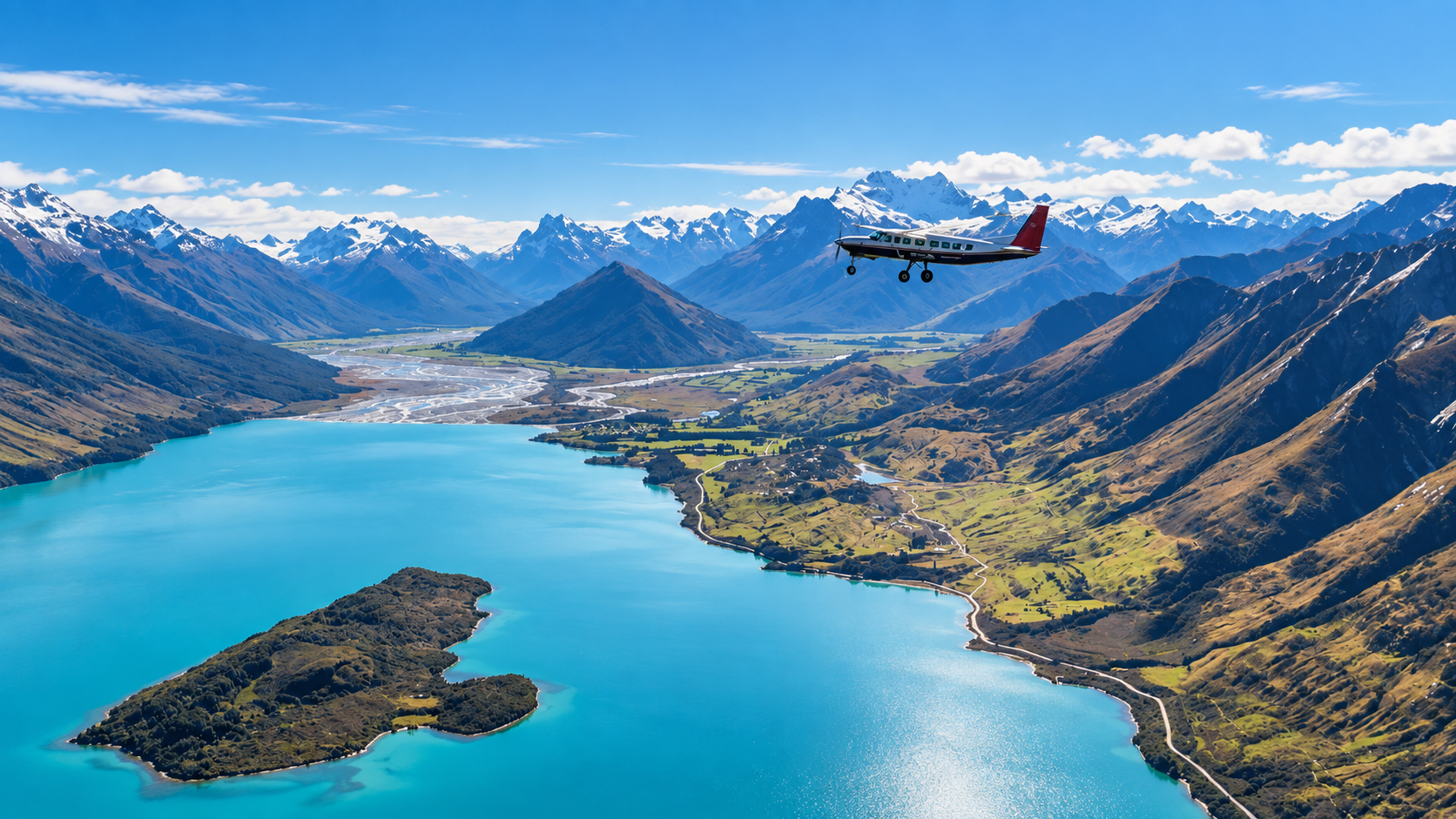
Current scenic flights from Queenstown cross the Southern Alps and can pass above locations such as Skippers Canyon, alpine lakes, glaciers and Fiordland before descending into Milford Sound. Air Milford's standard one-way trip currently takes around 40 minutes, while its popular Fly–Cruise–Fly itinerary includes about 1 hour 20 minutes of total flying plus a Milford Sound cruise.
This is much more than transportation.
In some ways, the journey to Milford becomes just as impressive as Milford itself.
Leaving Queenstown
Queenstown Airport is already surrounded by dramatic scenery.
Shortly after take-off, Lake Whakatipu spreads out below you, the Remarkables rise nearby and the developed areas around Queenstown begin disappearing.
Then you move towards the Southern Alps.
This is where the landscape becomes increasingly remote.
Roads disappear.
Small alpine lakes sit in basins that would take hours or days to reach on foot.
Glaciers appear between peaks.
Valleys run deep into the mountains without any sign of buildings.
From a road trip, New Zealand sometimes feels wild.
From the air, you realise how much wilderness you never actually get close to.
Approaching Milford Sound
The approach to Milford is one of the big reasons I would choose this flight.
You begin crossing rainforest-covered Fiordland mountains before Piopiotahi opens below you.
Mitre Peak rises directly from the fiord, waterfalls cut down the surrounding cliffs and the Tasman Sea sits beyond the entrance.
Air Milford's current Fly–Cruise–Fly itinerary flies the length of Milford Sound before landing at Milford Airport, then includes an approximately 1½-hour nature cruise before returning to Queenstown by a different aerial route.
That different return path matters.
You are not simply watching the same scenery rewind.
The return can reveal additional glaciers, alpine lakes and waterfalls, including views towards Sutherland Falls on suitable routes.
Fly Only or Fly–Cruise–Fly?
If your budget allows it and you have never visited Milford Sound before, I would choose the flight-and-cruise combination.
Seeing Milford from above is impressive.
Being down on the water underneath those cliffs is completely different.
You get both scales.
From the aircraft, you understand the shape of the fiord and the surrounding mountains.
From the boat, you understand how enormous the cliffs actually are.
The current Air Milford Fly–Cruise–Fly experience is roughly a five-hour half-day trip, which is remarkably efficient compared with travelling to Milford and back entirely by road from Queenstown.
It is expensive.
But you are effectively buying a scenic flight across the Southern Alps and a Milford cruise in one experience.
That is one of the New Zealand activities where I think the price at least makes logical sense.
What About Coach–Cruise–Fly?
This may actually be the version I would choose if I had never travelled the Milford Road.
Current combinations allow you to coach from Queenstown through Te Anau and along the Milford Road, cruise Milford Sound and fly back to Queenstown. Air Milford's present version takes around ten hours, with approximately five hours travelling by coach, a 1¾-hour cruise and a 40-minute return flight.
That is an excellent combination because you do not repeat the long road journey.
You see Milford from land.
Then water.
Then air.
For a first trip, that is difficult to beat.
It is a very full day, but at least each part of the journey is different.
Flying vs Driving to Milford
I would not automatically say flying is better.
The Milford Road is one of New Zealand's best drives and deserves to be experienced.
If you are staying in Te Anau and have time, I would still happily drive to Milford.
But if you are staying only in Queenstown and trying to avoid a very long return road day, scenic flying becomes much more attractive.
It solves a genuine travel problem rather than simply adding another expensive activity.
Aotearoa Adventures Tip
If Milford is one of the most important experiences on your trip, avoid leaving the scenic flight until your final morning in Queenstown.
Mountain flying depends on weather and visibility. Air Milford itself recommends booking for the first suitable day of your Queenstown stay so there is room to reschedule if conditions are unsuitable.
I would follow that advice.
3. Franz Josef & Fox Glacier – The Best Glacier Scenic Flight
The West Coast is one of the places where flying completely changes what you can see.
From the villages of Franz Josef and Fox Glacier, you are surrounded by rainforest.
The mountains are clearly there, but much of the upper glacier terrain is hidden behind the valleys and ridges.
Then a helicopter climbs away from the coast and suddenly the whole landscape opens.
Below you are rainforest, braided rivers and the Tasman Sea.
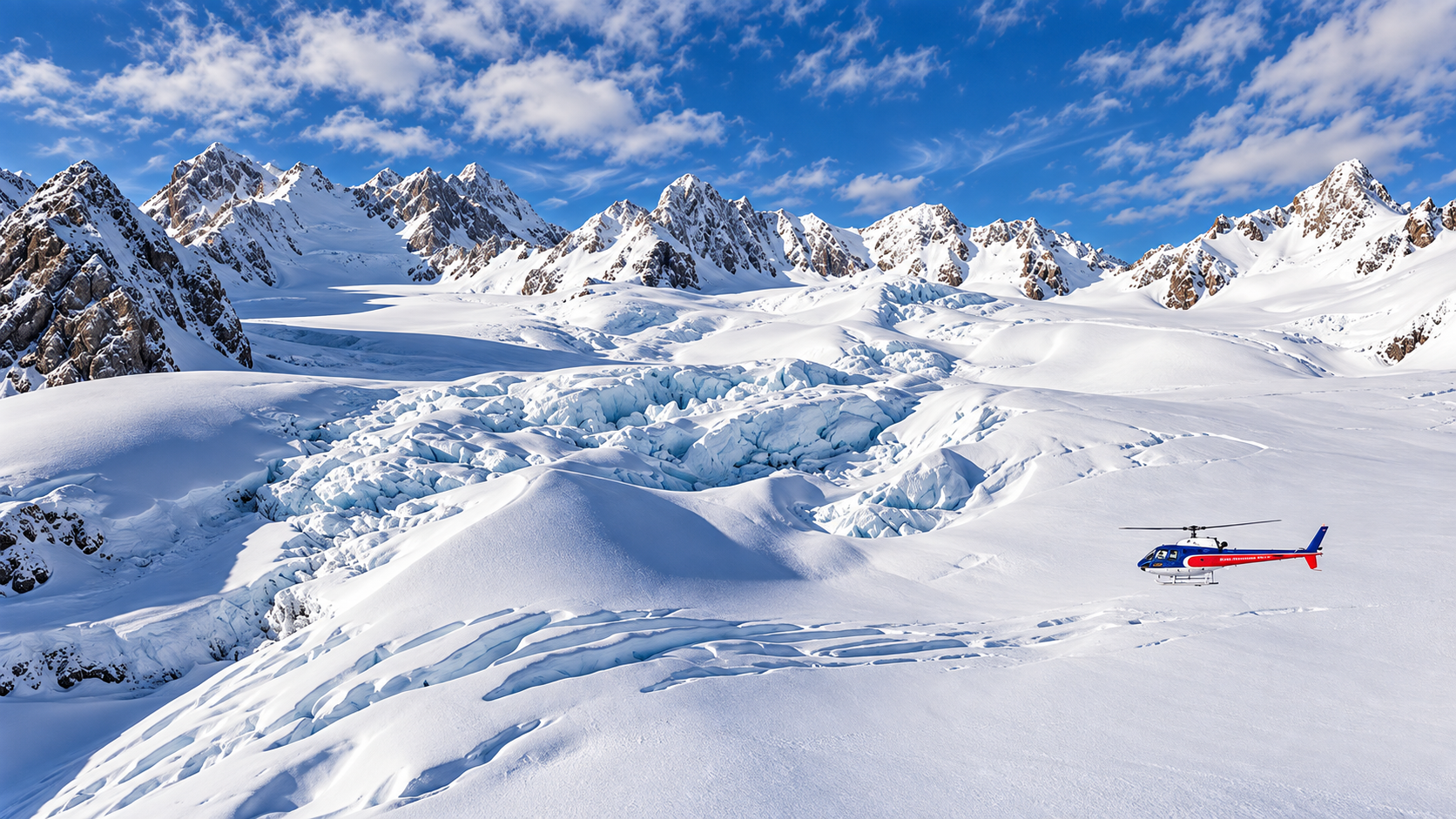
Ahead are huge glaciers climbing into the Southern Alps.
And on longer flights, Aoraki/Mount Cook itself appears on the other side of the range.
It is one of the most dramatic transitions anywhere in New Zealand.
Glacier Helicopters currently operates from both Franz Josef and Fox Glacier, with flights ranging from shorter glacier-and-snow-landing trips to longer journeys incorporating both glaciers and Aoraki/Mount Cook. Their current scenic programme includes snow landings as part of the glacier flights.
Franz Josef or Fox Glacier?
This is one of those questions where the good news is that you do not necessarily need to choose.
Current Twin Glacier flights can take you above both Franz Josef and Fox Glacier in the same experience, with a snow landing included.
If you are already staying in one town and simply want a shorter flight, departing from whichever location is convenient makes sense.
If you want the bigger experience, I would strongly consider seeing both.
They have different shapes and personalities.
Franz Josef/Kā Roimata o Hine Hukatere is narrower and steeper in its upper sections.
Fox/Te Moeka o Tuawe spreads through a different valley system and provides spectacular views towards the wider Southern Alps.
From above, comparing the two gives you far more understanding than looking at them independently from ground-level viewpoints.
Why a Helicopter Makes Sense Here
This is one location where I think the helicopter is more than simply a glamorous way to fly.
The terrain is steep.
The glaciers are surrounded by mountains.
And a helicopter can take you from near sea level into the alpine environment very quickly before landing on snow.
Current Glacier Helicopters trips include everything from shorter snow landings to a roughly 40-minute Mount Cook Spectacular, while longer itineraries fly across the Main Divide and provide views from the West Coast towards Aoraki.
That is a huge amount of landscape in a relatively short period.
The Snow Landing
For me, the landing is worth prioritising.
You can see glaciers from several places around New Zealand.
Standing in an alpine snowfield surrounded by them is much harder to reproduce.
The aircraft lands, everyone steps out and you suddenly realise how distant the road, village and rainforest have become.
On clear days you may be able to look west towards the Tasman Sea and east towards the high Southern Alps within the same experience.
That combination is what makes Glacier Country so unusual.
There are not many places where large glaciers sit so close to temperate rainforest and ocean.
Scenic Flight or Heli-Hike?
This is the big West Coast decision.
A scenic flight is about seeing the landscape.
A heli-hike is about physically experiencing the glacier.
If you want to walk on the ice, explore formations and spend much longer in the glacier environment, choose the heli-hike.
If your main priority is photography, mountain scenery or seeing multiple glaciers, choose the scenic flight.
Personally, if I had never been on a glacier before and the heli-hike fitted the budget, I would be very tempted by that.
But if I had limited time or simply wanted the best aerial overview of Glacier Country, the scenic helicopter wins easily.
West Coast Weather
The weather is the biggest practical consideration.
The mountains rise very quickly from the coast, and cloud can move through the valleys even when the weather elsewhere in the region seems acceptable.
Flights may be delayed, changed or cancelled when conditions are unsuitable.
That is not something I would view as a problem with the activity.
It is simply what flying in real mountains involves.
What you can control is your itinerary.
Stay more than one night.
Book early in your visit.
Have another activity ready if the aircraft cannot fly.
Lake Matheson, glacier valley walks and Hokitika farther north are not exactly terrible backup options.
Aotearoa Adventures Tip
If you are already spending the money on a Glacier Country scenic flight, compare the Twin Glacier and Aoraki/Mount Cook routes rather than automatically choosing the shortest snow landing.
Sometimes the difference in price is much smaller than the difference in what you actually see.
Current flights from Franz Josef and Fox range from shorter snow landings to wider routes covering both glaciers or continuing towards Mount Cook.
4. Wānaka & Tititea/Mount Aspiring – The Best Scenic Flight for Wilderness
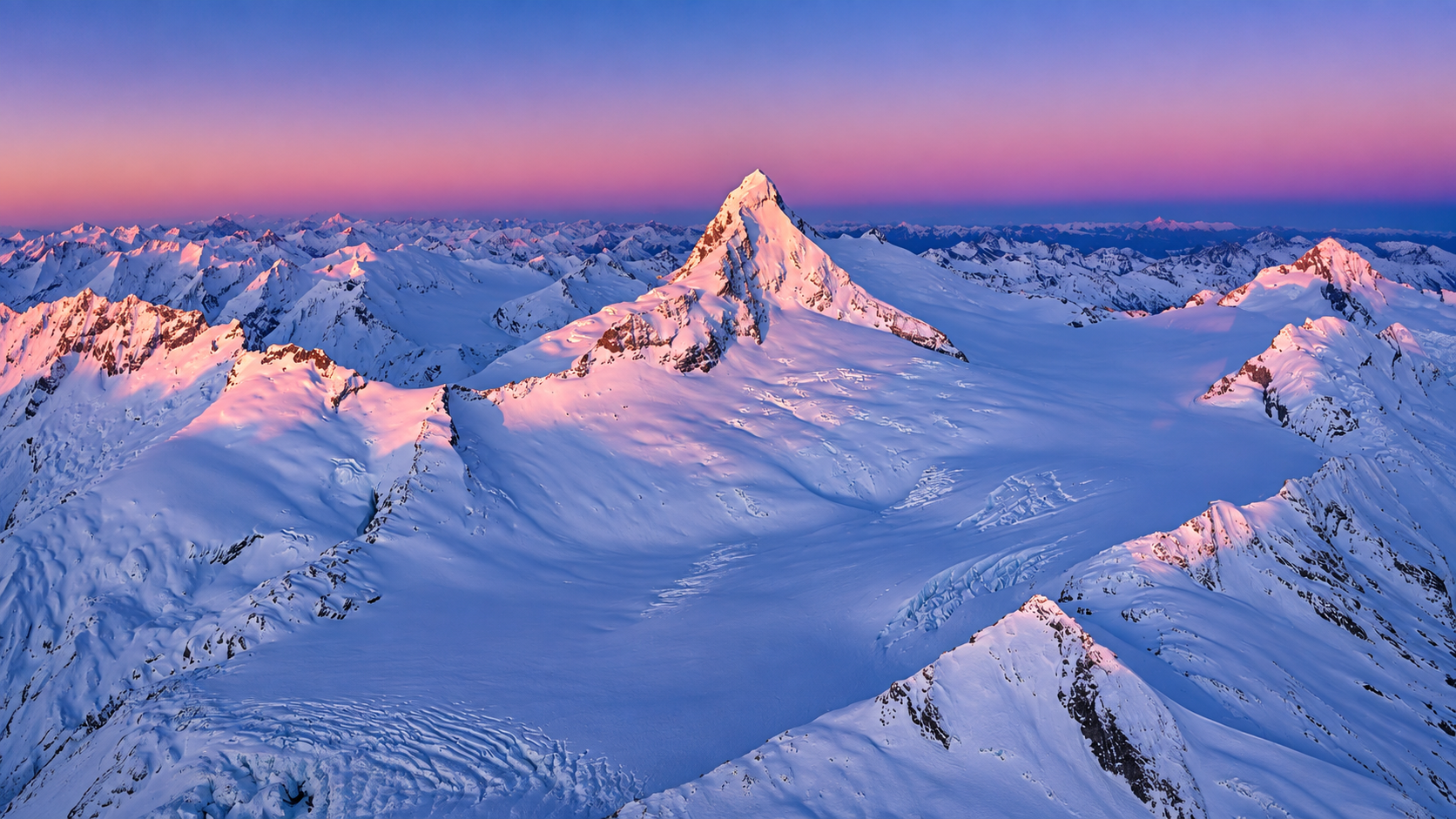
Wānaka has a habit of becoming more impressive the farther you move away from town.
Lake Wānaka itself is beautiful, but beyond the developed shoreline is a huge landscape of remote valleys, glaciers and mountains extending into Mount Aspiring National Park.
Much of that country is difficult to reach.
That makes aircraft particularly useful.
From Wānaka you can take a short helicopter flight above the lake, fly deep into Mount Aspiring country, land among the mountains or continue all the way across the Southern Alps towards Milford Sound.
Current Aspiring Helicopters options range from a 20-minute Lake Wānaka scenic flight with an alpine landing to an approximately one-hour Tititea/Mount Aspiring and glaciers trip with two alpine landings. Longer flights connect Wānaka with Milford Sound and Aoraki/Mount Cook.
That range makes Wānaka one of the best places in New Zealand to choose a flight that matches your budget.
Why Mount Aspiring Is So Impressive From the Air
Tititea/Mount Aspiring rises to 3,033 metres and dominates the national park around it.
From the ground, you can see the mountain from certain hikes and viewpoints, but the surrounding terrain is enormous.
The helicopter lets you move quickly over the Matukituki Valley and into alpine country containing hanging glaciers, deep valleys, mountain lakes and extensive snowfields.
Aspiring Helicopters' current one-hour Mount Aspiring and Glaciers flight includes two high-altitude alpine landings and travels through the wider World Heritage alpine landscape.
That would be my pick.
Not necessarily because it is the longest or most expensive flight available, but because an hour feels long enough to actually go somewhere.
You leave the Wānaka landscape behind and enter a completely different environment.
The Matukituki Valley
The location of some Wānaka helicopter operations is a major advantage.
Aspiring Helicopters operates from the Matukituki Valley, placing the aircraft close to the entrance of Mount Aspiring National Park rather than spending a large proportion of the flight simply reaching the mountains.
For visitors, that means more of your airtime can be spent around the scenery you actually paid to see.
It also makes the drive to the helicopter base part of the experience.
The Matukituki Valley is beautiful at ground level.
Then you get to see it from above.
Fixed-Wing Flights From Wānaka
Helicopters are not the only option.
Southern Alps Air operates fixed-wing scenic flights from Wānaka, including routes around Mount Aspiring, Aoraki/Mount Cook, West Coast glaciers and Milford Sound. Its current programme even includes a three-hour Scenic Epic linking Milford Sound, Mount Aspiring, Aoraki/Mount Cook and the Franz Josef and Fox glacier region in one flight.
That sort of trip is obviously a major purchase.
But it shows what is possible from Wānaka.
Because of the town's position close to the Southern Alps, a plane can reach several of New Zealand's biggest landscapes without spending huge amounts of time crossing developed country.
Wānaka or Queenstown for a Scenic Flight?
If you want Milford Sound, Queenstown probably gives you more departure choice and a very straightforward itinerary.
If you want Mount Aspiring and glaciers, I would lean towards Wānaka.
The town sits closer to the national park and the overall experience feels more connected to the surrounding wilderness.
There is also something appealing about doing one of your major scenic flights somewhere slightly quieter than Queenstown.
Wānaka still has excellent tourism infrastructure.
It just does not feel like every activity is competing for your attention at once.
Is a Short Lake Wānaka Flight Worth It?
I think so, particularly for families or first-time helicopter passengers.
Current 20-minute flights include views over Lake Wānaka and its islands plus an alpine landing.
That is a very accessible introduction.
You get the take-off, lake views, mountains and landing without committing to one of the more expensive hour-plus experiences.
If you already know this will be your only helicopter flight in New Zealand, however, I would try to stretch the budget to Mount Aspiring.
The difference in landscape is substantial.
Aotearoa Adventures Tip
If you are choosing between a scenic flight and another expensive Wānaka activity, ask yourself whether you will see the same landscape another way.
You can bike beside Lake Wānaka.
You can hike above the town.
But most travellers are not going to casually reach remote glaciers around Mount Aspiring National Park.
That is where I think a scenic flight earns its money.
5. Kaikōura – See Whales, Mountains and the Pacific From Above
Kaikōura is the destination that stops this article becoming five slightly different versions of “fly over some mountains”.
Here, the landscape and wildlife come together.
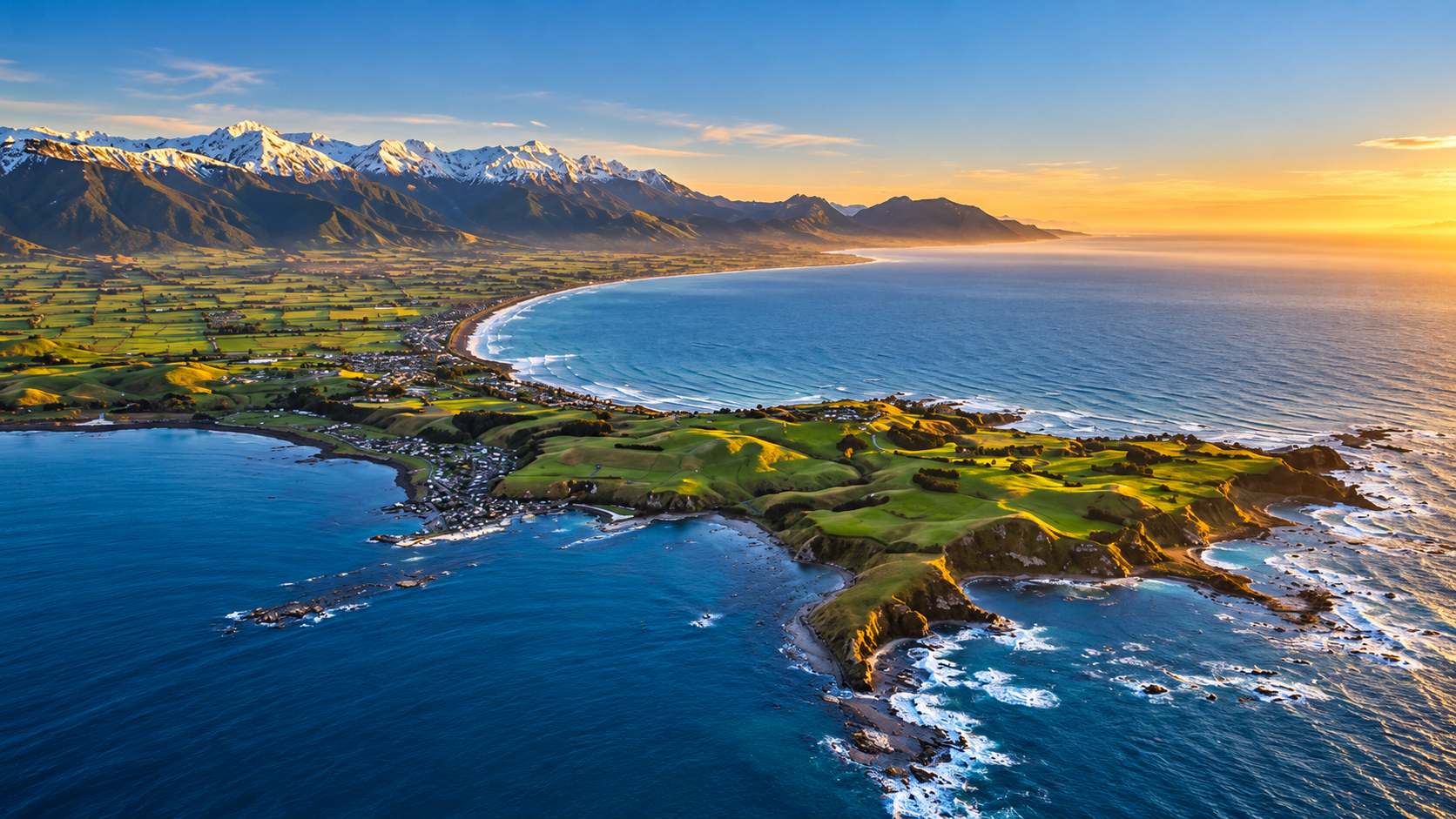
The Seaward Kaikōura Range rises dramatically beside the Pacific Ocean, while deep offshore waters support an extraordinary variety of marine life.
That already makes Kaikōura unusual from ground level.
From the air, you can potentially see the mountains, peninsula, coastline and a sperm whale in the same half hour.
Wings Over Whales currently offers a 30-minute whale-watching scenic flight, with passengers advised to allow around an hour including check-in. An extended option adds more time in the whale-watching area plus aerial views of the Kaikōura Peninsula and Seaward Kaikōura Range.
For someone who wants a scenic flight that feels completely different from Mount Cook or Milford, I think this is a brilliant choice.
Why See Whales From the Air?
One major advantage becomes obvious once you are above the water.
From a boat, most of the whale remains underwater.
You generally see the back, dorsal area and tail when it dives.
From an aircraft, you can potentially see the whole shape of the animal below the surface, which makes its size much easier to understand.
The standard Wings Over Whales aircraft are high-wing designs so passengers have clear views beneath the wing, and the flight circles wildlife when sightings allow.
That perspective is the reason I would consider this even if you were already planning to take the Whale Watch Kaikōura boat.
The two experiences do not give you exactly the same view.
Are Whale Sightings Guaranteed?
No wildlife experience should be approached like that.
Kaikōura has year-round sperm whales in its offshore environment, while other species including humpbacks, blue whales and orca may pass through seasonally, along with dusky dolphins and other marine life.
But these are wild animals.
They are not on a timetable.
Pilots and operators use local knowledge to search the likely areas, but the ocean remains the ocean.
I would book because Kaikōura itself is worth seeing from the air, with the whale encounter as the feature that can make it extraordinary.
The Mountains Are Almost as Good as the Whales
This is what surprised me most when looking at Kaikōura scenic-flight options.
The extended experience is not simply “fly around for longer in case another whale appears”.
It also takes you over the peninsula and towards the Seaward Kaikōura Range, which rises to more than 2,500 metres close to the Pacific coastline.
That combination gives the photographs a completely different character from any other destination in this guide.
You have deep blue ocean on one side.
Sharp mountain ridges on the other.
Green farmland and Kaikōura township between them.
And possibly a whale underneath you.
New Zealand does occasionally show off.
Whale Flight or Whale-Watching Boat?
This is another choice where I do not think one experience completely replaces the other.
The boat is more immersive.
You are on the ocean, surrounded by the wider marine environment, and seeing a sperm whale surface nearby can be extraordinarily powerful.
The flight gives you perspective.
You see much more coastline and can understand the full size of a whale from above.
It is also considerably quicker.
For somebody with limited time, that makes the aircraft particularly attractive.
The standard current whale flight is around 30 minutes in the air.
If seasickness is a major concern, the flight may also be a far more appealing option than spending several hours offshore.
Although people prone to motion sickness can still feel uncomfortable in smaller aircraft, so I would not assume flying is automatically symptom-free.
Standard or Extended Flight?
If the budget allowed it, I would choose the extended whale and mountain scenic flight.
The standard thirty-minute experience gives you the main wildlife opportunity.
The extended version adds the wider Kaikōura landscape and more time around the whale-search area.
Since the coastline and mountains are such an important part of what makes Kaikōura special, I think that extra scenery adds real value.
Aotearoa Adventures Tip
Do not organise the entire Kaikōura visit around a single exact wildlife expectation.
Take the scenic flight, but also walk the Kaikōura Peninsula, look for seals from shore and spend time along the coast.
The more of the environment you experience, the less the trip depends on whether one particular whale decides to surface at precisely the right moment.
COMPARE KAIKŌURA WHALE-WATCHING FLIGHTS
So, Where Is the Best Place for a Scenic Flight in New Zealand?
There is no single answer, but I would narrow it down like this.
Best overall alpine flight: Aoraki/Mount Cook
If the image in your head is glaciers, snow, enormous peaks and landing somewhere in the Southern Alps, this is the obvious choice.
Best complete scenic journey: Queenstown to Milford Sound
You see such an enormous range of landscapes that the flight feels like a destination in itself.
Best glacier experience: Franz Josef and Fox
The combination of rainforest, ocean, glaciers and high mountains is uniquely West Coast.
Best wilderness flight: Wānaka and Mount Aspiring
This is where I would go for remote alpine scenery without quite as much tourism around the edges.
Best wildlife flight: Kaikōura
Nothing else on the list gives you the possibility of looking down onto a sperm whale while mountains rise almost directly from the coastline behind you.
Helicopter or Scenic Plane: Which Is Better?
This is one of the most useful things to understand before booking.
Neither is automatically better.
They offer slightly different experiences.
Choose a Helicopter If…
I would lean towards a helicopter if the landing is important.
Helicopters can reach alpine ridges, glaciers and snowfields that fixed-wing aircraft generally cannot.
They also fly differently.
There is something extremely satisfying about approaching a mountain landing slowly, touching down and then stepping directly into alpine country.
Helicopter tours are particularly strong around Mount Cook, Franz Josef, Fox Glacier and Mount Aspiring.
Choose a Fixed-Wing Aircraft If…
A plane becomes very attractive when you want to cover a lot of distance.
Queenstown to Milford Sound is a perfect example.
You can efficiently cross large sections of the Southern Alps and Fiordland while still getting excellent views from a small aircraft.
Fixed-wing flights may also be cheaper per minute than comparable helicopter trips, although individual products vary considerably.
What About a Ski Plane?
Mount Cook gives you a third option.
Ski planes combine scenic aviation with the unusual experience of landing directly on alpine snow.
If that idea appeals to you, I think it is one of the most distinctively New Zealand scenic flights available.
Is a Scenic Flight Worth the Money?
This is where I think some travel blogs become slightly unrealistic.
Scenic flights are expensive.
For a couple or family, the cost can become one of the largest individual purchases of the entire holiday.
I would not tell everyone that they must do one.
Instead, I would ask:
Does the flight show you something you genuinely cannot experience from the ground?
At Aoraki/Mount Cook, yes.
On the West Coast, yes.
Around Mount Aspiring, definitely.
Flying to Milford can also save a huge amount of travel time while giving you an exceptional view.
That is where the value comes from.
I would be less enthusiastic about spending hundreds of dollars simply to fly above a landscape that you already have plenty of good roadside viewpoints of.
If you are going to spend scenic-flight money, choose somewhere that justifies the aircraft.
Is the Longer Scenic Flight Worth Paying For?
Sometimes.
I would not automatically buy the longest option.
A 20-minute flight above Wānaka could be perfect for someone who simply wants to experience a helicopter and see the lake from above.
But there are places where the longer route gives you a fundamentally different experience.
A West Coast flight that sees both glaciers rather than one is a good example.
Flying around Mount Aspiring rather than only Lake Wānaka is another.
And flying Queenstown–Milford–Queenstown is obviously a completely different product from a local Queenstown circuit.
The question I would ask is:
What extra landscape am I buying?
If the answer is another glacier, national park, mountain range or landing, the upgrade may be worthwhile.
If the answer is essentially “another ten minutes circling the same view”, I would probably keep the money.
What Is an Alpine or Glacier Landing Like?
The landing is normally short.
You are not being dropped into the mountains for the afternoon.
The pilot chooses a suitable site based on current snow, terrain and weather conditions, lands and lets passengers get out for photographs and a few minutes in the environment.
That short period can become the most memorable part of the trip.
Without the aircraft engine running, the mountains can feel incredibly quiet.
Do not expect beautifully maintained paths.
This is snow and alpine terrain.
Wear suitable shoes and listen carefully to your pilot about where you can walk.
And do not wander behind or around the aircraft unless explicitly instructed.
The pilot has a considerably better understanding of helicopters than your holiday photograph requires.
What Should You Wear on a Scenic Flight?
You generally do not need special clothing inside the aircraft.
The cabin is sheltered.
The landing is where clothing becomes important.
If your trip includes a mountain or glacier stop, take:
- enclosed flat-soled shoes
- a warm layer
- a jacket
- sunglasses
Current Wānaka helicopter guidance specifically recommends covered flat-soled footwear, jackets and sunglasses for its alpine flights.
Even on a warm day in Wānaka or Franz Josef, conditions thousands of feet higher can be completely different.
You can remove a jacket.
You cannot manufacture one on a glacier.
What About Cameras and Phones?
Bring them.
Just do not spend the entire experience viewing New Zealand through a six-inch screen.
Small aircraft windows can cause reflections, so hold the camera relatively close to the glass without pressing heavily against it.
Avoid wearing very bright clothing if photography matters, because reflections can appear in aircraft windows.
If your flight includes a landing, that is normally where the easiest photographs happen.
You can take your time rather than trying to photograph a mountain travelling past the window.
One other useful tip:
Look out both sides of the aircraft.
The best view is not permanently attached to your seat.
Pilots often adjust routes or circle major features to help passengers see them.
Does Everyone Get a Window Seat?
Not necessarily.
Small scenic aircraft are generally designed to provide good visibility, but seating arrangements depend on the aircraft, passenger numbers and weight-and-balance requirements.
Some flights specifically guarantee window seats. Southern Alps Air, for example, advertises guaranteed window seating on its Scenic Epic flight.
Helicopters also have different seating layouts.
If a window position is particularly important, check before booking rather than assuming.
Also remember that aviation seating is not always allocated like a bus.
Passenger weights can affect where people need to sit.
That is normal.
Why Do Scenic Flight Operators Ask for Your Weight?
Because aircraft weight and balance matter.
This is particularly important in smaller planes and helicopters.
Current Wānaka scenic-flight terms require individual passenger weights when booking, and similar rules are common across scenic aviation.
Give the operator the correct information.
This is not a situation where taking five kilograms off because it looks better on a form provides any benefit whatsoever.
The pilot does not care.
The aircraft does.
What Happens If the Weather Is Bad?
Your flight may be delayed, changed or cancelled.
This is completely normal.
Cloud can hide the mountains.
Wind can make a landing unsuitable.
Rain and visibility can affect particular routes.
Operators constantly assess whether the planned experience can operate safely and whether there is enough visibility to make it worthwhile.
Aspiring Helicopters, for example, states that its flights are weather dependent and may be rescheduled or offered an alternative route when conditions interfere with the planned experience.
I would much rather have an operator cancel than take my money for a scenic flight where the scenery remains hidden inside cloud.
This is why itinerary flexibility matters so much.
Should You Book the Morning Flight?
Morning conditions can sometimes be calmer, but I would not make a universal rule that morning is always better.
Mountain weather is more complicated than that.
The best approach is to book on an early day in your stay, not necessarily the earliest hour.
Then follow the operator's recommendation.
If the pilot tells you conditions look better at 1pm, I would listen to the person whose job involves understanding the mountains from the air rather than insisting that a travel blog said mornings are best.
Can Children Take Scenic Flights?
Usually, yes.
Scenic aviation can actually be a very good family activity because there is little physical effort involved.
The exact rules and child pricing vary between companies. For example, Aspiring Helicopters currently treats ages 0–14 as children, with very young children able to sit on a parent's lap under its stated conditions.
For young children, I would think carefully about flight duration.
A 20-minute lake flight can be fantastic.
A three-hour scenic epic may be considerably less exciting to a five-year-old once the initial novelty of the aircraft wears off.
Know your child.
Not every bucket-list experience needs to become a family endurance test.
What If You Are Nervous About Flying?
Small aircraft feel different from commercial airliners.
You hear more.
You feel more movement.
You can often see the pilot.
And because you are close to the windows, the sense of height is much more obvious.
For some nervous flyers, that actually feels reassuring because they can see exactly what is happening.
For others, it can take a little time to settle.
Tell the operator that you are nervous.
This is unlikely to be the first time they have heard it.
Avoid spending the previous evening watching videos about aircraft incidents.
That is advice I would probably apply to commercial flights as well.
What About Motion Sickness?
It can happen.
Small aircraft are more affected by air movement than large commercial jets, and some passengers who are perfectly comfortable on airline flights can feel queasy in a scenic aircraft.
If you know you suffer from motion sickness, use whatever preventative medication or approach normally works for you and follow the instructions properly.
Have a light meal beforehand rather than either eating an enormous breakfast or flying on a completely empty stomach.
And tell the pilot if you begin feeling unwell.
Trying to remain impressively silent while gradually turning green benefits nobody.
What Is the Best Scenic Flight for First-Time Visitors?
For me:
Aoraki/Mount Cook
It gives you the most obvious version of what people imagine when they think of a New Zealand scenic flight.
Snow.
Glaciers.
Huge mountains.
A possible alpine landing.
And the country's highest peak.
It feels special without requiring a complex itinerary.
You are already in Mount Cook National Park.
The airport is right there.
The mountains are right there.
You take off and almost immediately understand why you paid for it.
What Is the Best Scenic Flight for Couples?
I would probably choose Wānaka or Milford Sound.
Wānaka works because it feels a little quieter and some helicopter trips include remote alpine landings where the experience becomes very personal.
Milford is the bigger spectacle.
A fly–cruise–fly day from Queenstown would make a fantastic special-occasion activity because the experience lasts several hours and includes both flying and time on the fiord.
For a honeymoon or anniversary where you have deliberately set aside the budget for something memorable, either would be very difficult to beat.
What Is the Best Scenic Flight for Families?
I would look closely at a shorter Aoraki/Mount Cook or Wānaka flight.
Twenty to thirty minutes is enough for children to enjoy being in a helicopter without the flight becoming too long.
Kaikōura is another excellent option for animal-loving children because looking for whales gives them something specific to focus on.
A scenic flight can become much more interesting to a child when it is:
“Can you find the whale?”
rather than:
“Please continue appreciating the geological significance of this valley for another 70 minutes.”
What Is the Best Scenic Flight for Photography?
Probably Aoraki/Mount Cook or the West Coast glaciers.
The scale, snow, ice and mountains create enormous photographic variety.
Wānaka is excellent as well, particularly when lakes and glaciers can appear within the same route.
Kaikōura gives you something very different, with coastline and wildlife.
For photography specifically, I would compare aircraft design and seating as carefully as flight length.
A slightly shorter flight with excellent window visibility may be better than a longer experience from a seat that is harder to photograph from.
What Is the Best Scenic Flight If You Are Short on Time?
Kaikōura and Mount Cook are particularly easy.
The standard Kaikōura whale flight itself is around thirty minutes, while Aoraki/Mount Cook has current scenic options around 25 minutes.
Wānaka also has 20-minute helicopter flights.
Milford is different.
Even when flying, I would give it at least half a day because you may as well include the fiord rather than simply treating Milford Airport like somewhere to turn around.
When Is the Best Time of Year for Scenic Flights in New Zealand?
There is no single best month.
Summer
Summer gives you long days and generally the busiest tourism season.
It is excellent for Milford, Mount Cook, Wānaka, Glacier Country and Kaikōura, but popular departures may fill.
Autumn
Autumn is one of my favourite periods around Queenstown and Wānaka.
The wider landscape begins changing colour while high mountains retain snow and ice.
Crowds also tend to ease compared with peak summer.
Winter
For alpine scenic flights, winter can look spectacular.
More snow transforms the mountains around Queenstown, Wānaka and Mount Cook.
But weather can still cancel flights and winter days are shorter.
Spring
Spring can give you excellent snow-covered mountains and dramatic conditions.
It can also be changeable.
For Wānaka snow landings, some options are more reliable outside the warmest summer period, although individual landing sites are always dependent on the day's conditions.
The best season is usually the one when you are already travelling.
I would not completely rebuild a New Zealand holiday around scenic-flight conditions.
Should You Book Scenic Flights in Advance?
If the flight is important to you, yes.
But I would combine advance booking with flexibility.
Book for an early day in the destination.
If the weather works, excellent.
If not, move it.
This matters particularly in:
Aoraki/Mount Cook
Franz Josef and Fox Glacier
Wānaka/Mount Aspiring
Milford Sound
The mountains have no interest in your carefully organised spreadsheet.
Give them some room.
My Ideal New Zealand Scenic Flight Road Trip
If scenic flights were going to become one of the major themes of a New Zealand holiday, I would not simply book five similar helicopter rides.
I would deliberately make them different.
Start at Kaikōura with the whale-watching flight.
That gives you ocean, wildlife and mountains.
Continue south towards Aoraki/Mount Cook and do a glacier or ski-plane experience.
Head across to the West Coast and fly above Franz Josef and Fox Glacier, ideally including a snow landing or Aoraki route.
Continue through Haast to Wānaka and fly into Mount Aspiring country.
Finish in Queenstown, where I would choose the Milford Fly–Cruise–Fly experience rather than another short local helicopter circuit.
By that point you would have seen ocean wildlife, glaciers, the Main Divide, Mount Aspiring and Fiordland.
More importantly, none of the flights would feel like you were simply repeating the previous one.
If You Can Only Afford One Scenic Flight
This is the decision most people are actually going to make.
These activities are expensive enough that telling travellers to “just do all five” is not particularly useful.
If you are travelling mainly through the South Island, I would choose between:
Aoraki/Mount Cook
Choose this if alpine scenery is the priority.
Queenstown to Milford Sound
Choose this if you want the biggest journey and need to include Milford in your itinerary.
Franz Josef/Fox Glacier
Choose this if glaciers are what most excite you.
For a North Island-focused trip, I would not force a scenic flight just for the sake of ticking one off.
Save the money for the South Island on another trip — unless you are visiting Kaikōura, where the combination of wildlife and scenery gives you something completely different anyway.
Final Thoughts: Are Scenic Flights in New Zealand Worth It?
Scenic flights are probably one of the hardest New Zealand activities to recommend universally.
They can cost more than several nights of accommodation.
A family may spend a substantial amount for less than an hour in the aircraft.
And the weather gets the final vote.
But there are also landscapes in New Zealand where a flight gives you something that simply cannot be recreated from the road.
At Aoraki/Mount Cook, you can leave a valley floor and minutes later be surrounded by glaciers and the highest mountains in the country.
From Queenstown, you can cross the Southern Alps and arrive in Milford Sound instead of spending most of the day driving around them.
On the West Coast, you can move from rainforest to snow and ice almost unbelievably quickly.
From Wānaka, you can reach remote Mount Aspiring country that would otherwise require serious backcountry travel.
And in Kaikōura, you can look down onto a sperm whale with mountains rising beside the Pacific.
That is where I think scenic flying earns its place on an adventure website.
It is not just sightseeing.
The aircraft gives you access.
If you are going to book one, choose the landscape you most want to understand.
Do not automatically buy the longest flight.
Do not automatically buy the cheapest one either.
Look at the route.
Look at the landing.
Think about what else you are doing in the destination.
Then decide whether the flight gives you something your road trip cannot.
If it does, I think there is a very good chance you will remember the view long after you have forgotten what it cost.
Ready to See New Zealand From Above?
VIEW AORAKI/MOUNT COOK SCENIC FLIGHTS
COMPARE QUEENSTOWN TO MILFORD SOUND FLIGHTS
VIEW FRANZ JOSEF & FOX GLACIER HELICOPTER FLIGHTS