

North Island vs South Island: Which Should You Visit?
North Island vs South Island: Which Should You Visit?
Choosing between New Zealand’s North Island and South Island is one of the hardest decisions when planning a first trip. Both islands offer spectacular scenery, memorable road trips and more than enough things to fill a holiday, but they give you quite different versions of New Zealand.
The North Island is incredibly varied. You can move from the beaches and islands of Northland to Auckland, then continue south through Rotorua’s geothermal landscapes, Lake Taupō and the volcanic scenery of Tongariro National Park. There is also a stronger concentration of Māori cultural experiences, some excellent adventure activities and several of New Zealand’s main cities.
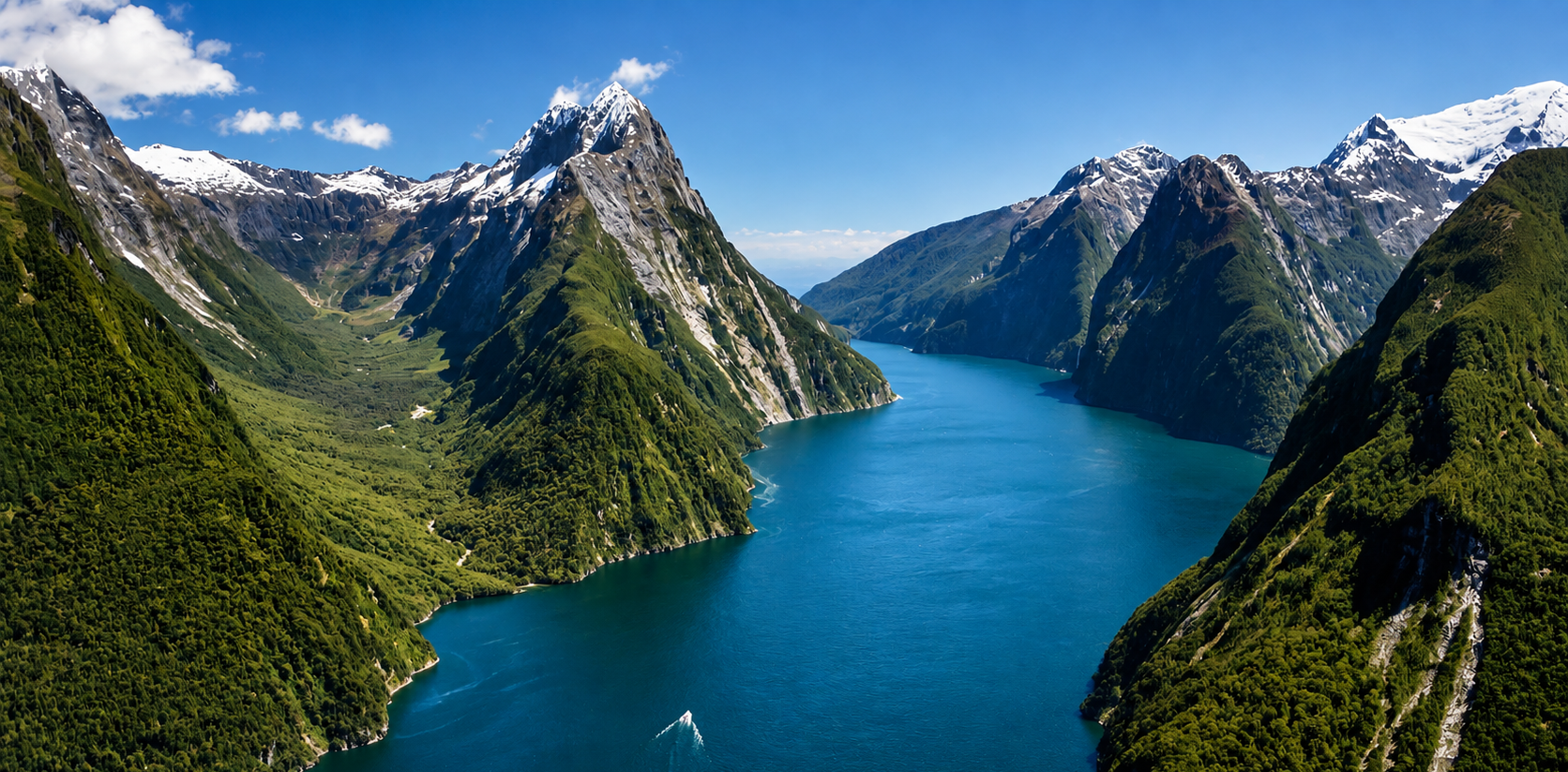
The South Island is where the scenery becomes much bigger and more dramatic. The Southern Alps run through much of the island, creating alpine lakes, glaciers, mountain passes and huge wilderness areas. Queenstown and Wānaka are two of New Zealand’s best adventure bases, Aoraki/Mount Cook delivers some of the country’s finest mountain scenery, and Fiordland contains Piopiotahi/Milford Sound and Patea/Doubtful Sound. Add Abel Tasman, Kaikōura, the West Coast and Central Otago and it becomes easy to understand why so many first-time visitors struggle to decide where to spend their time.
If you have three weeks or longer, I would seriously consider visiting both. If you only have one or two weeks, choosing one island can often give you a much better holiday than rushing between them.
So which should you choose?
Rather than simply declaring one island better than the other, these are the 12 main differences I would think about before deciding.
1. The Biggest Difference: What Kind of New Zealand Do You Want?
The easiest way to start is to think about the image of New Zealand that made you want to visit in the first place.
If you picture towering mountains, turquoise alpine lakes, glaciers, fiords and winding roads through huge landscapes, you are probably imagining the South Island. It contains many of the places that dominate international New Zealand travel photography, including Queenstown, Wānaka, Lake Tekapo, Aoraki/Mount Cook and Milford Sound.
If your ideal trip has more variety between beaches, volcanic landscapes, geothermal areas, lakes, cities and Māori culture, I would look more closely at the North Island. Rotorua, Taupō and Tongariro National Park are completely different from one another despite sitting relatively close together, while Northland and the Bay of Islands give you a warmer coastal experience again.
For a classic mountain-heavy New Zealand adventure, I think the South Island has the advantage. For a trip where you want to experience several different sides of the country without travelling enormous distances between them, the North Island becomes extremely appealing.
Neither is simply the better island.
They are different trips.
2. Which Island Has the Best Scenery?
This is probably the category where the South Island wins most easily, particularly if dramatic mountain landscapes are what you are looking for.
Drive towards Aoraki/Mount Cook beside Lake Pūkaki and you get one of the most recognisable road-trip views in the country. Around Queenstown and Wānaka, mountains rise directly behind huge lakes. Head west and the landscape changes into rainforest and glacier country, while Fiordland takes everything another step further with enormous valleys, dark water, waterfalls and steep mountains disappearing into the clouds.
The North Island scenery is less consistently alpine but perhaps more varied. Tongariro National Park gives you volcanoes and exposed lava landscapes. Rotorua gives you geothermal valleys, steaming ground and colourful pools. Lake Taupō dominates the central part of the island, while the Coromandel, Bay of Islands and Northland provide long stretches of coast and beaches.
If I wanted the trip to feel visually spectacular almost every day, I would choose the South Island.
If I wanted the scenery to keep changing dramatically in character — beach one day, geothermal landscape the next and volcanoes after that — I would choose the North Island.
My pick for dramatic scenery: South Island.
3. Which Island Is Better for Adventure Activities?
Both islands are excellent for adventure, but again they have slightly different strengths.
The South Island has Queenstown, which is difficult to beat as an all-round adventure destination. You can bungy jump, skydive, jet boat, raft, mountain bike, ski, take scenic flights and cruise Lake Whakatipu without needing to completely reorganise your itinerary between activities.
Wānaka gives you another excellent base for hiking, mountain biking, skydiving and alpine flights, while the West Coast adds glacier experiences and Fiordland brings hiking, kayaking and wilderness travel into the picture.
The North Island should not be underestimated, though. Rotorua is one of the best adventure destinations in the country, particularly if you enjoy rafting and mountain biking. The Kaituna River and Tutea Falls provide one of New Zealand’s most memorable commercial rafting experiences, while the Whakarewarewa Forest has an international reputation for mountain biking.
Taupō is another very strong adventure base. Skydiving, jet boating and lake activities are readily available, while nearby Tūrangi gives you access to rafting on the Tongariro River and the wider Central Plateau.
For the widest concentration of high-profile adventure experiences, I would choose the South Island.
For adventure mixed with geothermal attractions and shorter travel distances, the North Island is extremely good.
My pick for adventure: South Island, but much closer than people sometimes assume.
4. Which Island Is Better for Hiking?
This depends on what kind of hiking you enjoy.
The South Island has the advantage for classic alpine hiking. Around Aoraki/Mount Cook, Wānaka, Queenstown and Fiordland you are surrounded by mountains, valleys, alpine lakes and large wilderness areas. Abel Tasman adds something completely different with a coastal track that moves through native forest and alongside golden beaches.
You could easily build an entire South Island holiday around walking and never run out of options.
The North Island offers one of the country's most distinctive hiking landscapes in Tongariro National Park. The combination of volcanic peaks, craters and exposed terrain gives it a completely different character from the Southern Alps. There are also excellent forest and coastal walks throughout the North Island, including routes around Taranaki, Northland and the Coromandel.
If somebody told me hiking was the single most important part of their New Zealand holiday, I would probably send them to the South Island because of the sheer number and variety of alpine options.
However, I would still try to include Tongariro on a longer two-island trip. The volcanic landscape provides something the South Island simply does not replicate.
My pick for hiking: South Island.
5. Which Island Is Better for Māori Culture and Geothermal Experiences?
This is where I think the North Island clearly comes into its own.
Rotorua is one of the strongest places for visitors wanting to experience both geothermal New Zealand and learn more about Māori culture. The landscape itself is unusual, with steam rising from the ground, hot pools, bubbling mud and geothermal valleys spread throughout the region.
The cultural side is equally important. Māori-led experiences around Rotorua give visitors an opportunity to understand more about traditions, history, food and the relationship between people and place rather than simply travelling through New Zealand looking at scenery.
Farther north, Waitangi in the Bay of Islands holds enormous importance in New Zealand history and gives visitors another reason to spend time in Northland.
You will find Māori history, language and culture throughout both islands, of course. This is not something confined to one part of New Zealand. But for a first-time visitor who wants those experiences to form a major part of the itinerary, I think the North Island makes them easier to incorporate.
This is one of the biggest reasons I would hesitate before telling every first-time traveller to skip straight to the South Island.
The mountains may be bigger in the south, but understanding New Zealand involves more than mountains.
My pick for Māori cultural and geothermal experiences: North Island.
6. Which Island Is Better for Beaches and Coastal Travel?
The answer here is probably North Island, although Abel Tasman makes sure the South Island puts up a good fight.
Northland and the Bay of Islands are obvious choices for travellers who want warm-weather coastal travel. Islands, beaches, sailing, kayaking and small coastal towns create an experience that feels very different from the alpine South Island.
The Coromandel also gives you beautiful coastline within reach of Auckland, while other parts of the North Island have excellent surf beaches and quieter coastal areas that receive far less international attention.
The South Island's strongest answer is Abel Tasman National Park, where golden beaches, clear water, kayaking and coastal walking create one of the country's best summer destinations. Kaikōura offers a completely different coastal experience, with mountains rising immediately behind the ocean and marine wildlife becoming the main attraction.
The South Island coast can be spectacular, particularly around the West Coast and Catlins, but much of it feels rugged rather than tropical or beach-holiday focused.
If swimming, beaches and warmer coastal travel are central to the trip, I would choose the North Island.
If you want dramatic coastline as part of a broader mountain road trip, the South Island still offers plenty.
My pick for beaches: North Island.
7. Which Island Is Better for Road Trips?
This one is difficult because both islands are excellent.
The South Island probably offers the more spectacular classic road trip. Roads connect mountain towns, glacial lakes, high-country landscapes, rainforest and dramatic coastline, and some of the drives are destinations in themselves.
Queenstown to Glenorchy is a perfect example. So is the road alongside Lake Pūkaki towards Aoraki/Mount Cook. The journey between Wānaka and the West Coast through Haast Pass is another where the landscape completely changes while you drive.
But there is a downside.
Distances can become large and mountain roads can make journeys slower than they initially appear.
The North Island can be easier for travellers with less time. Auckland, Rotorua, Taupō and Tongariro can be linked naturally without spending entire days behind the wheel. That means you can experience several very different destinations while keeping the driving manageable.
If I had one week, I might actually prefer a North Island road trip simply because the distances between the places I wanted to visit could be shorter.
If I had two or three weeks and road-tripping itself was a major part of the holiday, I would choose the South Island.
My pick for the ultimate road trip: South Island.
8. Which Island Is Easier for a Short First Trip?
For a genuinely short trip, I think the North Island can be easier.
Imagine you have seven days.
You could arrive in Auckland, spend a little time there, travel to Rotorua, continue to Taupō and finish around Tongariro National Park. That gives you a major city, Māori culture, geothermal landscapes, a huge lake, adventure activities and volcanic scenery without needing to cover enormous distances.
A seven-day South Island trip can still be fantastic, but you need to make harder choices.
Queenstown, Wānaka, Fiordland and Aoraki/Mount Cook can already fill the entire week. Add Christchurch, the West Coast or Abel Tasman and the driving quickly begins taking over.
That does not mean the North Island is somehow smaller and easier everywhere. It simply offers a useful concentration of major visitor destinations in the central part of the island.
If you have only a week and this is your first New Zealand visit, I would choose one compact region of either island rather than trying to travel end-to-end.
But if I had to build a varied seven-day introduction to New Zealand, the central North Island would be very hard to beat.
My pick for a short varied trip: North Island.
9. Which Island Is Better in Summer?
Both.
Summer is one of those seasons where choosing between them becomes particularly difficult.
The North Island's warmer coastal destinations really come alive. Northland, the Bay of Islands and the Coromandel become excellent additions to a road trip, while Rotorua and Taupō offer plenty of outdoor activities.
On the South Island, summer opens up the full road-trip and hiking experience. Queenstown and Wānaka are busy with adventure activities, the alpine walking season is underway, Abel Tasman is perfect for kayaking and beaches, and the long daylight hours make journeys through Fiordland and the wider South Island much easier.
If my main priorities were beaches, warmer weather and coastal travel, I would favour the North Island.
If my priorities were hiking, mountains and adventure activities, I would choose the South Island.
For a longer summer trip, this is exactly why combining the two islands works so well. You can experience two very different versions of New Zealand in the same season.
10. Which Island Is Better in Winter?
For a dedicated winter holiday, I would choose the South Island, particularly if snow and skiing are part of the plan.
Queenstown and Wānaka become completely different destinations once winter arrives. The surrounding mountains are covered in snow, ski fields become a major focus and the towns develop a winter atmosphere that feels very different from their summer personalities.
Aoraki/Mount Cook can also look spectacular under winter conditions, although alpine travel needs to be treated appropriately and ordinary summer hiking advice should never simply be transferred to winter.
The North Island still has plenty to offer. The Central Plateau around Ruapehu provides alpine scenery, while Rotorua's hot pools and geothermal areas become particularly appealing when the temperatures drop. Taupō can also be beautiful on crisp winter days.
If skiing is not your priority, the North Island can actually make a very enjoyable winter road trip because you can combine cooler landscapes with geothermal experiences and generally milder northern regions.
But if what you really want is the full snow-covered New Zealand image, I would head south.
My pick for winter: South Island.
11. Which Island Is More Expensive?
I would not choose an island based purely on cost because your travel style makes a much bigger difference than the island itself.
However, the South Island can become expensive surprisingly quickly, especially if your itinerary revolves around major tourism destinations and adventure activities.
Queenstown is the obvious example. Accommodation can be expensive, and there is an almost dangerous number of opportunities to spend money on bungy jumping, skydiving, jet boating, rafting and scenic flights.
Aoraki/Mount Cook can also require more planning because accommodation close to the national park is limited. Add Fiordland cruises, glacier activities and scenic flights and a South Island adventure trip can quickly become financially ambitious.
The North Island is not automatically cheap, but it can be easier to create a varied trip without spending as much on premium activities. You can mix Rotorua, Taupō and Tongariro with free or relatively inexpensive outdoor experiences and shorter driving distances.
That said, a South Island trip built around hiking and simple accommodation could cost far less than a North Island holiday filled with luxury hotels and guided experiences.
The better approach is deciding what you actually want to do and budgeting around it.
My pick for easier budget control: North Island, slightly.
12. Which Island Would I Choose for a First New Zealand Adventure?
If somebody told me they had two weeks, loved mountains and outdoor adventure and could only choose one island, I would choose the South Island.
I would probably build the trip around Queenstown, Wānaka, Aoraki/Mount Cook and Fiordland, then add another region depending on the route and interests. That could be the West Coast for glaciers and rainforest, Abel Tasman for kayaking and beaches, or Kaikōura for marine wildlife.
There is simply an extraordinary concentration of landscapes and activities within the South Island.
However, I would not automatically give that answer to everybody.
If somebody told me they were more interested in Māori culture, geothermal landscapes, beaches and volcanic hiking, I would send them to the North Island without hesitation.
Rotorua, Taupō, Tongariro National Park and Northland can create an excellent first trip that looks nothing like the standard Queenstown-and-Milford itinerary.
For me, this is why the question should not really be:
Which island is better?
It should be:
Which island is better for the trip I want?
A Great First North Island Trip
If I had around ten days for the North Island, I would resist trying to reach every corner.
I would begin with Auckland, particularly if that is where the international flight arrives. A day or two gives you time to recover and explore before beginning the road trip properly.
From there, I would move towards Rotorua and spend several nights rather than treating it as a single geothermal stop. There is enough here to combine geothermal attractions with Māori culture, rafting, mountain biking and hot pools.
Next would be Taupō, where you can spend time around the lake, visit Huka Falls and choose from activities such as jet boating, skydiving and scenic cruises. From Taupō, Tūrangi and Tongariro National Park become the natural next part of the trip.
If I had more time, I might add Northland, Taranaki, Hawke's Bay or Wellington rather than automatically attempting to include all of them.
The strength of the North Island itinerary is variety. You can see a lot of different New Zealand without needing to drive halfway across the country every day.
A Great First South Island Trip
For a first South Island adventure, I would build the route around the places that genuinely make the island special rather than trying to complete a full circuit for the sake of it.
Queenstown would be one of my main bases. I would give it at least three or four nights if adventure activities are important, allowing enough time for something major such as bungy jumping, skydiving or jet boating alongside slower experiences around the lake or nearby Arrowtown and Glenorchy.
I would then spend time in Wānaka, which gives you beautiful lake scenery and a slightly calmer atmosphere while keeping excellent hiking and adventure options nearby.
From there, Aoraki/Mount Cook deserves time rather than being reduced to a quick roadside stop. The journey beside Lake Pūkaki is part of the experience, and staying overnight gives you a chance to enjoy the national park when the day traffic has disappeared.
I would also give Fiordland at least two or three nights based around Te Anau. Milford Sound deserves a proper day, while Doubtful Sound becomes an excellent addition when there is enough time.
With two weeks or longer, Abel Tasman, Kaikōura or the West Coast could then become the next section.
Can You Visit Both Islands?
Absolutely, and if you have enough time, I think this gives you the best overall introduction to New Zealand.
For me, three weeks is where combining both islands becomes particularly comfortable.
That gives you enough time to experience a meaningful section of the North Island and still have plenty left for the South without constantly moving accommodation.
With around two weeks, I would be more selective. You might spend several days around Rotorua, Taupō and Tongariro before flying south and concentrating on Queenstown, Wānaka and Fiordland.
I would not insist on driving the entire country simply because you are technically doing a road trip.
Domestic flights can save enormous amounts of time when your main interests are far apart.
With a month, however, a full road journey connected by the Cook Strait ferry becomes much more appealing.
You can travel through the North Island towards Wellington, cross to Picton and continue through the South Island without the journey feeling rushed.
What if You Only Have 7 Days?
Choose one island.
I would not recommend trying to properly experience both in a week unless you are visiting only one small area of each for a very specific reason.
Seven days in the North Island could comfortably give you Auckland, Rotorua, Taupō and Tongariro.
Seven days in the South Island could give you Queenstown, Wānaka and Fiordland, or perhaps Queenstown, Wānaka and Aoraki/Mount Cook.
Either of those trips would give you much more than spending the same week repeatedly checking out of accommodation and flying between opposite ends of the country.
New Zealand rewards time in a destination far more than it rewards collecting destination names.
What if You Have 14 Days?
Two weeks gives you a genuine choice.
You could explore one island properly, which would be my preference if there are lots of places on that island you want to see.
Alternatively, you could combine the two by choosing only the strongest destinations.
For example, a first-time adventure trip might include Rotorua, Taupō and Tongariro in the North Island before flying south for Queenstown, Wānaka and Fiordland.
That gives you geothermal landscapes, Māori culture, volcanic scenery, lakes, mountains, adventure activities and fiords within one holiday.
What I would not do is add another ten destinations simply because there happen to be fourteen days.
Two weeks sounds long when you book the flights.
It feels surprisingly short once New Zealand begins offering you places to stop.
Aotearoa Adventures Tip: Don't Choose an Island From Someone Else's Favourite
You will find plenty of travellers who confidently tell you that one island is obviously better.
Usually, that says more about what they enjoy than about the islands themselves.
Someone who loves high mountains will probably favour the South Island.
Someone who prefers beaches, geothermal landscapes and Māori cultural experiences may have a completely different answer.
Use other travellers' opinions to discover places, but do not let them design your entire holiday.
Look at what each island actually offers and choose the one that best matches the trip you want.
If the South Island wins, fantastic.
If the North Island wins, you are not somehow choosing the less exciting version of New Zealand.
You are simply choosing a different one.
Final Thoughts: North Island or South Island?
If I had to choose one island for a first New Zealand adventure holiday, I would probably choose the South Island. The combination of Queenstown, Wānaka, Aoraki/Mount Cook, Fiordland and the wider Southern Alps gives you an incredible concentration of mountains, road trips, hiking and adventure activities. For travellers who have dreamed of the New Zealand scenery they have seen in photographs, the South Island is often where those expectations become real.
But I would not describe it as the better half of New Zealand.
The North Island offers things the South cannot replace. Rotorua's geothermal landscapes, Māori cultural experiences, the volcanic scenery around Tongariro, Lake Taupō and the beaches farther north create a completely different journey. A traveller interested in those experiences could easily spend two weeks entirely in the North Island and leave feeling that there was still plenty more to explore.
If you have a week, choose one area of one island and enjoy it properly. If you have two weeks, either explore one island in depth or combine only a handful of highlights from both. If you have three weeks or longer, visiting the North and South Islands begins to make much more sense because you have enough time to appreciate how different they really are.
The biggest mistake would be choosing both simply because you are worried about missing something.
You are going to miss something regardless.
New Zealand has too many worthwhile places for one trip.
Instead, decide what you want your holiday to feel like. If that means mountains, fiords and big adventure activities, head south. If it means volcanoes, beaches, geothermal landscapes and Māori culture, look north. If both sound equally good and you have the time, experience both.
Whichever island you choose, leave enough room to slow down.
Some of the best New Zealand moments will probably happen somewhere between the places you originally came to see.
Continue Planning Your New Zealand Trip
NEW ZEALAND TRAVEL GUIDE FOR FIRST-TIME VISITORS
BEST TIME TO VISIT NEW ZEALAND