

What to Pack for New Zealand: The Complete Packing Guide
What to Pack for New Zealand: The Complete Packing Guide
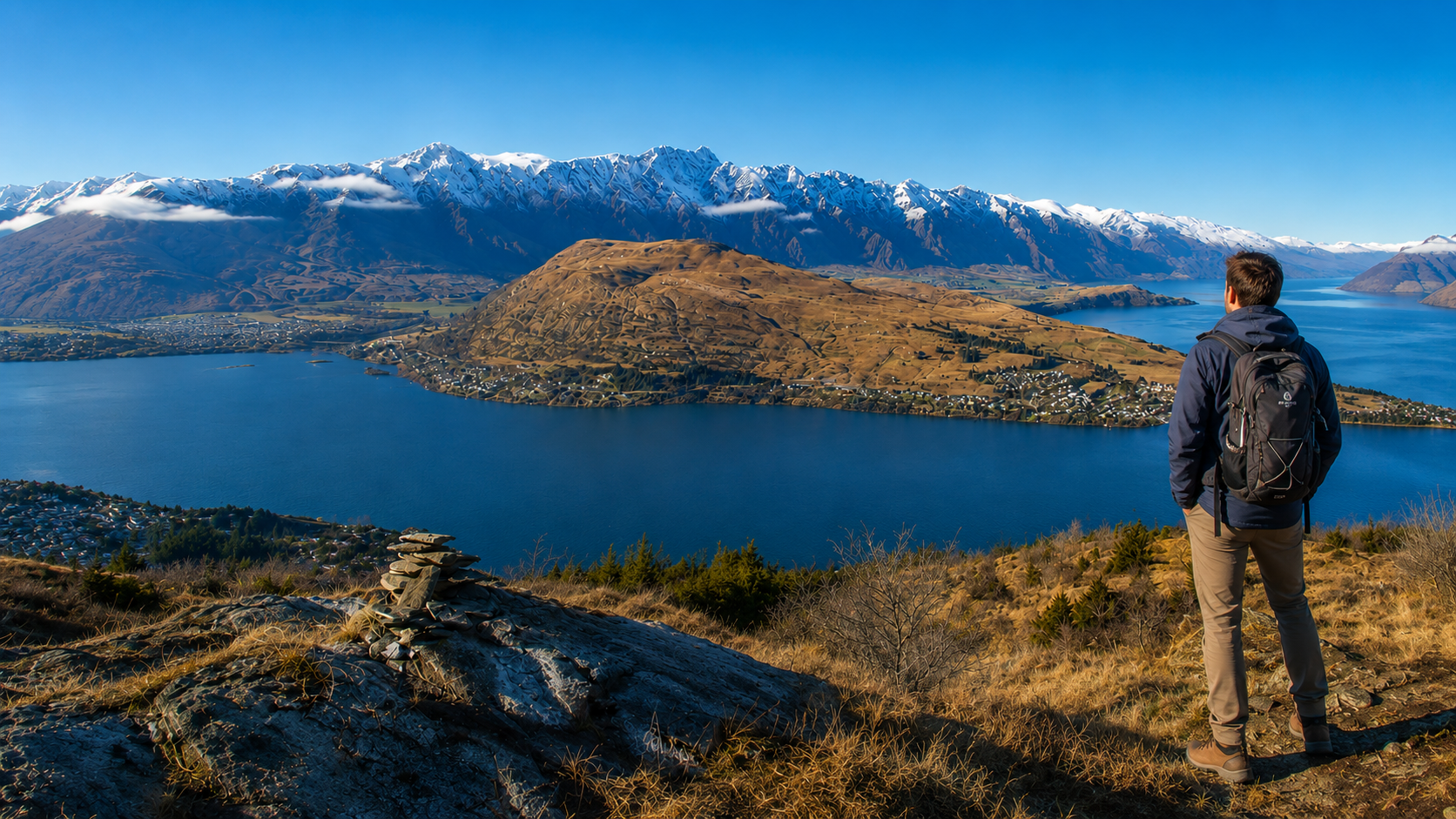
Packing for New Zealand can be surprisingly difficult because the country does not fit neatly into one type of holiday. You might spend one morning walking beside a beach in Northland, a few days later be exploring geothermal areas around Rotorua, and by the following week find yourself standing beneath snow-covered mountains in the South Island.
That variety is one of the best things about travelling here, but it also means the weather can change considerably as you move around the country. Even during summer, a warm day beside a lake can turn into a cold evening in the mountains. In spring and autumn, conditions can shift quickly, while winter requires much more thought if you are travelling through alpine areas.
For most visitors, the answer is not packing more.
It is packing better.
A few versatile layers, a good waterproof jacket, comfortable shoes and clothing that can handle several different conditions will usually be much more useful than trying to prepare for every possible weather forecast individually. New Zealand is also a relaxed country, so unless you have a particular event planned, you probably need far fewer formal clothes than you think.
This guide covers what I would bring for a New Zealand road trip, including clothing, footwear, hiking gear, electronics, sun protection, adventure activities and the small practical items that become surprisingly useful once you are actually travelling.
The Most Important Thing to Pack: Layers
If I could give only one piece of packing advice for New Zealand, it would be to bring layers.
New Zealand weather can vary greatly between regions, and the temperature can change even more when altitude is involved. A warm afternoon in Queenstown does not necessarily tell you what the weather will feel like higher on a walking track, and a sunny morning does not guarantee the same conditions by late afternoon.
A simple layering system solves most of this.
I would start with comfortable lightweight clothing close to the skin, add a fleece, wool layer or light insulated jacket when it becomes cooler, and keep a waterproof outer layer available for wind and rain. You can then remove or add clothing throughout the day without carrying several completely different outfits.
This is particularly useful on road trips. The weather in Christchurch may be completely different from the weather you encounter later that day near Aoraki/Mount Cook, despite the fact that both places are part of the same journey.
Layering also saves luggage space.
Instead of packing one enormous winter jacket that is too warm for most of the trip, several lighter pieces give you far more flexibility.
Bring a Good Waterproof Jacket
A waterproof jacket is one item I would bring regardless of when you visit.
You may never use it.
That would be wonderful.
But if you do need it, you will probably be very pleased it was there.
New Zealand has wet regions, mountain weather and coastal weather, and conditions can change much faster than visitors expect. Fiordland is the obvious example, where rain is a normal part of the landscape rather than an unusual interruption.
A waterproof shell is usually more useful than a very heavy coat because you can wear warm layers underneath it when necessary.
For ordinary sightseeing and road trips, you do not need an expedition-level jacket.
But if serious hiking is part of your itinerary, I would invest in something properly waterproof and wind resistant rather than relying on a very light fashion raincoat.
There is a difference between walking from the car to a café in rain and spending several hours exposed on an alpine track.
What Clothes Should You Pack?
New Zealand is fairly casual, particularly outside the largest cities.
For most travellers, comfortable everyday clothes will cover almost everything.
I would bring a few T-shirts or lightweight tops, a couple of warmer long-sleeve layers, comfortable trousers or shorts, something warm for evenings and clothing that can handle walking, driving and sightseeing without needing to be changed constantly.
Jeans are fine for towns and restaurants, but I would not rely on them as your main outdoor clothing. Once denim gets wet, it stays wet for an impressively long time.
Quick-drying trousers or hiking pants are much better for outdoor days.
For a normal two- or three-week road trip, I would pack enough clothing for roughly a week and plan to do laundry.
There is little point dragging three weeks of clean clothing around New Zealand when holiday parks, apartments, motels and laundromats make washing fairly easy.
Packing less also makes moving accommodation much easier.
And by the middle of a road trip, that starts to matter.
What Should You Wear in New Zealand During Summer?
Summer runs from December through February and is the easiest season to pack for, but I would still avoid bringing only hot-weather clothing.
Shorts, lightweight tops and comfortable summer clothes will get plenty of use, particularly around beaches, towns and lower-altitude destinations.
I would also bring a warm layer and waterproof jacket.
Even in summer, evenings can become cool around places such as Queenstown, Wānaka, Aoraki/Mount Cook and the Central Plateau.
If you are hiking, the difference between conditions in town and conditions higher on a mountain can be substantial.
Summer is also when sun protection becomes especially important.
Do not assume that a cooler temperature means the sun is weak. New Zealand's UV can be strong, so a hat, sunglasses and sunscreen should be part of your normal day rather than something you only remember when heading to the beach.
What Should You Wear in Autumn?
Autumn runs from March through May and is one of my favourite periods for travelling around New Zealand.
The challenge is that early March can still feel very summery, while May can feel close to winter in southern and inland regions.
That means layering becomes particularly useful.
I would bring ordinary warm-weather clothing, a fleece or similar mid-layer, a proper jacket and long trousers.
If your trip includes Queenstown, Wānaka, Central Otago or Aoraki/Mount Cook later in autumn, I would include something genuinely warm for early mornings and evenings.
Autumn can be fantastic for hiking because the cooler temperatures are comfortable, but conditions at higher elevations begin changing as the season progresses.
If you are travelling in late April or May, check the individual track conditions rather than assuming everything still operates like summer.
What Should You Wear in Winter?
Winter requires the most preparation, particularly in the South Island and Central Plateau.
June through August can bring freezing temperatures, snow and icy conditions in alpine areas.
For a winter Queenstown or Wānaka trip, I would bring proper warm layers, a good jacket, warm socks, long trousers, gloves and a beanie.
If skiing is part of the holiday, you will also need appropriate snow clothing, although skis, boots, helmets and other bulky equipment can normally be hired rather than carried internationally.
For ordinary winter sightseeing, you do not need to dress like you are heading into Antarctica.
But you do need enough clothing to be comfortable outside.
A winter morning around Aoraki/Mount Cook or Te Anau can feel very different from a mild afternoon in Auckland.
If the trip covers both islands, pack for the coldest destination rather than the warmest one.
What Should You Wear in Spring?
Spring runs from September through November and can be wonderfully unpredictable.
You might have warm sunshine in the afternoon and cold rain the following morning.
Higher mountains may still hold significant snow while lower valleys are already becoming green and warm.
This is exactly the season where a good layering system earns its place in the suitcase.
I would pack much as I would for autumn: lightweight clothing, long trousers, a fleece or warm mid-layer, waterproof jacket and something properly warm for the mountains.
By November, summer clothing becomes more useful, but I would still keep the warmer options.
New Zealand spring has a habit of reminding people that summer has not quite arrived yet.
What Shoes Should You Bring?
For most travellers, footwear can be kept relatively simple.
A comfortable pair of walking shoes or trainers will probably get more use than anything else.
Even if you are not planning a hiking holiday, New Zealand destinations often involve walking. Viewpoints, lakefronts, geothermal parks, coastal tracks and town centres all mean you can easily spend far more time on your feet than expected.
If you are planning proper hiking, I would add trail shoes or hiking boots depending on the tracks you want to do.
For many well-formed day walks in good summer conditions, trail shoes can be perfectly practical for experienced walkers.
For rougher terrain, wet tracks or more serious alpine routes, good hiking boots may be the better choice.
Do not buy a new pair of hiking boots immediately before flying to New Zealand and then discover that they begin destroying your feet five kilometres into the first walk.
Wear them beforehand.
Your holiday does not need a blister subplot.
Do You Need Hiking Boots for New Zealand?
Not everyone does.
If your itinerary mainly involves cities, scenic drives, short walks and commercial attractions, comfortable walking shoes will probably be enough.
If you are planning to spend significant time in national parks, proper outdoor footwear becomes more worthwhile.
The important thing is choosing footwear for the actual track rather than the photograph you saw online.
Some popular New Zealand tracks are extremely well formed.
Others involve rock, mud, river crossings or alpine terrain.
Popularity does not necessarily mean easy conditions.
Check individual track information before deciding what equipment you need.
Pack a Small Daypack
A small backpack is one of the most useful things you can bring.
You will use it constantly.
It can carry water, sunscreen, a jacket, snacks, camera equipment and whatever else you need for a day away from the accommodation.
I would choose something comfortable enough for a several-hour walk but small enough that it does not become annoying when visiting towns or joining activities.
Around 15–25 litres is usually plenty for ordinary day trips.
If serious alpine hiking is part of the holiday, you may want something larger depending on the route.
For most travellers, though, this is a daypack, not a mountaineering expedition bag.
Sun Protection Matters in New Zealand
This is one area where I would not be casual.
New Zealand sun can feel surprisingly strong, particularly during summer and at higher elevations.
Bring good sunscreen, sunglasses and a hat.
Then actually use them.
People sometimes associate sunburn with very hot weather, but temperature and UV are not the same thing.
You can be walking in cool mountain air and still get badly burnt.
For long outdoor days, I would also consider lightweight clothing that covers the arms and neck.
It is easier than constantly reapplying sunscreen to every centimetre of skin.
Do You Need Insect Repellent?
Yes, particularly if you are travelling through the South Island.
Sandflies can be extremely annoying around parts of Fiordland, the West Coast and other wet or forested areas.
They are tiny.
Their enthusiasm is not.
Bring insect repellent or buy some after arriving.
It is particularly useful around campsites, lakes, rivers and places such as Milford Sound.
If you are travelling by campervan, I would keep repellent somewhere easy to access rather than buried inside luggage.
There is nothing like opening a campervan door beside a beautiful river and discovering that several hundred local residents were apparently waiting for you.
Bring Swimwear Even if You Are Not Visiting in Summer
I would pack swimwear at almost any time of year.
New Zealand has beaches, lakes, swimming pools and hot pools throughout the country.
Rotorua and Taupō have geothermal bathing options, while places such as Hanmer Springs are popular specifically because soaking in hot water feels particularly good when the air is cold.
A swimsuit takes almost no luggage space.
There is little reason not to bring one.
If you are travelling in summer, I would also bring a lightweight towel if your accommodation or activity does not provide one.
A quick-drying travel towel can be useful for campervan travellers, beach days and swimming stops.
What to Pack for Hiking in New Zealand
If hiking is a major part of your trip, your packing needs become more serious.
At minimum, I would want suitable footwear, waterproof clothing, warm layers, water, food, sun protection and a backpack.
Then I would adjust the equipment depending on the actual route.
A short forest walk is not the same as an exposed alpine hike.
For longer or more remote walks, navigation, first-aid equipment, an emergency communication device and additional warm clothing may be appropriate.
For serious backcountry travel, you need to prepare for the environment rather than simply follow a generic travel-blog packing list.
New Zealand's mountains deserve respect.
Weather can change quickly, and some tracks that appear straightforward in summer photographs can become completely different in winter or poor weather.
Use current Department of Conservation information and local forecasts when deciding what equipment is required.
Do You Need a First-Aid Kit?
I would carry a small basic one.
You do not need an enormous medical bag for ordinary travel.
But plasters, blister treatment, pain relief and any personal medication can be useful, especially on road trips where you may spend time away from larger towns.
Blister care is particularly worthwhile if you are doing lots of walking.
A tiny hotspot on your foot can become surprisingly influential when tomorrow's itinerary contains another fifteen kilometres.
If you have prescription medication, bring enough for the trip and keep important medication in your hand luggage when flying rather than placing all of it inside checked baggage.
What to Pack for Adventure Activities
One of the good things about New Zealand adventure tourism is that specialist safety equipment is normally provided by the operator.
You do not need to bring a parachute for skydiving.
That would raise some interesting questions at airport security anyway.
Bungy operators provide the necessary harnesses and equipment, rafting operators provide technical gear such as helmets and buoyancy aids, and snow-sports equipment can usually be hired.
What you do need is sensible clothing.
For activities such as jet boating and scenic cruises, bring a warm layer and waterproof jacket because being near or on water can feel cooler than expected.
For rafting and canyoning, operators usually explain what clothing is suitable and what they provide.
For scenic flights, comfortable everyday clothing is normally fine, although alpine landings can obviously be much colder than the town where the flight began.
Always check the specific operator's instructions before the day.
What to Pack for a New Zealand Road Trip
For a self-drive holiday, there are a few things I would keep inside the car rather than packing everything deep inside the luggage.
A reusable water bottle is useful every day.
So are sunglasses, sunscreen, a warm layer and waterproof jacket.
I would also keep some snacks available because many of New Zealand's best roads pass through rural areas where food options can be limited.
A phone mount is useful if your rental company does not provide navigation.
A charging cable and car charger are equally important.
Download offline maps for remote areas as well.
Mobile coverage is generally good around towns but can disappear in national parks, valleys and remote parts of the West Coast or Fiordland.
Being able to navigate without mobile data is worth preparing for.
What to Pack for a Campervan Trip
Campervan travellers should pack even lighter.
Storage is limited, particularly in smaller vehicles.
Soft luggage is much easier to deal with than large hard-shell suitcases because it can be compressed or folded once empty.
Before packing kitchen gear, towels or bedding, check what the campervan company already provides.
Many rentals include basic cooking equipment and bedding, while others treat certain items as optional extras.
There is no point carrying something halfway around the world if it is already sitting inside the van when you collect it.
I would also bring a small torch or headlamp.
It becomes extremely useful around campsites at night and takes almost no space.
A pair of easy slip-on shoes or sandals is another surprisingly useful campervan item because you will constantly be moving between the vehicle and campsite facilities.
Electronics and Chargers
For most travellers, your phone will probably become your camera, navigation system, booking confirmation folder and weather checker.
Bring the correct charger.
New Zealand uses Type I power sockets, the same general plug style used in Australia.
The standard electricity supply is 230–240 volts at 50 Hz, so visitors from countries using different plugs will need an adapter.
Most modern phone and laptop chargers accept a wide voltage range, but always check the label on your own device before plugging it in.
A small multi-port USB charger can be much more useful than carrying several separate adapters.
A power bank is also worth bringing, particularly if you plan long hiking days, camping or photography.
You may go a full day without convenient access to a wall socket.
Cameras
Whether you need a dedicated camera depends completely on how interested you are in photography.
Modern phones are excellent and probably all most travellers need.
If photography is one of the main reasons for the trip, New Zealand is certainly a destination where a proper camera earns its luggage space.
Bring enough memory cards and spare batteries.
Cold weather can reduce battery performance, and scenic-flight days have a habit of producing far more photographs than expected.
I would also have some way of backing up important images during a longer trip.
You do not want three weeks of New Zealand photographs to exist only on one tiny memory card.
Travel Documents
Most of your bookings may be digital, but keep the important information organised.
You will obviously need your passport.
Depending on nationality, you may also need an NZeTA or visa.
If you intend to drive, bring the correct driver's licence and any required translation or International Driving Permit.
Travel insurance details should be easy to access.
I would also keep copies of important documents somewhere separate from the originals.
Cloud storage works well, but having key information available offline can also be useful when mobile reception disappears.
There is no need to print a huge folder containing every café reservation.
Just make sure the important documents are available when you need them.
Money, Cards, and a Bit of Cash
Cards are accepted almost everywhere in New Zealand, but it’s still worth carrying a small amount of local cash for times when card payment isn’t possible or convenient. There’s no need to bring large sums of money with you. Before travelling, check your bank’s overseas transaction fees, as they can add up over weeks of frequent card use. A travel-friendly bank card could save you more than trying to optimise each purchase once you’re there.
Toiletries
There’s no need to pack several weeks’ worth of toiletries unless you’re attached to specific products. In New Zealand, supermarkets and pharmacies stock shampoo, toothpaste, deodorant, sunscreen, and just about everything a typical traveller might need. Travelling light is the way to go—bring enough for the start of your trip and top up as needed. For campervan trips especially, smaller toiletries are easier to handle since bathroom, and storage space can be tight. Lip balm is also worth packing, as wind, sun, dry air, and long days outdoors can make it unexpectedly handy.
Do You Need an Umbrella?
Personally, I would prioritise the waterproof jacket.
An umbrella can be useful in Auckland, Wellington or Christchurch when you are walking around town.
In strong wind or on a hiking track, it becomes considerably less useful.
If you already travel with a compact umbrella and it takes almost no space, bring it.
But I would not consider it essential.
A good rain jacket keeps your hands free and works much better for the outdoor activities New Zealand is known for.
What to Pack for New Zealand Beaches
If you are travelling through Northland, the Bay of Islands, Coromandel, Abel Tasman or other coastal destinations in summer, your beach packing can remain simple.
Bring swimwear, a towel, sunscreen, hat and something light to wear over your swimwear.
Water shoes are not necessary for most ordinary beaches, although they can be useful in rocky areas or for some water activities.
If kayaking or taking a boat trip, check what the operator provides.
Most specialist equipment will normally be supplied.
The biggest thing I would remember is sun protection.
It is very easy to spend longer outside than intended when the weather is good.
What to Pack for Rotorua and Geothermal Areas
Rotorua does not require special clothing, but there are a couple of practical considerations.
Comfortable walking shoes are useful because geothermal parks can involve a fair amount of walking.
I would also bring swimwear if hot pools are part of the plan.
There is another less glamorous detail.
Geothermal areas have a very distinctive sulphur smell, and sometimes clothing can hold onto it temporarily.
I probably would not wear the one outfit you absolutely need to remain pristine for the rest of the holiday while spending a day wandering through geothermal steam.
Normal washable travel clothing is ideal.
What to Pack for Queenstown and Wānaka
These destinations are particularly good examples of why layers matter.
During summer, afternoons around the lakes can be warm.
Early mornings can be much cooler.
Head higher into the mountains and conditions can change again.
I would carry a light warm layer in the daypack even when leaving accommodation under clear blue skies.
If you plan to hike, good shoes, sun protection and plenty of water matter.
If you are visiting in winter, proper warm clothing becomes essential.
Queenstown restaurants and bars are generally relaxed, so you do not need to fill the suitcase with formal evening clothing unless you personally enjoy dressing up.
What to Pack for Fiordland
Bring waterproof clothing.
That is probably the simplest advice.
Fiordland is spectacular partly because it receives so much rain.
Milford Sound can look incredible in wet weather as temporary waterfalls appear across the cliffs, but you will enjoy stopping along the Milford Road much more if you are dressed properly.
Insect repellent is also particularly useful here because of sandflies.
For hiking, I would bring appropriate footwear and a warm layer regardless of the forecast.
Fiordland weather can change quickly.
There is no need to fear the rain.
Just arrive prepared for it.
What to Pack for Aoraki/Mount Cook
Mountain conditions are the main consideration here.
Even if you are visiting during summer, carry layers.
You might begin a walk in warm sunshine and experience much cooler temperatures as cloud, wind or elevation increases.
Good walking footwear is useful if you intend to explore the national park's tracks.
Sun protection matters as well because there is less shade in many alpine areas.
If you are taking a scenic flight with an alpine or glacier landing, follow the operator's clothing recommendations. The temperature outside the aircraft may be considerably colder than it was when you left the village.
Do You Need Formal Clothing?
Probably not.
New Zealand is generally relaxed, and smart-casual clothing will cover almost every normal holiday situation.
If you have booked an especially high-end restaurant, wedding or formal event, bring something appropriate.
Otherwise, one slightly nicer outfit is usually plenty.
I would much rather use luggage space for a warm layer, waterproof jacket and comfortable walking shoes.
Those will get considerably more use.
How Much Luggage Should You Bring?
Less than your airline allowance encourages you to bring.
For a typical two- or three-week trip, I would aim for one medium suitcase or travel bag per person plus a daypack.
If you are travelling by rental car, this keeps the luggage manageable.
If you are using buses or domestic flights, lighter luggage becomes even more useful.
If you are travelling by campervan, it becomes essential.
New Zealand is an active destination.
You are probably going to wear the same practical clothing repeatedly.
That is normal.
Nobody beside the Hooker Valley Track cares whether you wore the same fleece in Rotorua five days earlier.
New Zealand Biosecurity: Clean Your Outdoor Gear
This is important for anyone bringing hiking boots, camping gear or other outdoor equipment.
New Zealand has strict biosecurity controls designed to protect its environment and agricultural industries.
Used outdoor equipment should be thoroughly cleaned before travelling.
That means removing soil, seeds and plant material from hiking shoes, tent pegs, walking poles and other equipment.
When entering New Zealand, declare items when the Traveller Declaration requires you to do so.
If you are uncertain whether something needs to be declared, the easiest approach is to declare it and allow border officials to decide.
Do not try to hide a muddy pair of boots simply because cleaning them now feels inconvenient.
That is not a great way to begin a holiday.
Don't Pack Too Much Food
It can be tempting to bring snacks or familiar foods from home, especially after a long flight.
But New Zealand's biosecurity rules cover a wide range of food and natural products.
Unless you genuinely need something special, I would buy food once you arrive.
New Zealand supermarkets carry everything you need for an ordinary road trip.
If you do bring food, make sure you understand the declaration requirements.
The general principle at the border is simple: if you are uncertain, declare it.
Pack for the Trip You Are Actually Taking
This sounds obvious, but it is probably the biggest lesson.
Someone spending two weeks visiting Auckland, Rotorua and the Bay of Islands needs a very different suitcase from somebody hiking through the South Island.
A July ski trip requires completely different clothing from an Abel Tasman beach holiday in February.
Do not build your packing list from a generic picture of New Zealand.
Look at your actual route.
How many hiking days do you have?
Will you be camping?
Are you going to the mountains?
Are you travelling in winter?
Will you swim?
Do you have laundry available?
Once you answer those questions, the packing list becomes much simpler.
Aotearoa Adventures Tip: Pack for Seven Days, Not Three Weeks
For a normal road trip, I would pack roughly a week's worth of everyday clothing and do laundry as you travel.
This makes moving between destinations much easier and gives you far more space for things that actually matter.
It also means the rental-car boot does not become an advanced three-dimensional puzzle every morning.
If you are staying somewhere for two or three nights, that is the ideal time to wash clothing.
Many apartments, holiday parks and motels have laundry facilities available.
By the second week, doing a load of washing feels far less inconvenient than carrying twice as much luggage.
A Simple New Zealand Packing List
If I were packing for a typical two- or three-week New Zealand road trip outside the depths of winter, my essentials would be: comfortable walking shoes, several lightweight tops, one or two pairs of practical trousers, shorts if travelling in warmer months, a warm fleece or mid-layer, a waterproof jacket, underwear and socks, sleepwear, swimwear, sunglasses, sun hat, sunscreen, insect repellent, a small daypack, reusable water bottle, phone and charger, power bank, travel adapter, basic toiletries, medication and the necessary travel documents.
I would then add hiking boots, extra cold-weather layers or specialist equipment only if the itinerary genuinely required them.
That is really all most travellers need.
Common Packing Mistakes Visitors Make
One of the biggest mistakes is packing entirely for the temperature in the main city.
Auckland weather tells you very little about what conditions may be like around Aoraki/Mount Cook.
Another mistake is bringing too much heavy clothing instead of layers.
A huge coat may be useful occasionally but becomes dead weight during the warmer parts of the trip.
People also underestimate sun protection because the temperature feels comfortable.
Others pack uncomfortable shoes because they do not consider themselves “hikers” and then discover that almost every destination involves walking.
And finally, there is the classic problem of bringing far too much.
More luggage does not necessarily make you better prepared.
Often it simply means carrying more things you never use.
Is It Easy to Buy Things You Forget?
Yes.
This is worth remembering when deciding whether you need to pack for every possible scenario.
Auckland, Wellington, Christchurch, Queenstown, Rotorua and most other significant towns have supermarkets, pharmacies and outdoor stores.
If you forget shampoo, buy it.
If the weather suddenly becomes colder than expected, you can buy another layer.
If your sunglasses disappear somewhere around Lake Taupō, the entire holiday is not over.
The only things I would be especially careful about are important medication, prescription items, essential travel documents and specialist equipment that may be difficult to replace quickly.
Most ordinary travel items are easy to find.
Should You Buy Outdoor Gear in New Zealand?
You certainly can.
New Zealand has plenty of outdoor stores because hiking, camping, skiing and outdoor recreation are part of everyday life here.
If you need a basic fleece, rain jacket, hat or daypack, you will have plenty of options.
However, I would not intentionally arrive without proper hiking footwear if you know you are planning a major walk.
Shoes need to fit well and should ideally be used before the trip.
Similarly, if you already own outdoor clothing you know works well, bring it rather than buying everything again after arriving.
The best approach is somewhere in the middle.
Bring the important gear.
Buy the little things you forgot.
Final Thoughts: What Should You Really Pack for New Zealand?
Packing for New Zealand becomes much easier once you stop trying to prepare for every possible type of weather with a completely separate outfit.
The key is flexibility.
Bring clothes you can layer.
Bring a proper waterproof jacket.
Bring shoes you can comfortably walk in for several hours.
Protect yourself from the sun.
Keep something warm in the daypack when you are heading into the mountains.
And leave enough space in your luggage that repacking does not become a daily argument with the suitcase.
You do not need enormous amounts of specialist equipment for a normal New Zealand holiday. Most adventure operators provide the technical gear required for their activities, outdoor stores are easy to find and ordinary travel essentials can be replaced once you arrive.
What matters is being prepared for the parts of the trip where the right equipment genuinely changes the experience.
A waterproof jacket matters when Fiordland decides to demonstrate why it is so green.
Good shoes matter halfway through a long walk.
A warm layer matters when the sun disappears behind the Southern Alps.
Sunscreen matters even when the temperature does not feel particularly hot.
Those are the things I would prioritise.
I would also keep the suitcase relatively light.
A New Zealand road trip often means moving every few days, using domestic flights, loading rental vehicles and walking between accommodation and transport. Carrying half your wardrobe around the country rarely improves any of those things.
Pack enough for roughly a week, use laundry facilities and rewear practical clothing.
Nobody is keeping track.
The aim is not to arrive prepared for every unlikely possibility.
It is to have the right equipment for the holiday you have actually planned.
If you can comfortably stay warm, dry, protected from the sun and ready to walk when an unexpected viewpoint appears beside the road, you are probably packed well enough.
And in New Zealand, an unexpected viewpoint is almost guaranteed.
Continue Planning Your New Zealand Trip
Once the packing is sorted, these guides will help you with the rest of your planning:
NEW ZEALAND TRAVEL GUIDE FOR FIRST-TIME VISITORS
BEST TIME TO VISIT NEW ZEALAND