

Central North Island Adventure
Central North Island Adventure – 7 Days
Auckland → Rotorua → Taupō → Tongariro → Auckland
If you want a first New Zealand road trip that gives you plenty of variety without spending half the holiday behind the wheel, the central North Island is an excellent place to start. Within one week you can move from Auckland into Rotorua’s geothermal landscapes, continue to the shores of Lake Taupō and finish among the volcanoes of Tongariro National Park.
What makes this route work so well is how different each stop feels. Rotorua brings Māori culture, geothermal activity, mountain biking and some of the country’s best white-water rafting. Taupō has a completely different atmosphere, with a huge lake, Huka Falls, jet boating, skydiving and plenty of space to slow down. Then Tongariro changes everything again, replacing lakes and forests with volcanic peaks, lava fields and exposed alpine landscapes.
I would not try to add too much more to this itinerary. Seven days disappears surprisingly quickly, and this route is much better when you have time to properly experience Rotorua, Taupō and Tongariro rather than driving through them just to reach another destination.
Day 1 – Arrive in Auckland and Keep the First Day Easy
I would use the first day as an easy introduction rather than immediately collecting a rental car and beginning a long drive. This is particularly important if you have arrived after an international flight. Jet lag and unfamiliar roads are not the best combination, and there is no real advantage in beginning the road trip exhausted.
Spend the day exploring Auckland at a relaxed pace. The waterfront around the Viaduct and Wynyard Quarter is an easy place to begin, while Mount Eden/Maungawhau gives you one of the best views across the city if you want to stretch your legs after the flight. If you have more energy, you could also take the ferry across the harbour or simply spend the afternoon around the central city.
I would stay in Auckland for the night and collect the rental car either later that day or the following morning. If your hotel charges heavily for parking, waiting until the morning you leave can actually be easier and cheaper.
The important thing is not trying to make the first day impressive. You have six days of geothermal valleys, rivers, lakes and volcanoes ahead of you.
Stay: Auckland
Road-trip pace: Very easy
Day 2 – Auckland to Rotorua
Leave Auckland in the morning and head south towards Rotorua. The direct drive takes roughly three hours in normal conditions, but I would allow longer because this is a holiday rather than a race.
Rotorua is where the road trip starts feeling very different from Auckland. The first thing many visitors notice is the geothermal activity. Steam rises from the ground in parts of the city, and the distinctive sulphur smell makes it fairly obvious that you have arrived somewhere unusual.
For your first afternoon, I would choose one main experience rather than trying to see everything immediately. A geothermal park is the obvious place to start. Rotorua has several, each offering a different mixture of geysers, colourful pools, bubbling mud and geothermal landscapes.
If Māori culture is important to you, Rotorua is also one of the strongest places in New Zealand to include a Māori-led cultural experience. I would give this proper time rather than treating it as something to quickly fit between attractions.
Finish the evening somewhere around the lakefront or in one of Rotorua’s hot pools. After the drive from Auckland, this is a good day to keep the pace comfortable.
Stay: Rotorua
Day 3 – Rotorua Adventure Day
This is the day I would make Rotorua properly adventurous.
If you are comfortable with white-water rafting, the Kaituna River would be high on my list. The river is famous for its fast-moving rapids and Tutea Falls, and it gives you a completely different view of the landscape from the geothermal attractions you experienced the day before.
Rotorua is also one of New Zealand’s strongest mountain-biking destinations. The trails through Whakarewarewa Forest give you another excellent option if rafting is not your thing, and the forest itself is worth seeing even if you are not planning a full riding day.
You could easily build the day around one major activity in the morning and something slower in the afternoon. After rafting or mountain biking, I would probably head back towards the geothermal side of Rotorua, take a forest walk or spend some time relaxing in the hot pools.
That mixture is what makes Rotorua such a good road-trip stop. You are not coming here for one attraction. The whole area gives you several completely different experiences within a relatively small space.
I would stay a second night rather than driving onward to Taupō that evening. There is no need. Taupō is close enough that tomorrow’s journey can remain short.
Stay: Rotorua
Aotearoa Adventures Tip: Rotorua is one of the places where paying for one really good experience makes more sense than rushing through several attractions. Choose the geothermal, cultural or adventure experience that matters most to you and give it enough time.
Day 4 – Rotorua to Taupō
The drive from Rotorua to Taupō is one of the easiest travel days on the itinerary, which is exactly why I like it.
You are only moving about an hour down the road, so there is no reason to rush away from Rotorua first thing in the morning. Have breakfast, visit something you missed or simply start the day slowly before heading south.
On the way to Taupō, the landscape gradually opens up until Lake Taupō becomes the main feature. It is enormous, and the volcanic mountains of Tongariro National Park can sometimes be seen in the distance on a clear day.
Your first stop should probably be Huka Falls. It is easy to reach and gives you one of the best demonstrations of just how much water moves through the Waikato River. The bright blue water is forced through a narrow channel before dropping into the river below, and the viewing areas make it an easy stop even if you only have an hour.
After that, head into Taupō and give yourself some time around the lakefront.
If you want something more active, this is also an excellent afternoon for a jet-boat ride near Huka Falls. It gives you a fast, fun experience without taking over the whole day.
Alternatively, take a scenic cruise across Lake Taupō towards the Ngātoroirangi Mine Bay Māori Rock Carvings. The cruise gives the day a much slower pace and is a good contrast if the previous day involved rafting or mountain biking.
Finish the evening beside the lake.
Taupō is one of those destinations where I would deliberately leave a little unscheduled time. Sitting beside the water with the mountains visible in the distance can be just as enjoyable as adding another attraction.
Stay: Taupō
Day 5 – Taupō Adventure Day and Tūrangi
Your second Taupō day is where I would choose one of the bigger adventure experiences.
If skydiving is on your New Zealand list, Taupō is an excellent place to do it. From the air you can see the enormous lake beneath you and, on clear days, the volcanic peaks of the Central Plateau beyond. It is the kind of activity that makes sense here because the scenery adds so much to the experience.
If jumping out of an aircraft sounds like an unnecessarily dramatic way to spend the morning, there are plenty of alternatives. You could kayak, cycle, take another lake experience or simply use the day to explore Taupō at a slower pace.
Later in the day, I would begin heading south towards Tūrangi, which sits near the southern end of Lake Taupō and makes an excellent base for the Tongariro section of the trip.
Tūrangi also has its own adventure option. The Tongariro River is one of the best places in the North Island for a more traditional rafting trip, with beautiful water, forested gorges and enough rapids to make the experience exciting without needing to build the whole day around extreme white water.
If you raft in Rotorua, you probably do not need another rafting trip unless you genuinely love it. Instead, use Tūrangi as a quiet transition into the volcanic part of the holiday.
Stay either in Tūrangi, National Park or around Whakapapa depending on what you are planning for the following day.
Stay: Tūrangi, National Park or Whakapapa
Day 6 – Tongariro National Park
This is the day I would protect most carefully in the itinerary.
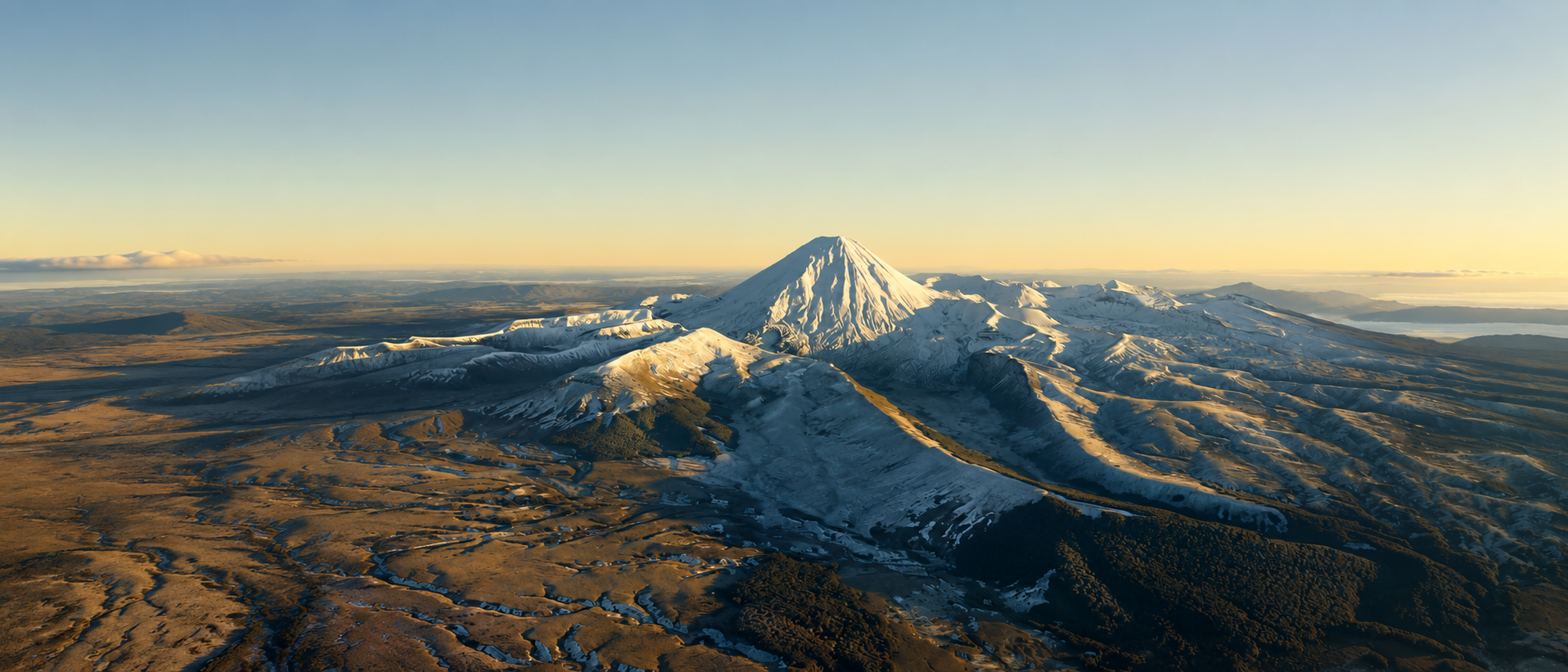
Tongariro National Park feels completely different from everywhere you have visited during the previous five days. The forest and farmland give way to an exposed volcanic landscape dominated by Mount Tongariro, Mount Ngauruhoe and Ruapehu.
For experienced and properly prepared walkers visiting in suitable conditions, the Tongariro Alpine Crossing is the obvious major day hike. It passes through volcanic terrain, crater landscapes and high exposed sections that make it one of New Zealand’s most distinctive walks.
It is also important not to treat it as an ordinary sightseeing attraction.
The crossing is an alpine hike, and conditions can change quickly. Check the weather, track information and transport arrangements before setting out. If conditions are poor, change the plan rather than forcing the walk simply because it is written into the itinerary.
That is also why I like spending the previous night nearby.
You are not trying to drive several hours before beginning the hike.
If the full Alpine Crossing is not suitable for you, Tongariro National Park still has plenty to offer. Shorter walks around Whakapapa give you an opportunity to experience the volcanic environment without committing to the full crossing.
Afterwards, return to your accommodation and have a quiet evening.
If you complete a major hike, you probably will not feel a great need to fill the evening with another activity.
Stay: Tūrangi, National Park or Whakapapa
Aotearoa Adventures Tip: If the Tongariro Alpine Crossing is one of the main reasons for your trip, consider giving yourself an extra day in this area if your overall holiday allows it. Having only one possible walking day leaves you completely dependent on the weather.
Day 7 – Tongariro to Auckland
Your final day is the longest driving day of the trip, so I would start reasonably early and keep the schedule simple.
From the Tongariro/Tūrangi area, allow roughly four to five hours to return to Auckland depending on your exact starting point, traffic and stops.
There is no need to cram another major attraction into the morning.
Have breakfast, take one final look at the mountains and begin heading north.
If your international flight leaves that evening, give yourself a very generous buffer. Auckland traffic can change quickly, and rental-car returns always seem to take slightly longer when there is an aircraft involved.
Personally, if the flight schedule allowed it, I would stay in Auckland for one final night and fly the following day. That removes the pressure of connecting a substantial road journey directly with an international departure.
There is also another option.
If your wider New Zealand trip is continuing south, you do not have to return to Auckland at all. From Tongariro you can continue towards Wellington and then either fly onward or cross Cook Strait to the South Island.
That turns this seven-day itinerary into the opening section of a much bigger New Zealand journey.
Why This Road Trip Works So Well
The biggest strength of this route is that the driving never dominates the holiday until the final return to Auckland.
Rotorua and Taupō sit close enough together that you can spend most of the day doing something rather than relocating. Taupō and Tūrangi are even closer, which allows the second half of the trip to slow down just as the landscapes become more dramatic.
You also get a surprising amount of variety for one week.
Auckland provides the urban beginning.
Rotorua gives you geothermal landscapes, Māori culture and adventure.
Taupō gives you the lake, river and water-based activities.
Tongariro gives you a completely different volcanic environment.
That is a lot of New Zealand without needing to cross the entire country.
How Much Driving Is Involved?
This is one of the more manageable New Zealand road trips.
The longest sections are Auckland to Rotorua and the final drive back from the Central Plateau. Everything in the middle is relatively compact.
That means you can comfortably spend two nights in Rotorua, one or two around Taupō and two around Tongariro without constantly feeling as though another long journey is waiting for you.
I would still avoid planning exact arrival times too aggressively.
New Zealand road trips have a habit of producing unexpected stops.
A viewpoint appears.
Someone wants coffee.
The lake looks particularly good.
You see a sign for somewhere you had never heard of.
Leave time for that.
It is part of why having your own vehicle is worthwhile.
Do You Need a Car?
For this itinerary, I would strongly recommend one.
You can reach major towns by bus, but having a car gives you far more flexibility around Rotorua, Taupō and Tongariro National Park.
It also allows you to change plans when weather affects outdoor activities.
If tomorrow looks terrible in Tongariro but good around Lake Taupō, having your own vehicle makes it much easier to adapt.
A small or medium rental car is completely adequate for an ordinary trip on the main roads. You do not need an SUV simply because mountains appear in the photographs.
HOW TO GET AROUND NEW ZEALAND
DRIVING IN NEW ZEALAND: WHAT VISITORS NEED TO KNOW
When Is the Best Time for This Road Trip?
For the easiest first-time road trip, I particularly like late spring through early autumn.
Summer gives you long daylight hours and plenty of opportunity for outdoor activities, although January can be busy.
February and March are excellent if you want warmer conditions while avoiding some of the strongest holiday-period demand.
Spring can also be beautiful, particularly as the days become longer.
The main thing that changes the trip is Tongariro.
Alpine conditions need to be treated very differently from ordinary road-trip weather, especially outside the warmer months. If hiking is central to the itinerary, choose the season accordingly and always check current track conditions.
If you are travelling in winter, the itinerary can still work, but I would redesign the Tongariro day around winter-appropriate activities unless you have the experience and equipment required for alpine conditions.
Who Is This Road Trip Best For?
I think this is one of the best New Zealand itineraries for first-time visitors who want adventure without spending every day driving.
It works particularly well for couples, solo travellers and families with older children because the activities can easily be adjusted.
One traveller might raft the Kaituna, skydive in Taupō and hike Tongariro.
Another could follow almost exactly the same route but replace those experiences with geothermal parks, Māori culture, scenic cruising, hot pools and shorter walks.
That flexibility is what makes the central North Island so useful.
You can make the trip as adventurous as you want.
Aotearoa Adventures Tip: Don't Add Too Much
Seven days can look like a lot when you first open a map.
It is not.
I would resist adding Waitomo, Hobbiton, Coromandel, Wellington and another three towns simply because they are technically within reach.
Every extra destination has a cost.
You lose time checking out of accommodation, driving, parking, checking in again and working out where everything is.
Rotorua, Taupō and Tongariro already give you enough variety for a very good week.
If you have more time, add another destination.
If you do not, enjoy these ones properly.
Central North Island 7-Day Route at a Glance
Day 1: Auckland – arrive, recover and explore the city.
Day 2: Auckland → Rotorua – geothermal landscapes and hot pools.
Day 3: Rotorua – rafting, mountain biking or Māori cultural experience.
Day 4: Rotorua → Taupō – Huka Falls, lakefront and jet boating or scenic cruise.
Day 5: Taupō → Tūrangi – skydiving, lake activities or Tongariro River adventure.
Day 6: Tongariro National Park – major hike or shorter volcanic walks.
Day 7: Tongariro → Auckland – relaxed return journey.
Final Thoughts
For a first North Island road trip, this is one of the routes I would be most comfortable recommending.
It gives you enough variety that every few days feel completely different, yet the destinations sit close enough together that the holiday never becomes a driving marathon. You can experience Māori culture and geothermal landscapes in Rotorua, adventure around Lake Taupō and finish beneath some of the North Island's most dramatic volcanic scenery.
More importantly, there is room to actually enjoy it.
You are not packing the car every morning.
You are not crossing hundreds of kilometres simply to tick another place off a list.
And you have enough time in the main destinations to change the plan when weather or energy levels suggest something different.
That is what I think makes a good New Zealand road trip.
Not how much of the map you covered.
But how much of the journey you actually had time to experience.